


Voordelen
Stabiele energievoorziening voor het verlagen van dieselverbruik & peakshaving
Een constante energievoorziening uit hernieuwbare bronnen, waardoor het dieselverbruik daalt en dure piekstroom wordt vermeden – wat bijdraagt aan voorspelbare energiekosten en een meetbare impact op duurzaamheid.

Snelle installatie, direct gebruiksklaar
Binnen 24 uur geïnstalleerd en direct klaar voor gebruik – voor onmiddellijke energieopwekking met minimale installatie-inspanning.

Compact, weinig onderdelen en gemakkelijk te vervoeren
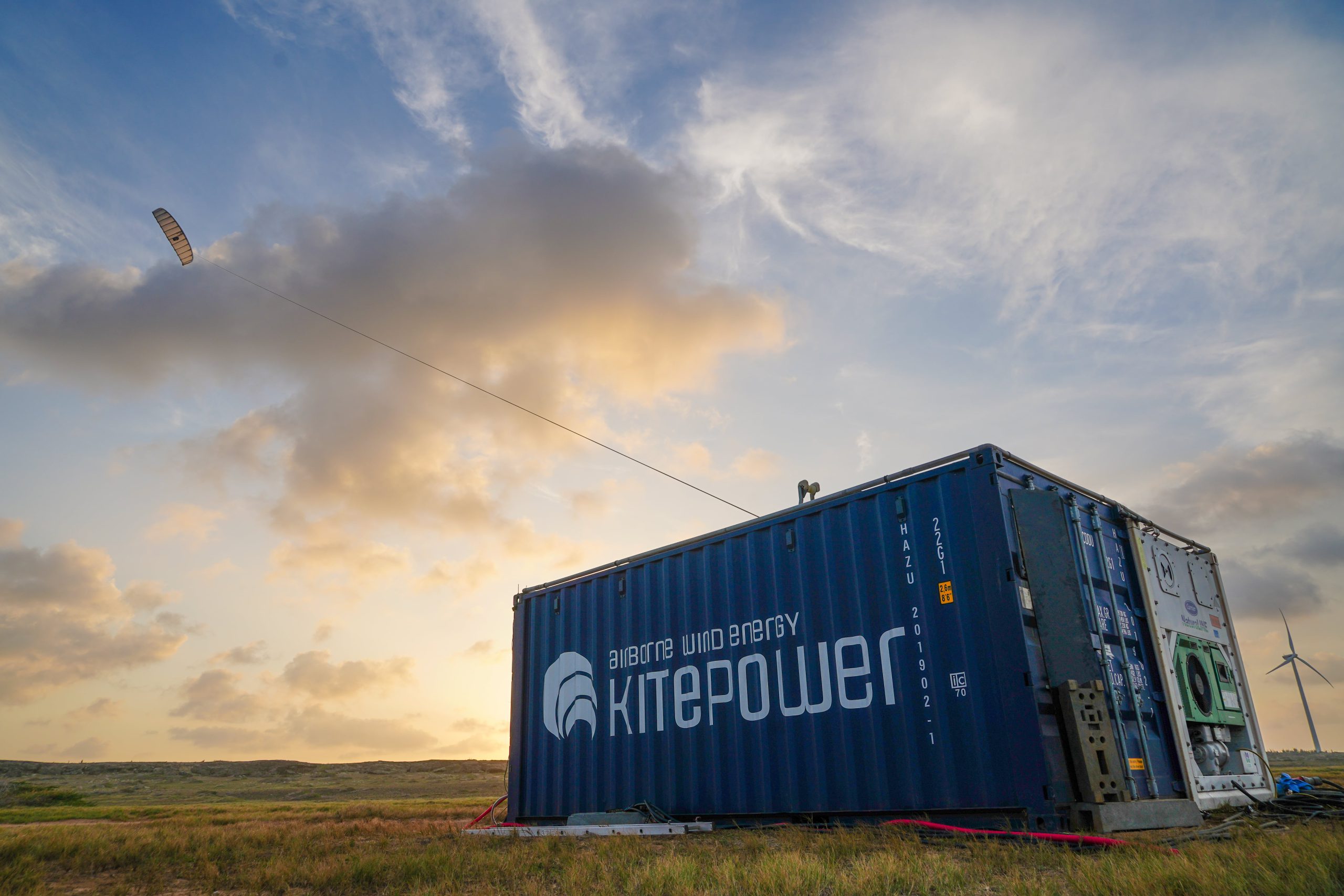
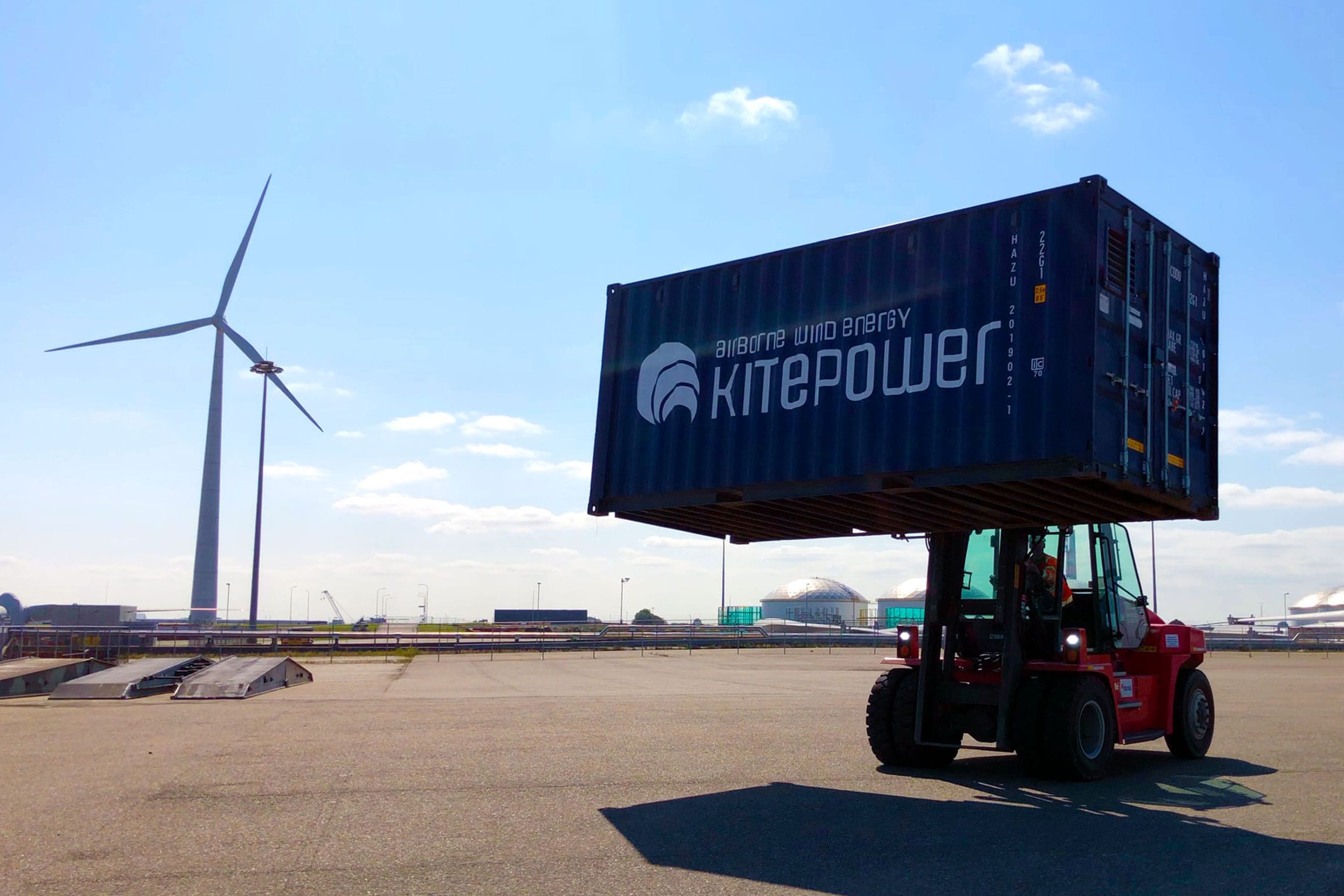
Er is tot 90% minder materiaal nodig dan bij conventionele windturbines en alle onderdelen passen in één container van 20 voet. Hierdoor is het systeem geschikt voor zowel tijdelijke als permanente installaties en kan het wereldwijd eenvoudig worden verplaatst.

24/7 duurzame energie met een stabiele opbrengst
Levert dag en nacht elektriciteit, ook bij bewolking en regen, met een hogere capaciteitsfactor dan zonne-energie en windenergie – wat een naadloze integratie met bestaande energiesystemen en langdurige systeemstabiliteit mogelijk maakt.

De onderdelen van een Kitepower systeem
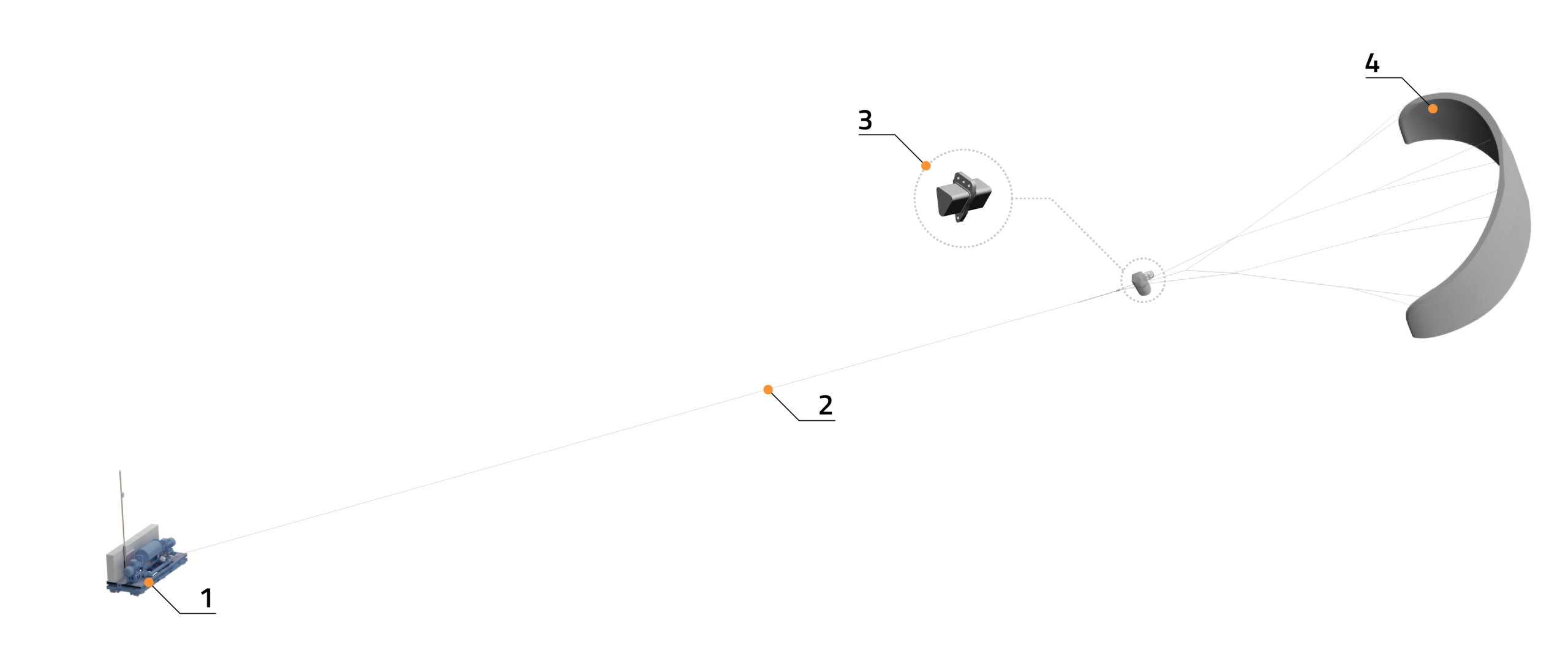
1. Ground Station
Converts the mechanical energy of the kite into electrical power and reels the kite in by using the generator as a motor.
- 2.44 m
- 2.6 m
- 6.06 m
- 9.6 t
- IP64
- 25 years
- 400V AC 3 phase
- 550-700V V
2. Tether
A Dyneema® line is used for a lightweight and strong connection between the kite and the GS.
- UHMWPE Dyneema®
- 350 m
3. Kite Control Unit
Controls the roll, pitch, and yaw of the kite and takes care of the communications between the sensor unit placed on the kite and the GS.
- 2 km km
- IP65
4. Kite
Consists of a hybrid between an inflatable and a fixed fibre-glass skeleton, forming the best combination for a strong and lightweight wing.
- 100 m²
- 3.5 t
- 110 km/h





The System Operation
Learn more about the continuous pumping cycle operationDe continue pompcyclus
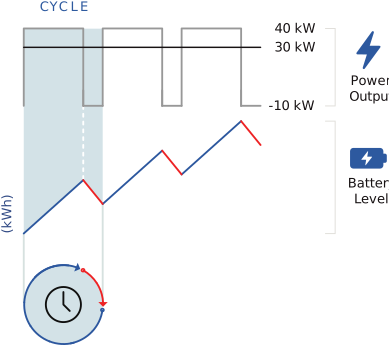
Uithalen - Energieproductie
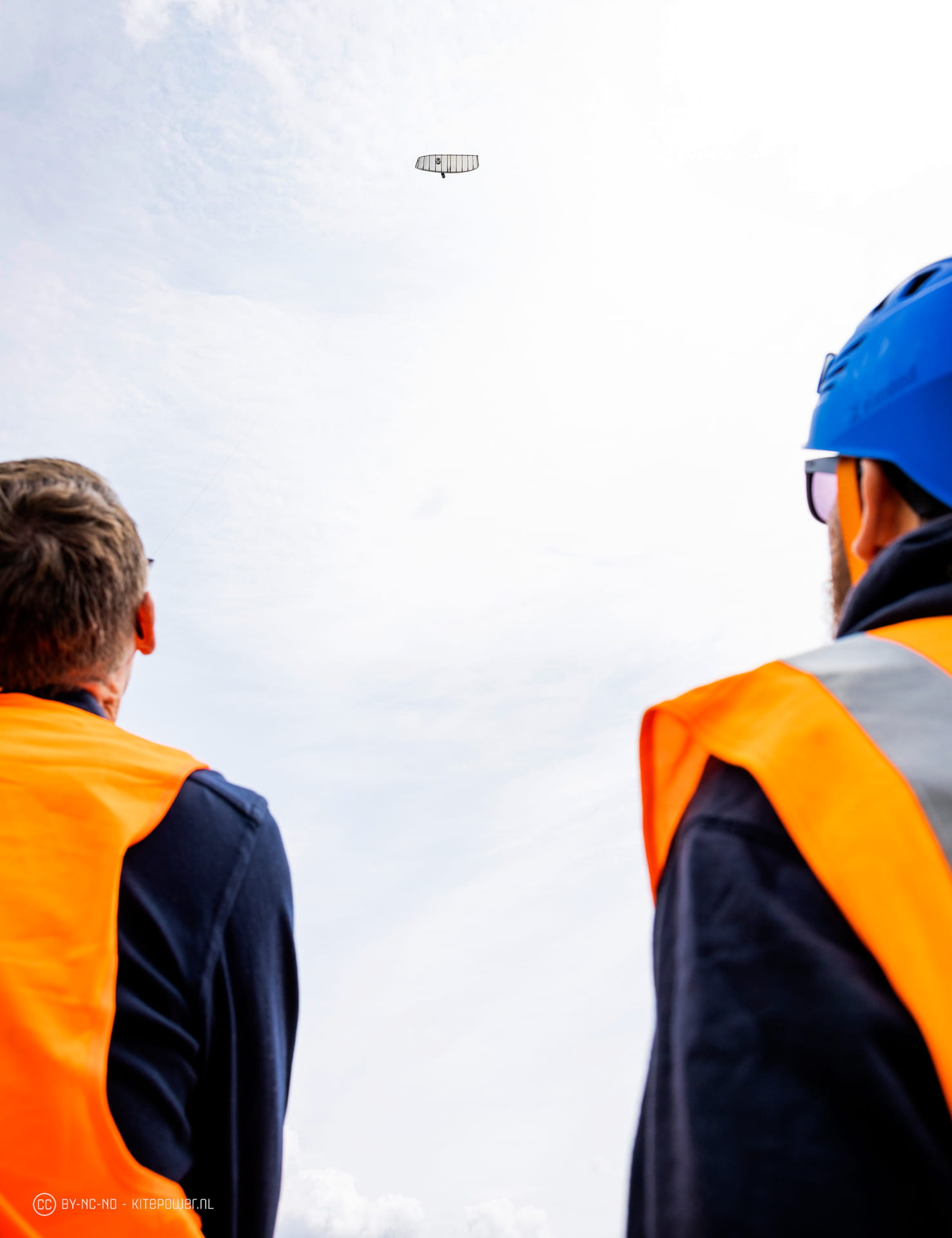
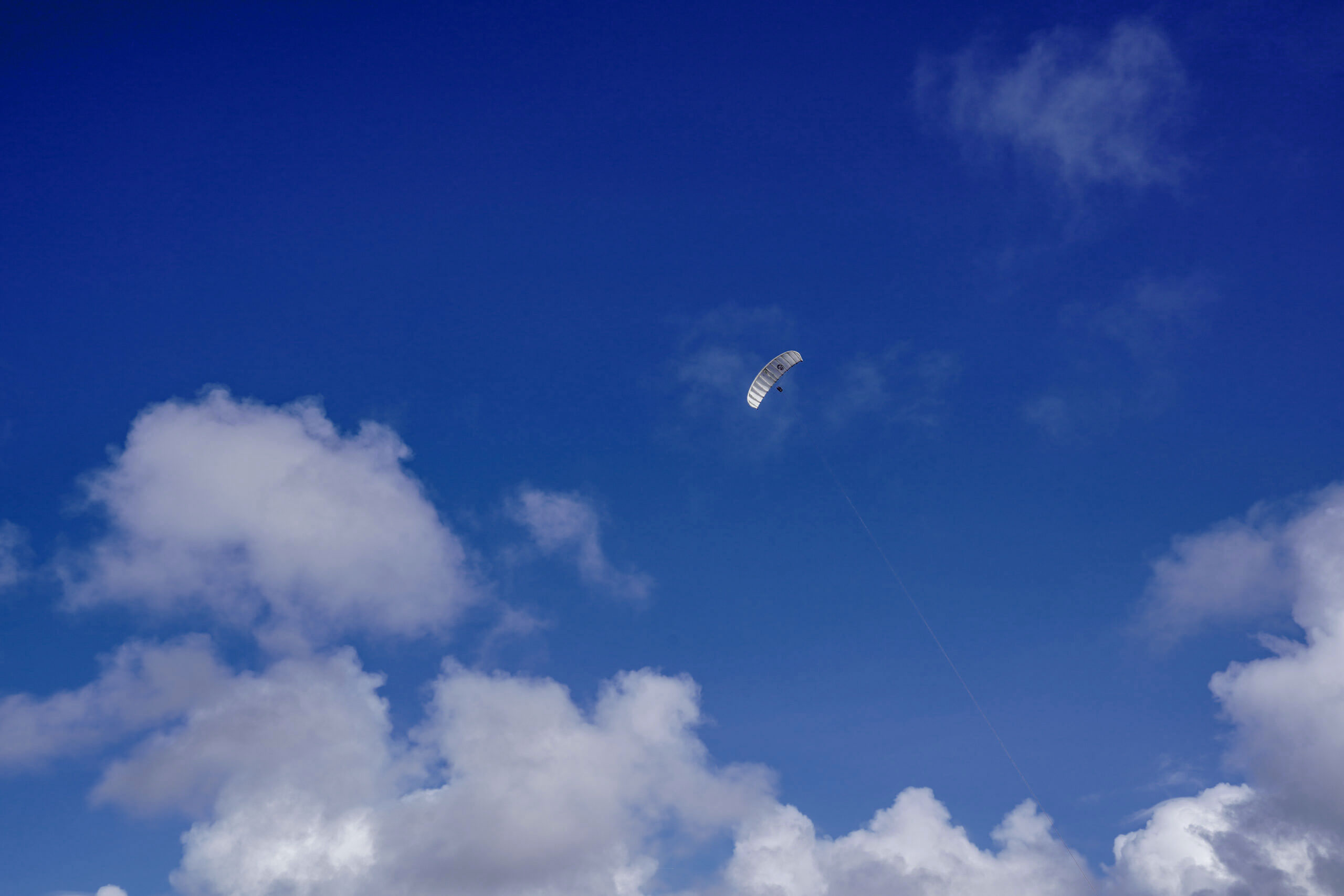
Energie wordt opgewekt tijdens de eerste fase, waarin de kites in een kruiswind ‘acht’-patroon vliegen om een hoge trekkracht te genereren en de kabel gecontroleerd van de lier in het grondstation af te rollen. Tijdens deze afrolfase produceren Kitepower-systemen gedurende 80% van de cyclustijd energie.
Inhalen - Energieconsumptie
Als de maximale lijnlengte bereikt is, wordt de vorm en aerodynamica van de vlieger aangepast om de vlieger binnen te halen met lage kracht. Een deel van de energie die in de eerste fase is geproduceerd, wordt hiervoor gebruikt. Gedurende het inhalen, consumeren de Kitepower systemen energie voor 20% van de cyclus.
Opwekkingsfases vs vermogen
De elektriciteitsopwekking verloopt in twee fasen, die zich in een continue cyclus herhalen en zo een positieve netto-energieopbrengst opleveren. De energie die het systeem tijdens het uithalen opwekt, is groter dan de energie die nodig is om de vlieger weer binnen te halen.
- Heeft een enkele cyclus duratie van 100 seconden
- Produceert 130 kW 80% van de cyclusduur bij het uithalen
- Verbruikt 20 kW 20% van de cyclusduur het inhalen
De elektriciteitsopwekking verloopt in twee fasen, die zich in een continue cyclus herhalen en zo een positieve netto-energieopbrengst opleveren. De energie die het systeem tijdens het uithalen opwekt, is groter dan de energie die nodig is om de vlieger weer binnen te halen.
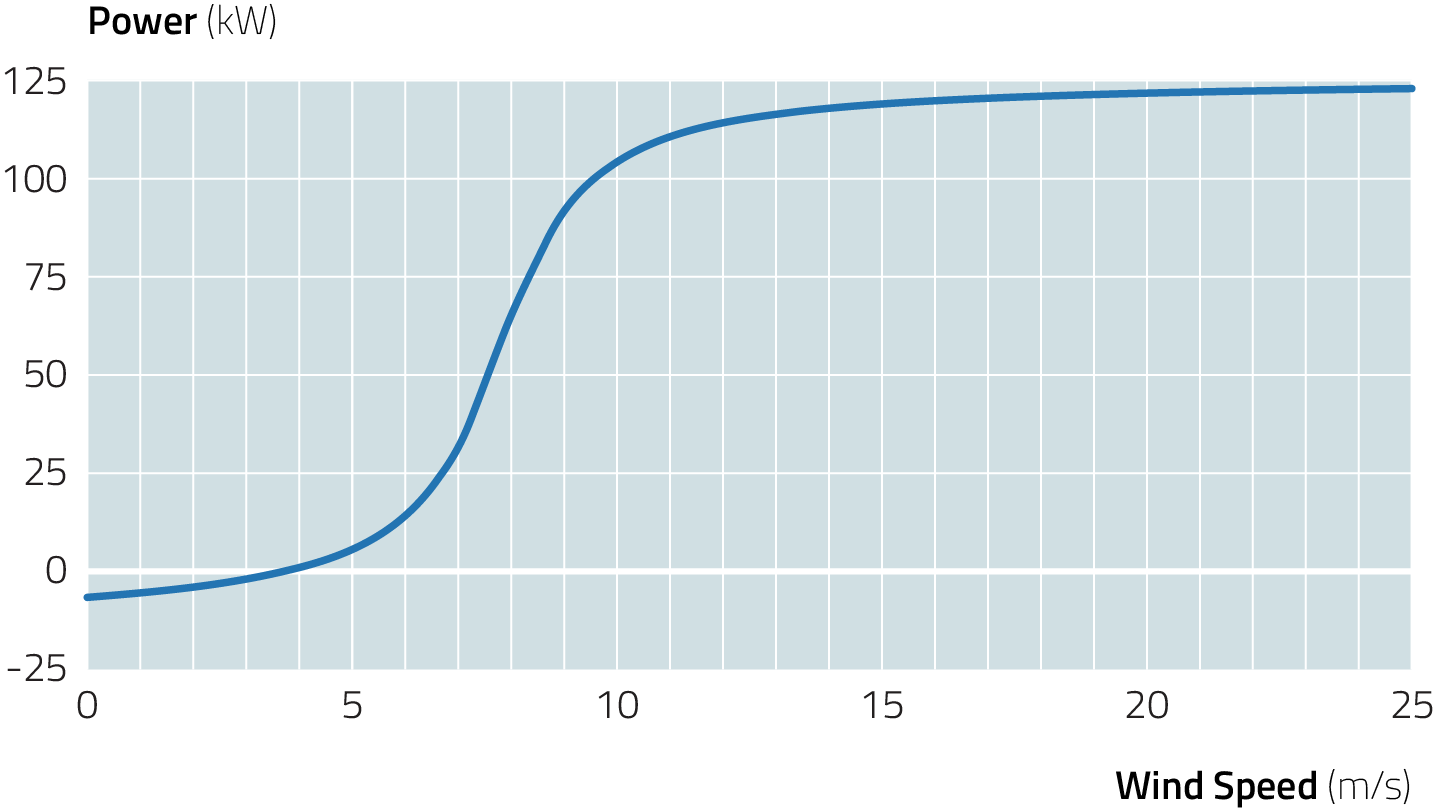
Kitepower represents an innovative and cost-effective alternative to existing wind turbines. Kitepower systems start producing energy with lower wind speeds than the ones required by conventional wind turbines, moreover, Kitepower is capable to harness stronger and more persistent winds at higher altitudes. (COMMENT: Highlight lower winds within the power curve graphic.)

Opwekkingsfases vs vermogen
De elektriciteitsopwekking verloopt in twee fasen, die zich in een continue cyclus herhalen en zo een positieve netto-energieopbrengst opleveren. De energie die het systeem tijdens het uithalen opwekt, is groter dan de energie die nodig is om de vlieger weer binnen te halen.
- Heeft een enkele cyclus duratie van 100 seconden
- Produceert 130 kW 80% van de cyclusduur bij het uithalen
- Verbruikt 20 kW 20% van de cyclusduur het inhalen
Begin met het opwekken van elektriciteit bij lagere windsnelheden
Kitepower vormt een innovatief en kosteneffectief alternatief voor bestaande windturbines. Kitepower systemen beginnen al energie op te wekken bij lagere windsnelheden dan bij conventionele windturbines het geval is; bovendien kan Kitepower gebruikmaken van sterkere en constantere wind op grotere hoogte.