



Het ontstaan van Kitepower
Kitepower was founded by Johannes Peschel and Roland Schmehl in January 2016 as a result of the work done by TU Delft’s pioneering kite power research group of the former astronaut Wubbo Ockels. Research in kite power generation was initiated by Wubbo Ockels in 1993, followed by a patent application for the Laddermill technology in 1997. Already in 2007, the first 20kW Kitepower system demonstrated the proof of concept. Currently, Kitepower is developing one of the first containerised on-shore AWES to enter the market. With all sorts of milestones up to now and a recent leadership change in 2025 where Johannes Peschel stepped down as CEO and Pieter Willems took over his role, Kitepower is ready for the next decade of innovation.
Kitepower is a registered trademark of Enevate BV.

Resilient future powered by distributed energy

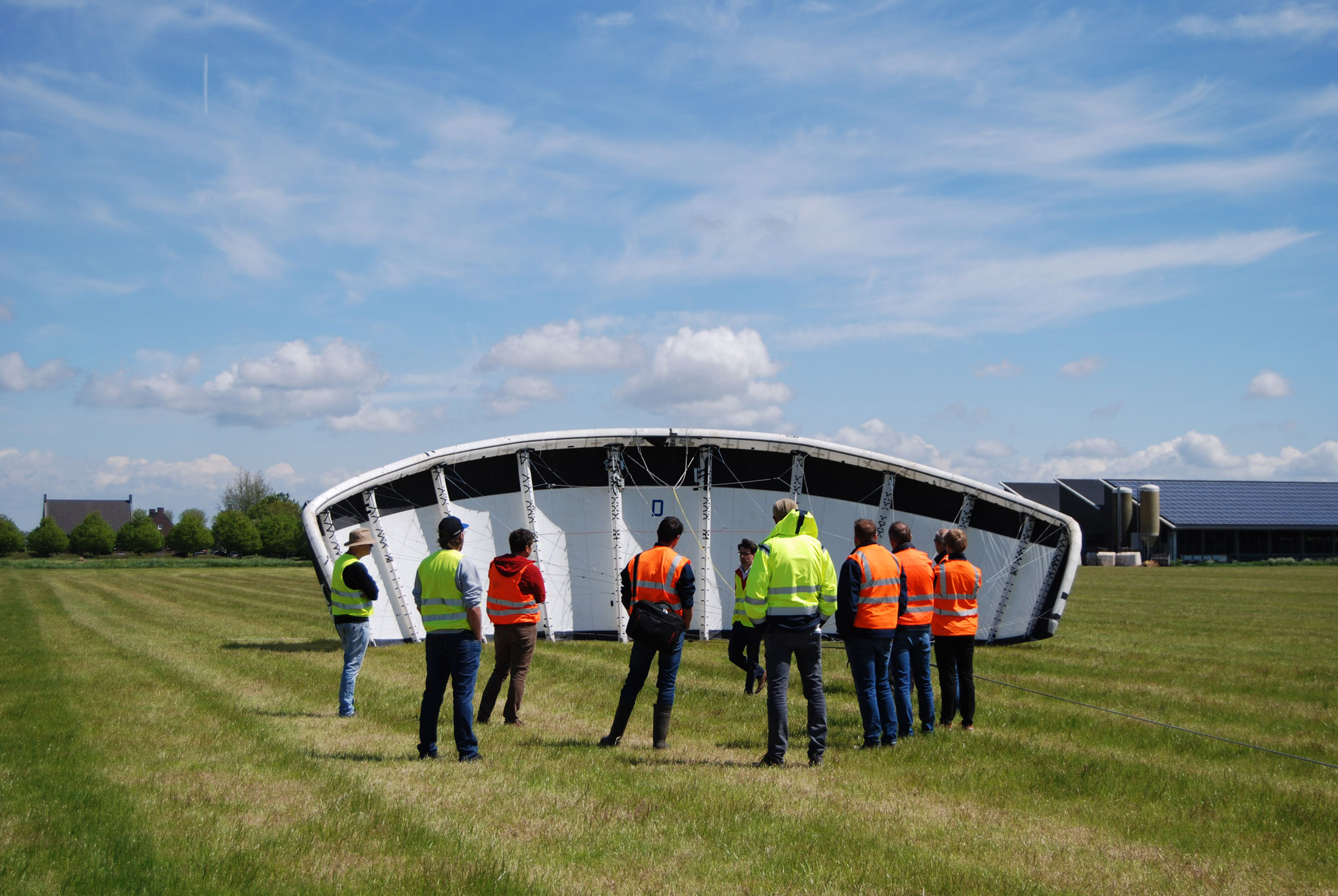
As electrification accelerates and grid congestion becomes an everyday reality, I believe the future of energy lies in smart, distributed solutions that generate power close to where it’s actually used. What sets Kitepower apart is our ability to bring clean energy to places where conventional renewables simply fall short — land-constrained locations, temporary sites, or areas where permitting and infrastructure are major hurdles. Unlike wind turbines or solar parks, our systems have a very small footprint, are highly mobile, and can be deployed quickly.
That flexibility allows us to move past many of the barriers that often slow down the energy transition. Our kite systems capture strong, consistent high-altitude winds while using very little material and requiring no civil works. This means we can offer a cost-effective and practical alternative to grid upgrades or traditional renewables, while also strengthening energy resilience and autonomy for our customers.
All we need to do is harness that power!

Kitepower’s Airborne Wind Energy is incredibly flexible and unbelievably powerful. For me, a sustainable future means moving away from centralized fossil or nuclear power plants toward decentralized renewable energy. There are few energy sources that can provide electricity sustainably at scale: solar and wind. Solar panels are a valid option, but their material and space efficiency is low compared to airborne wind energy. To power 150 households, PV panels need 109 t of material and 3140 m² of ground space, compared to 15 t and 49 m² for Kitepower. Wind power uses the whole planet as an engine. Temperature differences created by the sun generate wind everywhere — turning the Earth into a vast, constantly moving boiler.
All we need to do is harness that power. What I love about Kitepower is its simplicity and efficiency: almost every component directly contributes to electricity generation, using very little material. This makes Kitepower almost invisible, cost-effective, and, for me, a clear path to a sustainable future.
Embracing AWE to disrupt the global energy economy

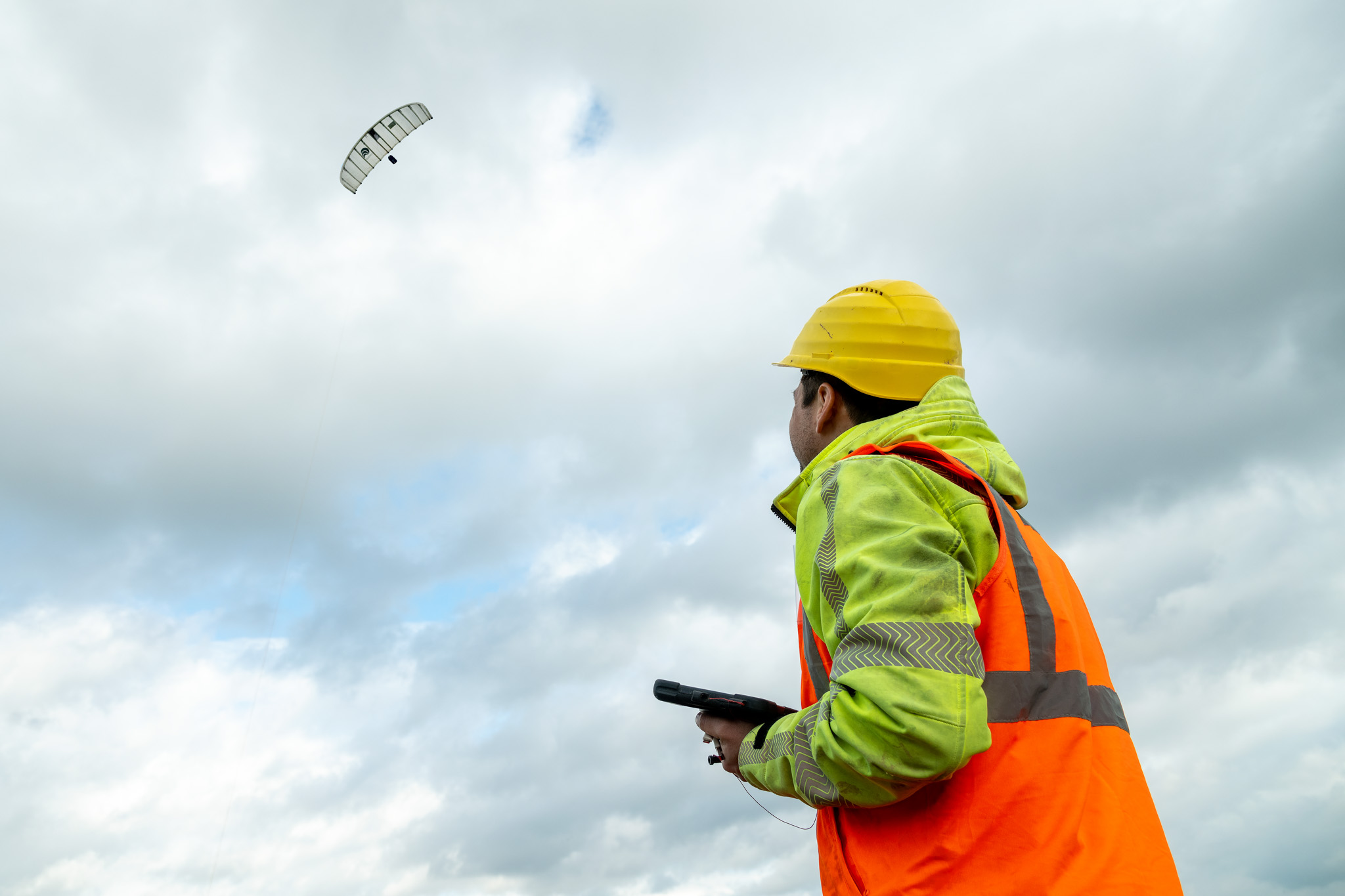
Airborne wind energy is an innovative renewable energy technology that is ideally suited for small-scale remote off-grid electricity generation and, at larger scale, has the potential to disrupt the global energy economy. Based on proven principles, commercial development focuses on improving and demonstrating the reliability and robustness of systems up to several hundred kilowatts.
At the same time, advances in robotics, artificial intelligence, unmanned aerial vehicles, and transport electrification create strong technological synergies. TU Delft is one of the pioneers in airborne wind energy, with Dutch astronaut and aerospace engineering professor Wubbo Ockels laying the foundations. In 2012, the research group automated a unique 20 kW pumping system based on soft-wing technology.
Since 2015, Kitepower has built on this technology while maintaining a close research link with TU Delft. Supported by a Horizon 2020 “Fast Track to Innovation” grant, the company and its partners have developed a 100 kW mobile energy system. I am proud to be involved as an advisor to this international, multidisciplinary team with an exciting and challenging mission ahead
Teamprofielen

Sweder Reuchlin
Head of Sales
What really makes Kitepower stand out to me is the dedication of my colleagues. Everyone is truly committed to our mission, and you can feel that in everything we do. That shared commitment fosters strong collaboration and a culture where we consistently support one another.

Merle van Beek
Business Developer
At Kitepower, everyone is closely aligned on what others are working on, which makes you feel truly part of both the product and the company as a whole. The mix of technical and non-technical backgrounds brings diverse expertise together and creates a strong team dynamic.
Bert Buchholz
Head of Software
As a Software Engineer at Kitepower, I have the freedom and responsibility to drive the direction of the software behind our kites. While my academic background laid the foundation, it is at Kitepower where I have truly expanded and refined my expertise in software architecture and design. The trust and ownership I’ve been given have helped shape me into the engineer I am today.
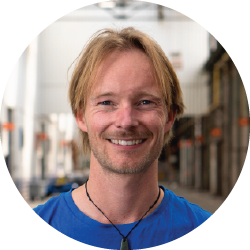
Wolf Fischer
Hardware Team Lead
As a Mechanical Engineer at Kitepower, I work on innovative projects where you can see the results directly reflected in the final product. That makes the work not only tangible, but also incredibly motivating. The freedom to bring ideas to life and truly make an impact inspires me to take on new challenges with enthusiasm every day.
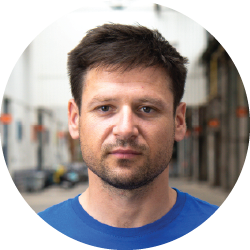
Andrei Luca
Head of Operations
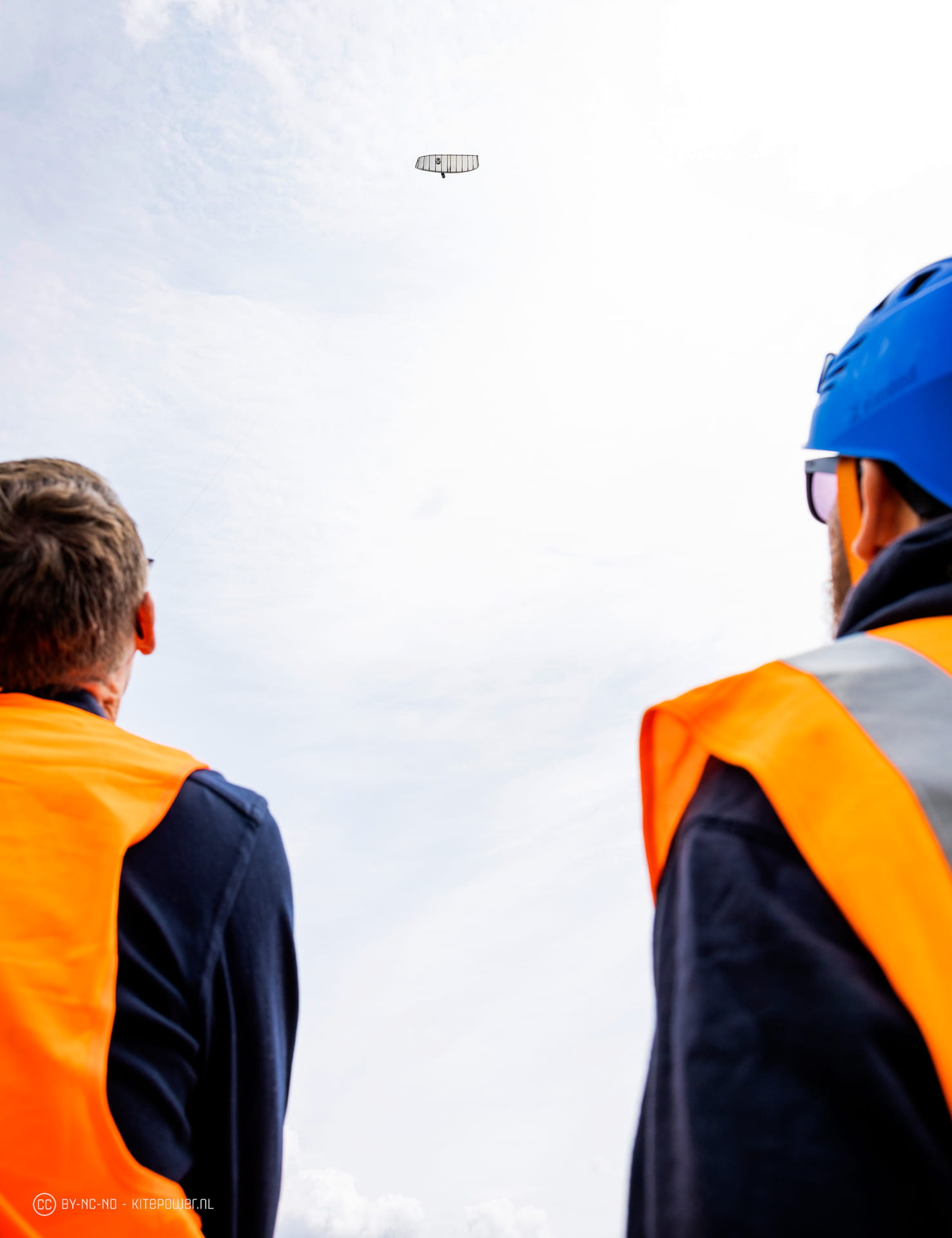
As a passionate kitesurfer, I’ve been able to turn my passion into work at Kitepower that truly energizes me and allows me to make a real impact. As Operations Manager, I test innovations developed by the entire team and see the direct results of our collective efforts. The moment the kite takes off remains special every single time and is an incredibly proud moment.