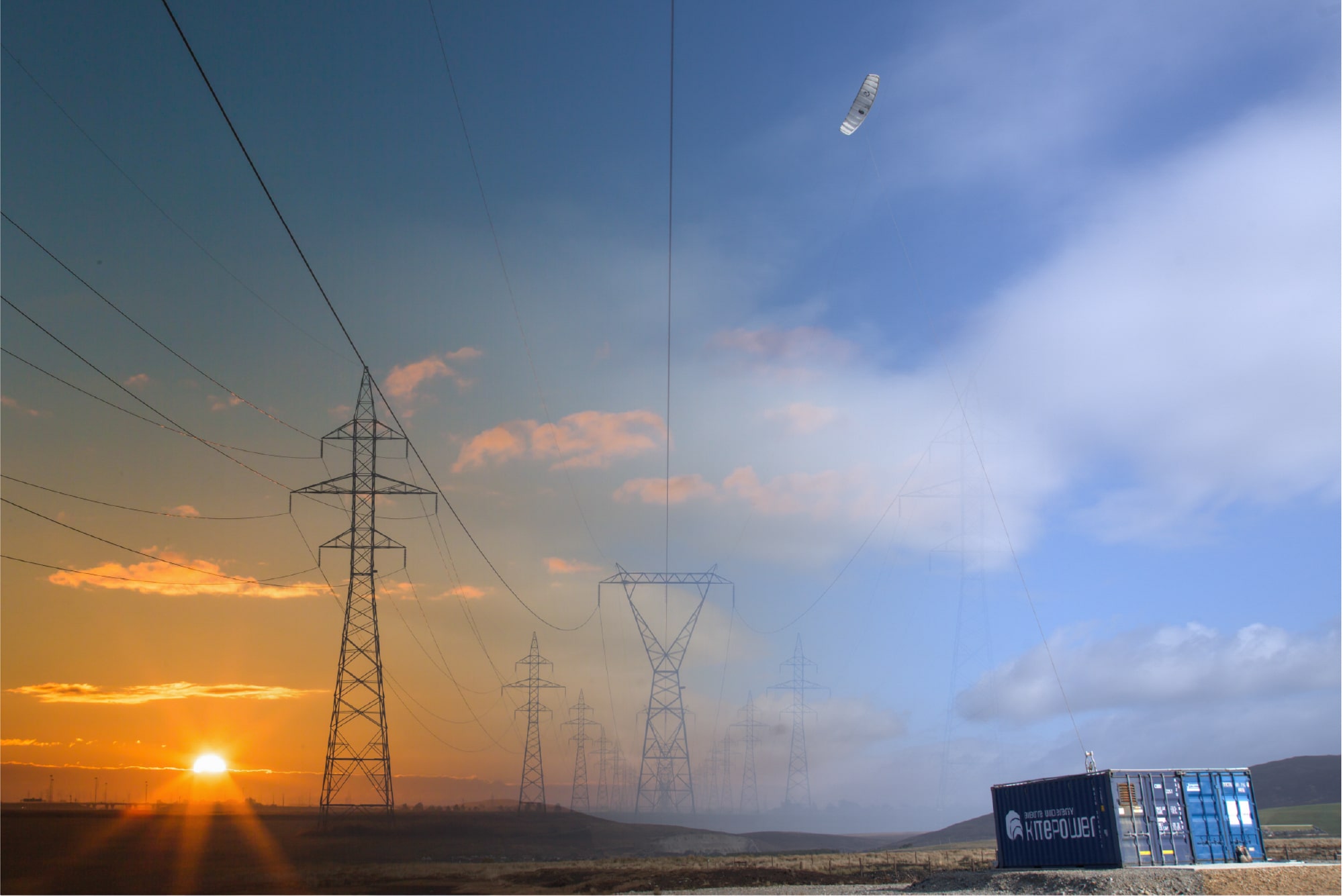
When communities learn how kite-based systems work and understand their environmental benefits, they tend to view the technology with interest and openness. Greater public understanding of airborne wind energy (AWE) could open doors for broader acceptance.
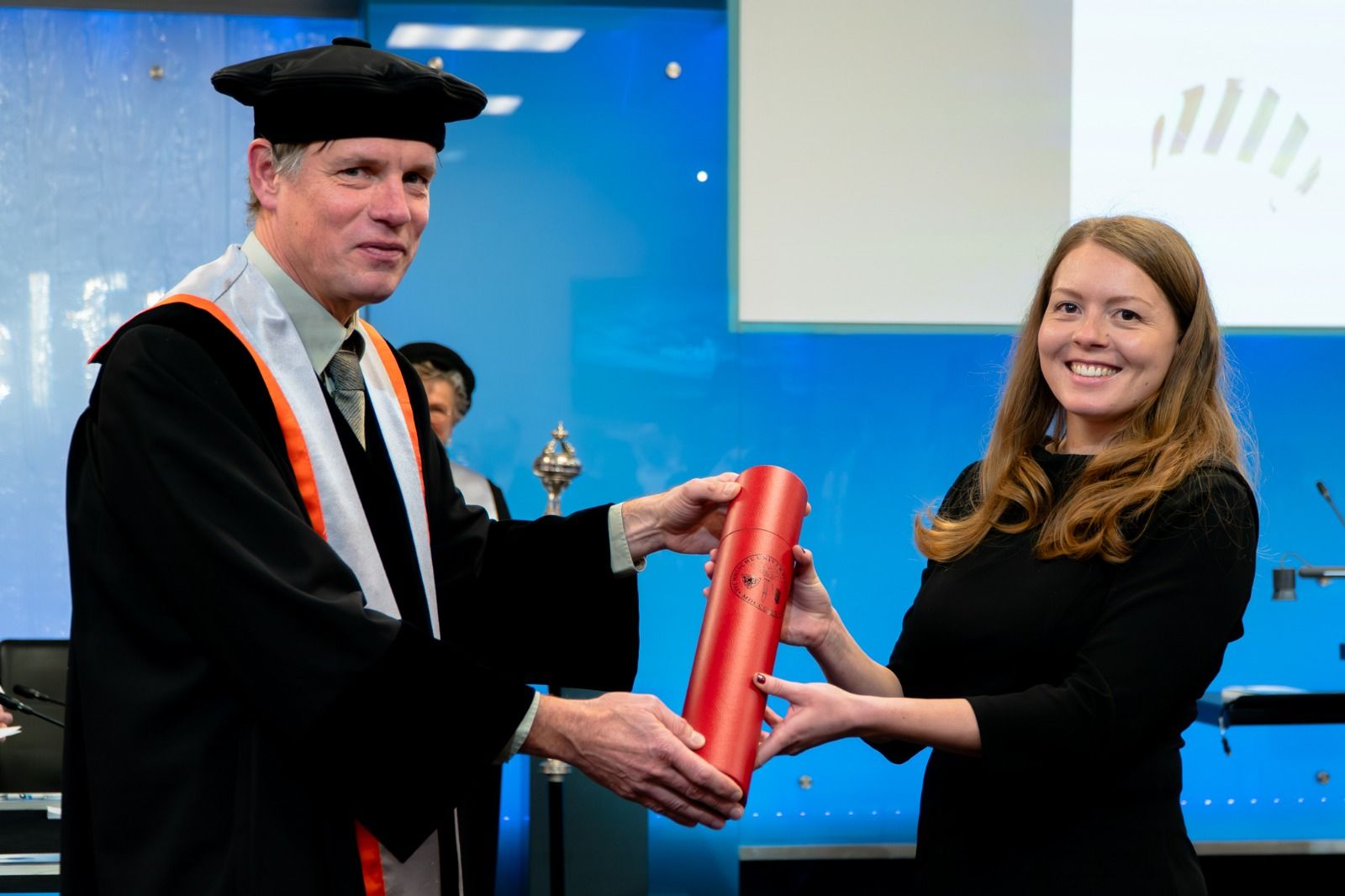
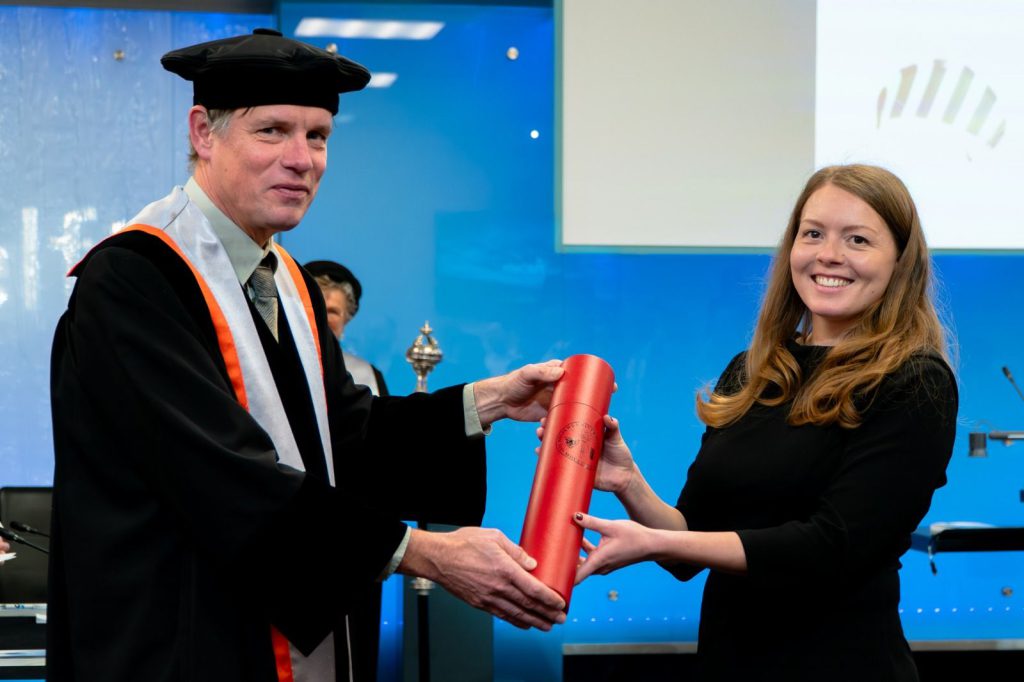
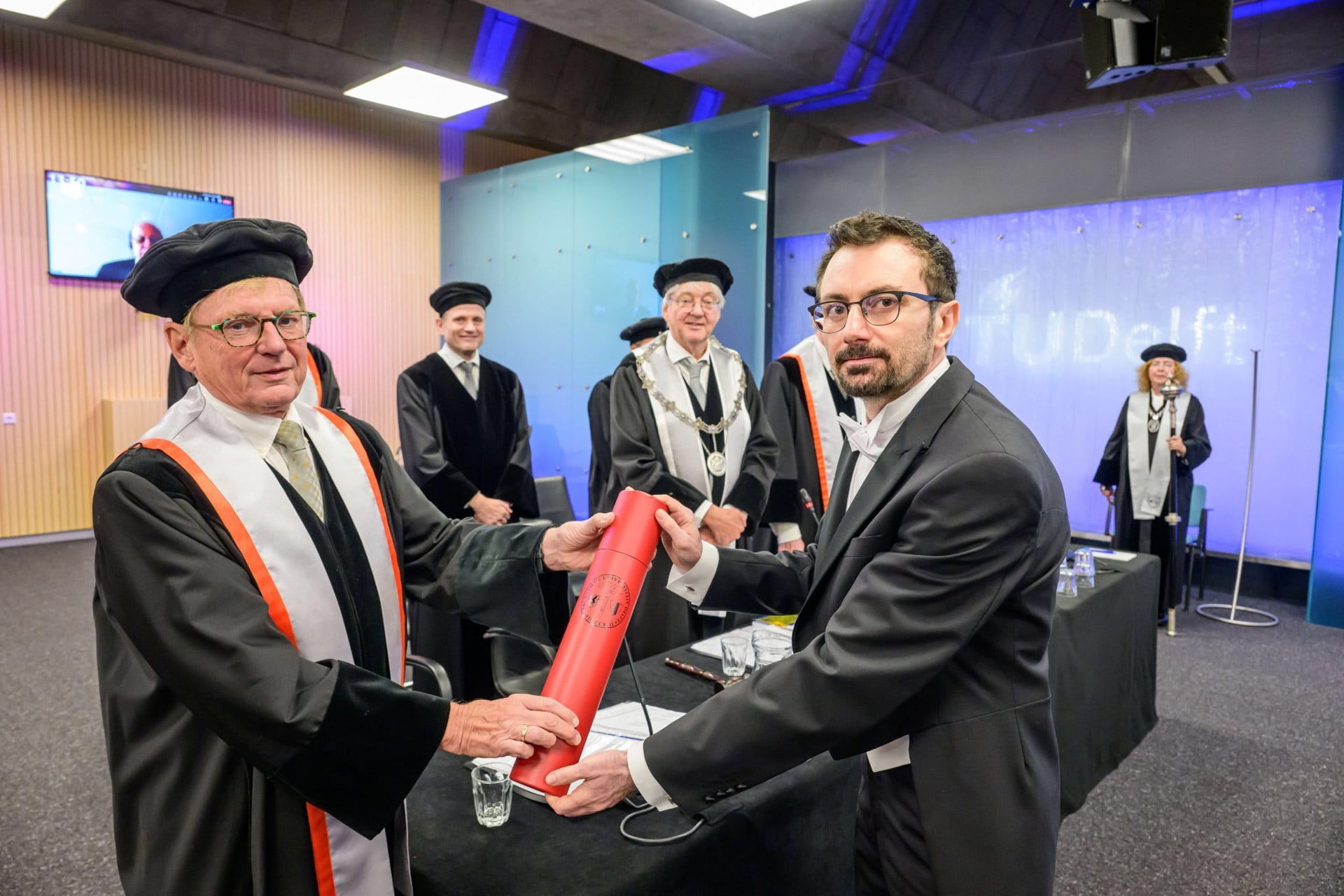
These insights come from a PhD study by Helena Schmidt, who completed her doctorate at Delft University of Technology on October 31, 2025, after 4.5 years of research on how communities perceive and accept airborne wind energy systems. Her work offers one of the first in-depth perspectives on how people respond to airborne wind energy in real settings.
Compared to traditional wind turbines, airborne systems raise fewer concerns about noise and landscape impact. At the same time, AWE remains relatively new, and public familiarity with it is still limited. More communication, education, and visible demonstrations will be essential to help communities understand the technology’s potential and build lasting trust.
This growing awareness opens great opportunities to accelerate the energy transition. Airborne wind energy can harness stronger and steadier winds at higher altitudes while using less material and space than conventional turbines. These characteristics make it a flexible and sustainable addition to the renewable energy mix, particularly in areas where installing large wind turbines is not feasible or the local communities oppose them.
Helena’s research also highlights the importance of local engagement. Communities that were informed early and had opportunities to ask questions or observe demonstrations showed higher levels of acceptance and confidence in the technology. This underlines that trust and dialogue are just as important as technical performance when introducing new renewable solutions.
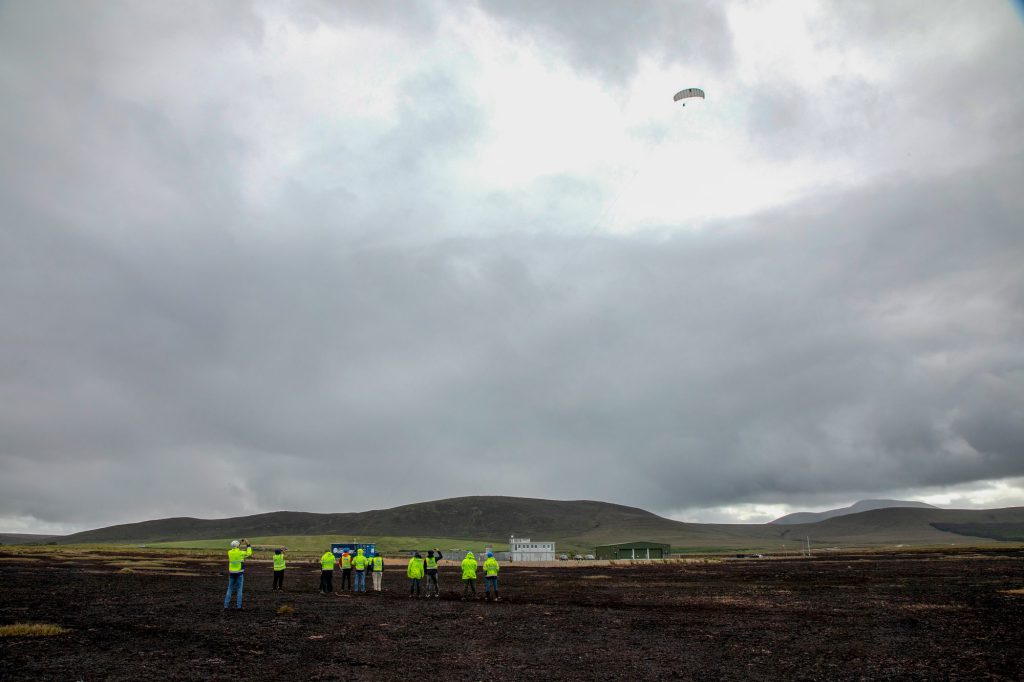
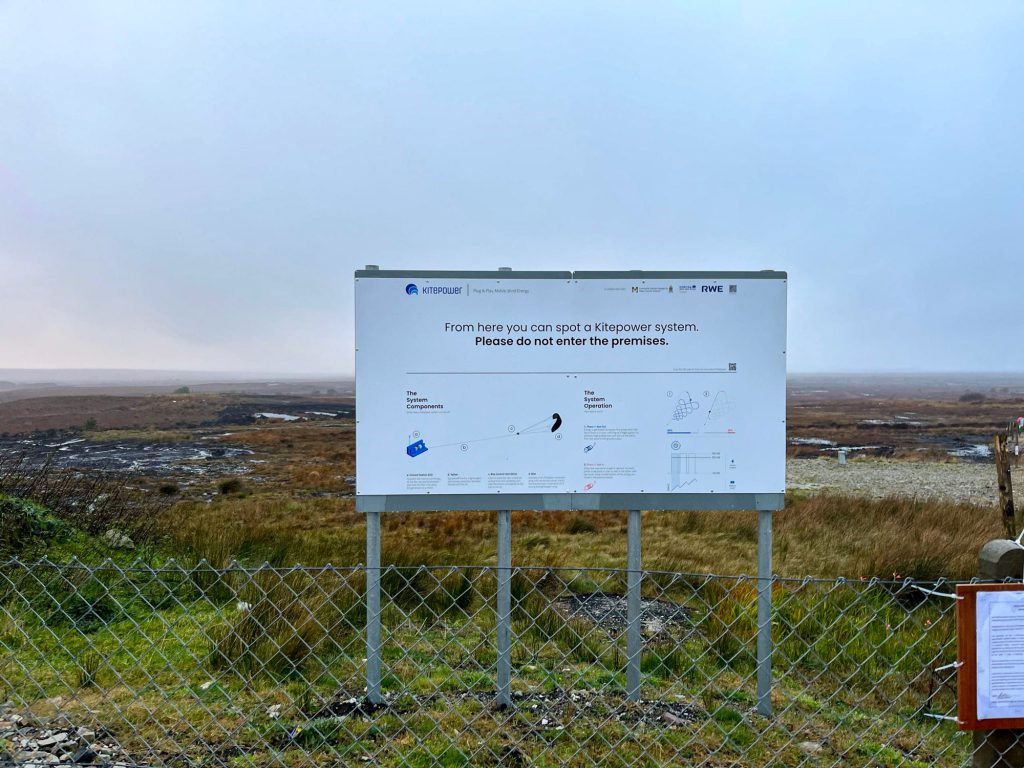
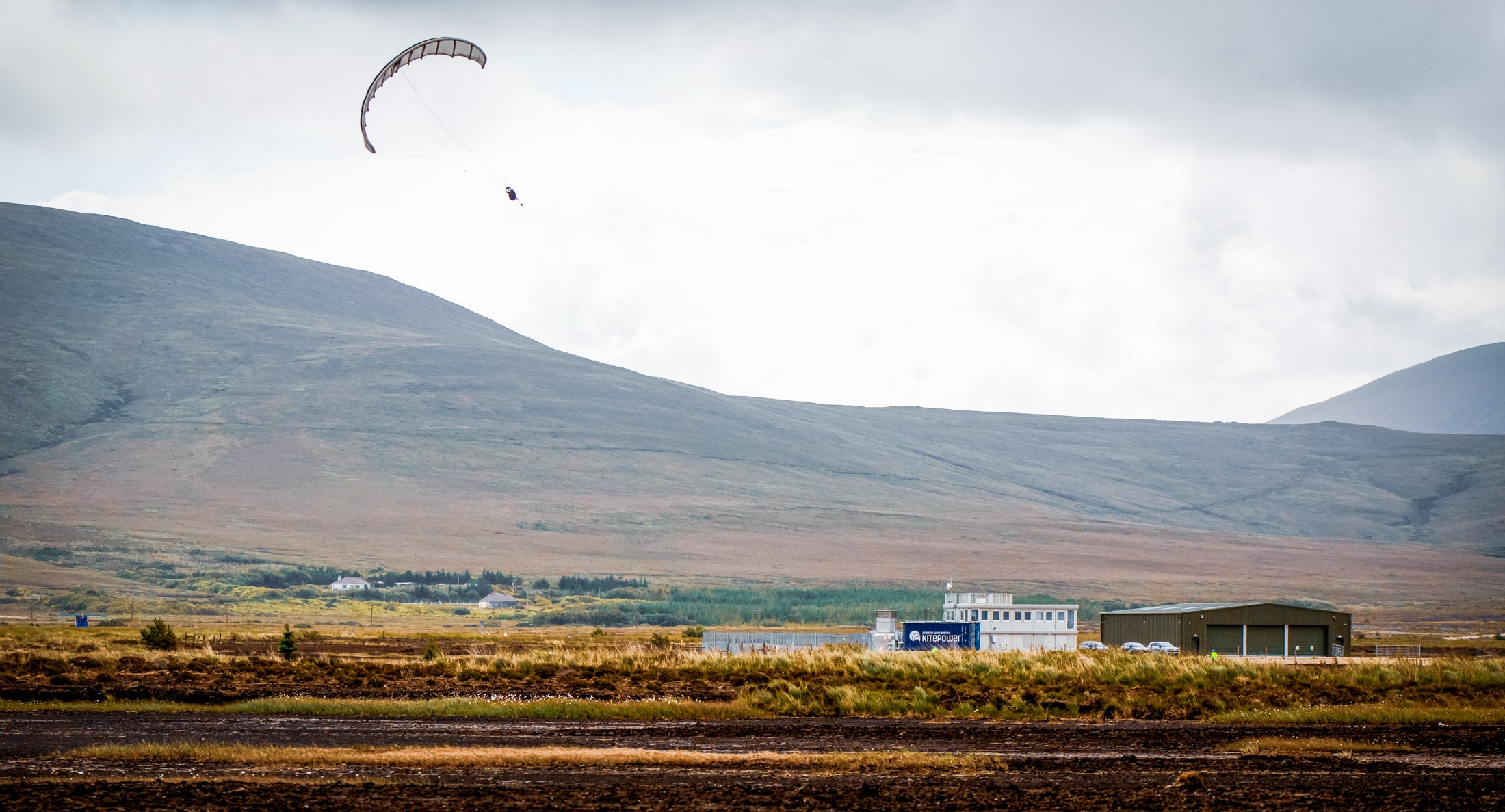
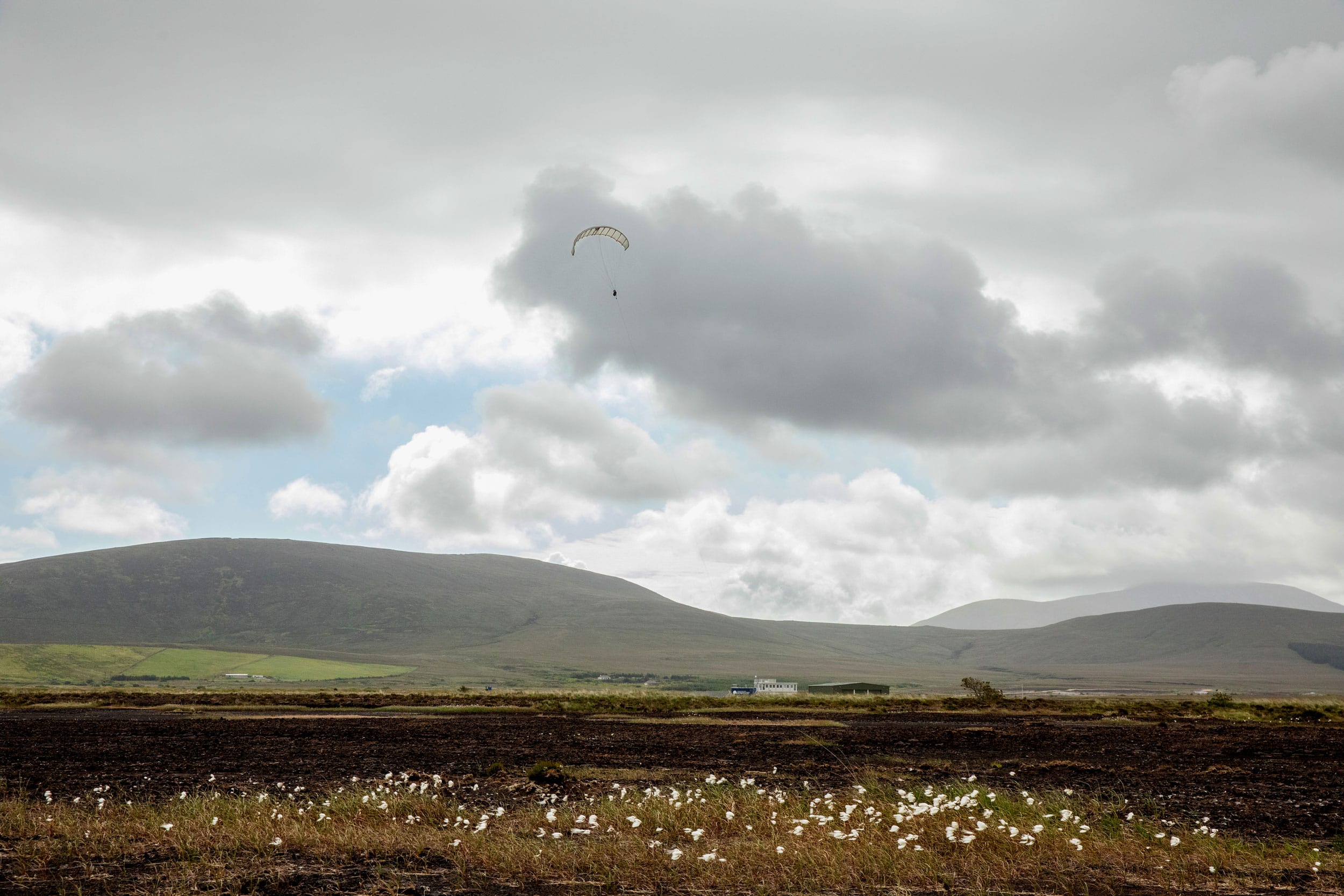
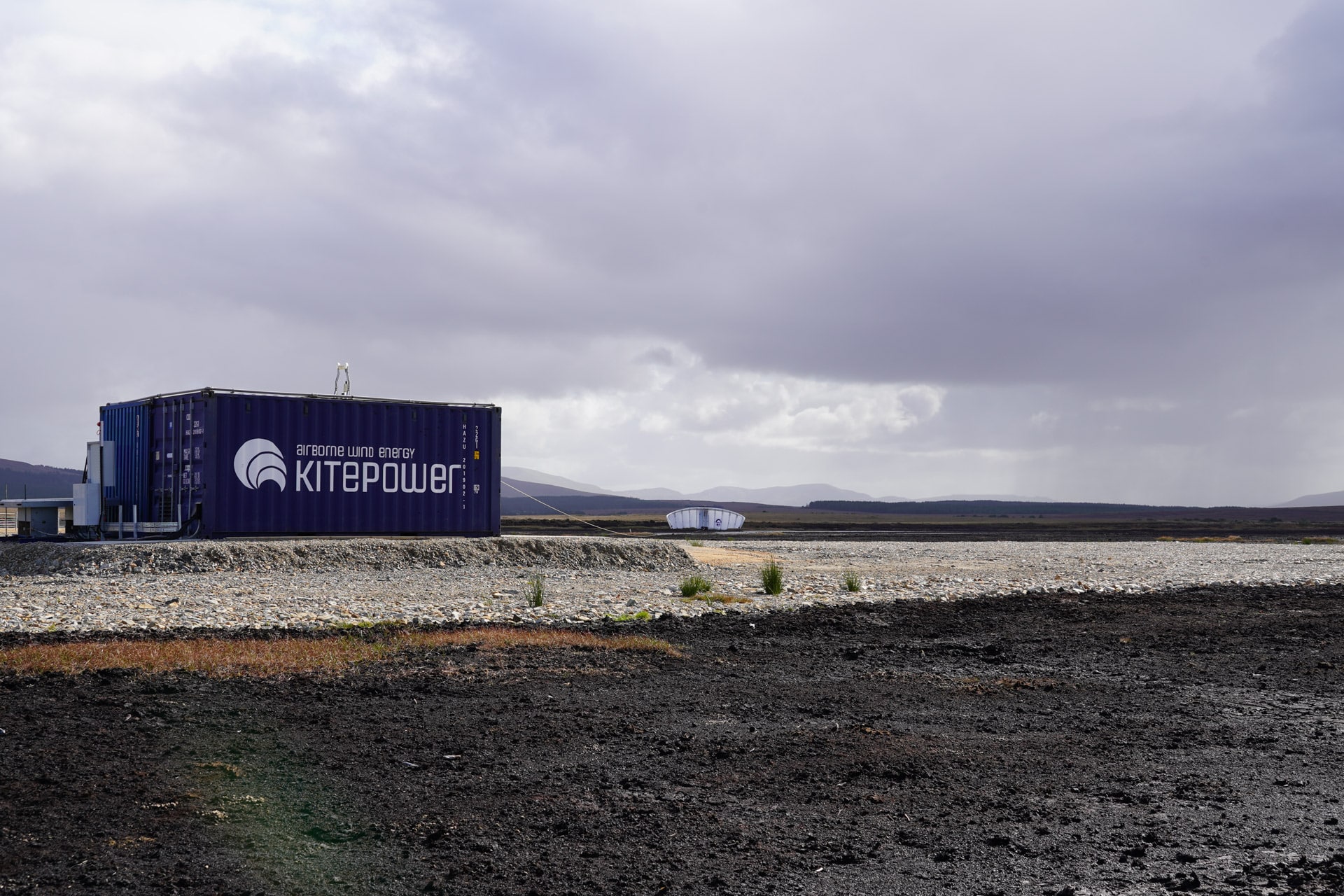
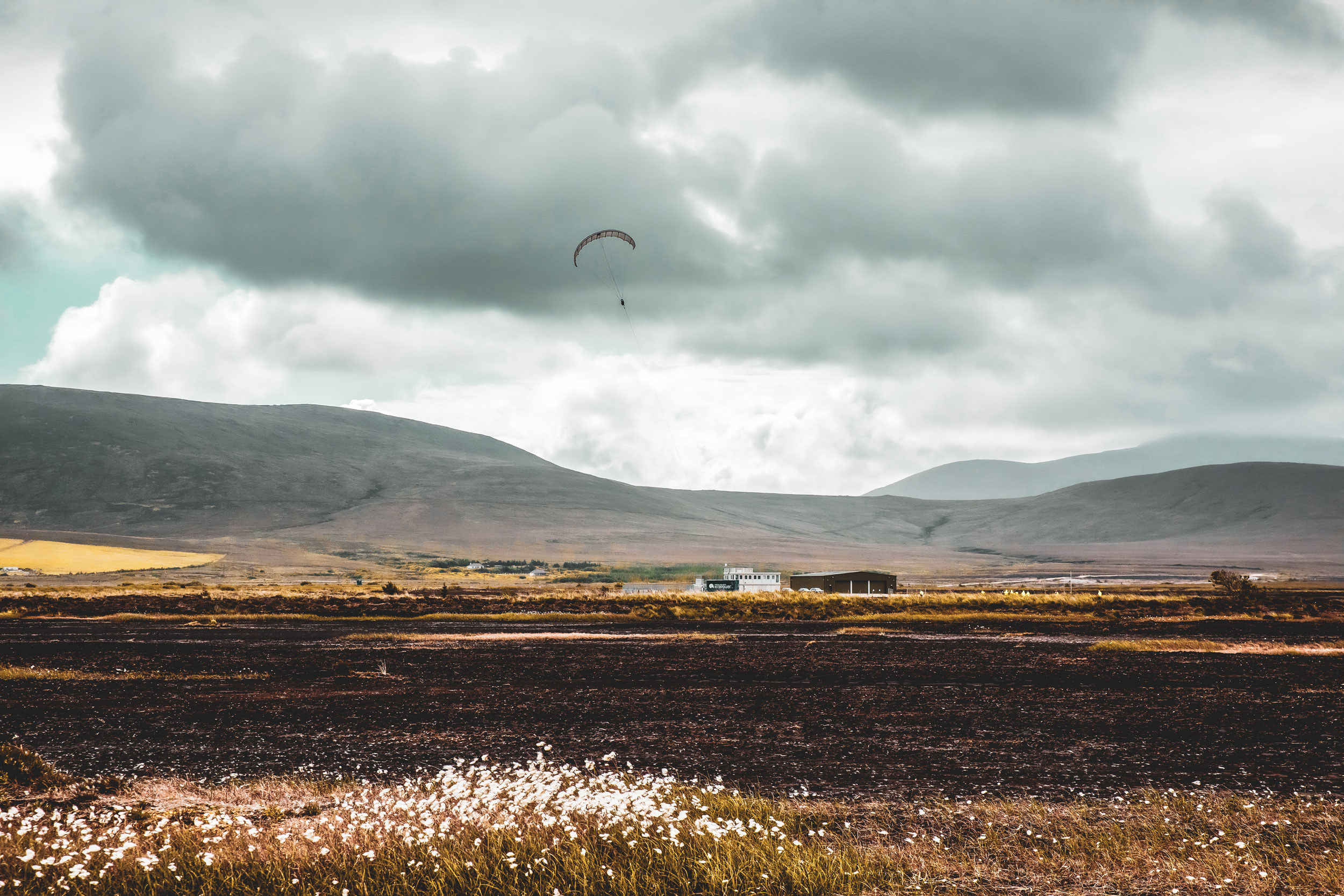
Helena completed her PhD on October 31, 2025, under the supervision of Dr Roland Schmehl, one of the founders of Kitepower. Kitepower contributed to the research by providing input and operational data from its test site in Bangor Erris, County Mayo, Ireland. The collaboration helped connect academic research with real-world experience, giving a more complete understanding of how airborne wind systems are perceived by local communities.
At Kitepower, we congratulate Helena on this achievement and thank her for her valuable contribution to the field. Her work strengthens the foundation for socially responsible and widely accepted deployment of airborne wind energy. Thanks to studies like this, businesses and consumers can look forward to faster access to clean, flexible, and sustainable energy from kites.
Predicting the wind at altitude where the kite actually flies is a big challenge for airborne wind energy. Traditional methods using ground level readings don’t take the wind’s speed gradient and directional change at altitude into account, which often leads to inaccurate wind estimations. TU Delft researcher Oriol Cayón is addressing this with a sensor fusion approach that allows kites to measure and interpret the wind in real time.
Kite as a Sensor: Wind Estimation
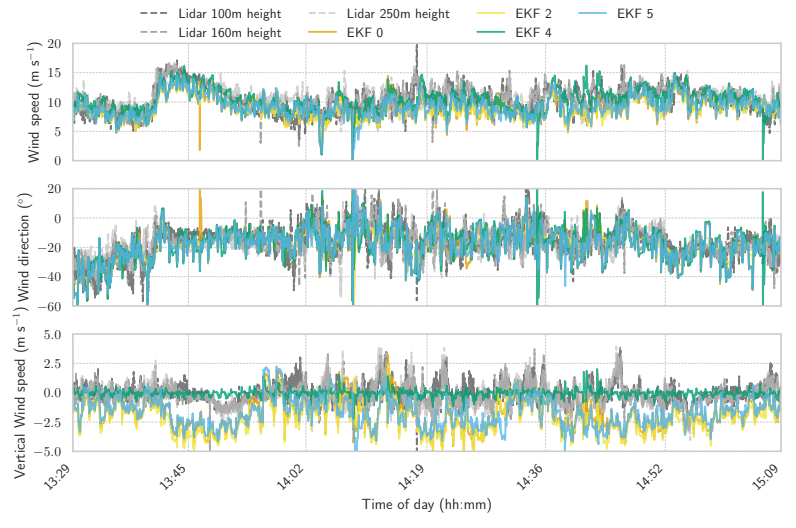
The method combines onboard measurements such as kite motion, tether tension, and aerodynamic forces with a dynamic system model using an Extended Kalman Filter. The result is accurate estimation of wind speed and direction at flight altitude, along with insights into the kite’s behavior and system state in real time. Unlike conventional approaches that rely on ground-based sensors, this approach lets the kite act as its own airborne weather station.
LiDAR Validation
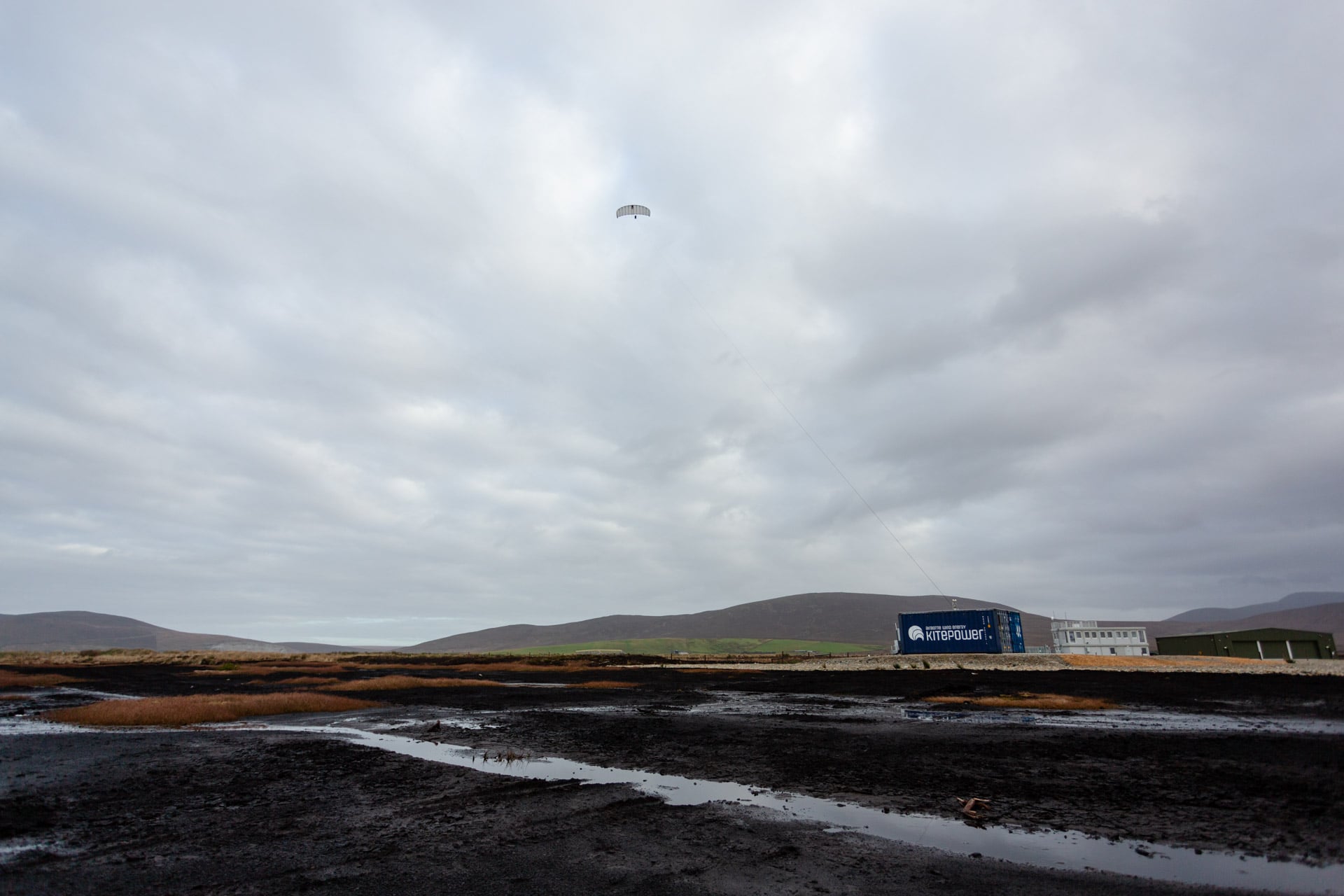
To validate the method, the estimations were compared with lidar measurements from Kitepower’s test site in Bangor Erris, Ireland.The agreement of these results across varying conditions confirm that kites themselves can serve as reliable sensors of the wind environment, providing accurate real time measurements.
The Impact for Kitepower
This real-time wind estimation has important implications for Kitepower systems. It enables more precise flight control, safer operation in changing conditions, and a better understanding of how the system responds to gusts and turbulence. This leads to more optimized and automated flights, increasing its efficiency, reliability and power output by adjusting its flight as conditions change in real time.
TU Delft PhD candidate Jelle Poland is pushing the boundaries of airborne wind energy research through his cutting-edge work in system state estimation, aero-structural modeling, and kite deformation analysis. His developments are a crucial step toward making kite-based renewable energy systems smarter, more reliable, and easier to scale.
Real-Time Deformation Modeling
A major focus of Poland’s research is how flexible membrane kites deform under aerodynamic loading and how this deformation impacts flight behavior and control. He has developed computationally efficient deformation models that predict how the kite’s surface responds in flight conditions. These models factor in structural tension, pressure distribution, and real-time flight dynamics.
His work will enable real-time integration of deformation data into flight control algorithms, improving the kite’s maneuverability, flight stability, and energy yield—especially in turbulent or rapidly changing wind environments. The deformation predictions are vital for ensuring the kite maintains optimal shape throughout its pumping cycles.
Wind Tunnel Validation at TU Delft
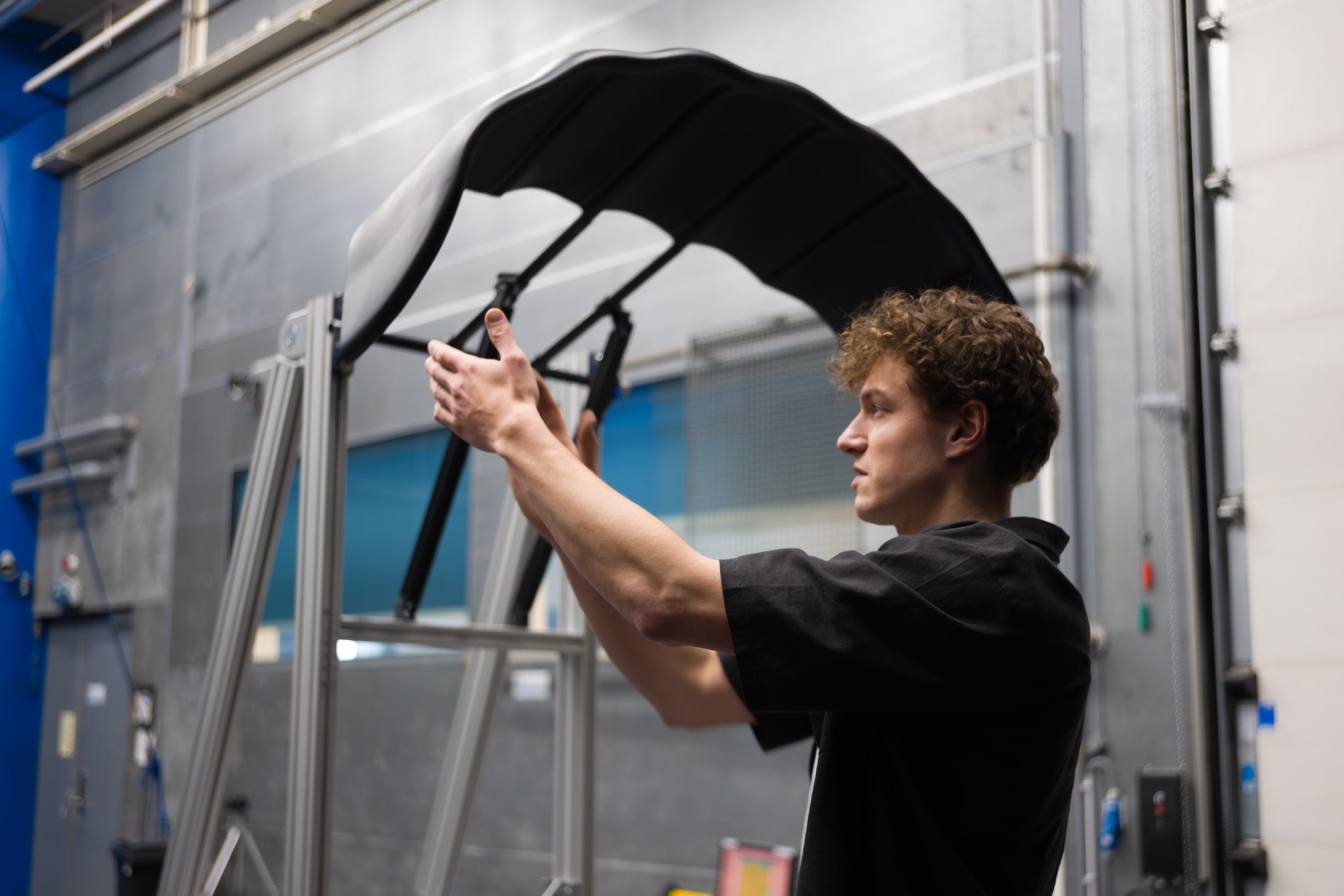
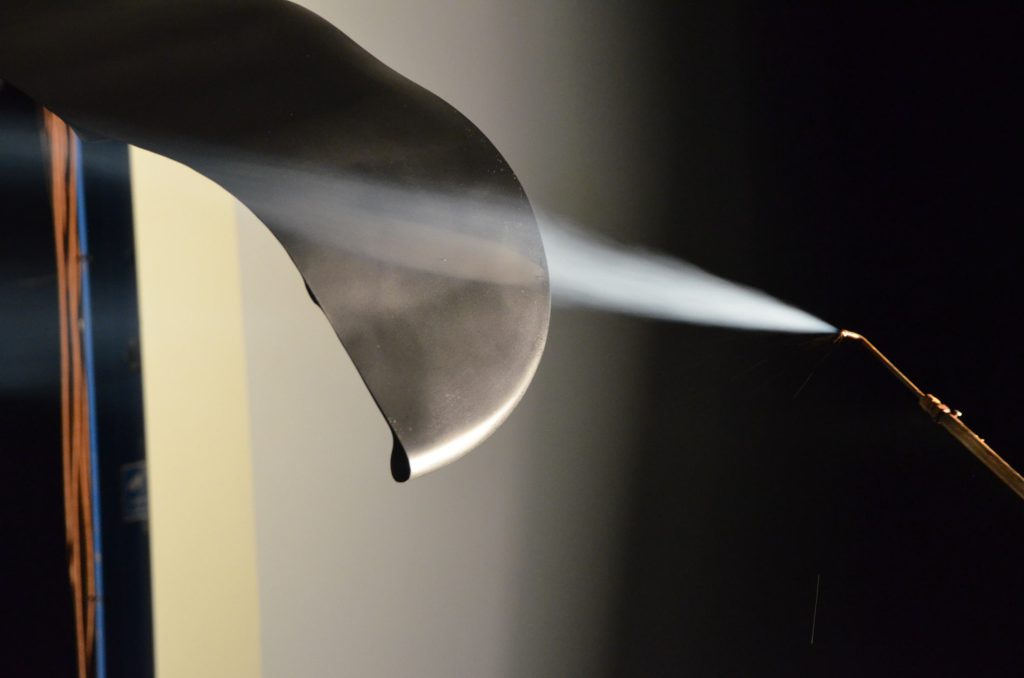
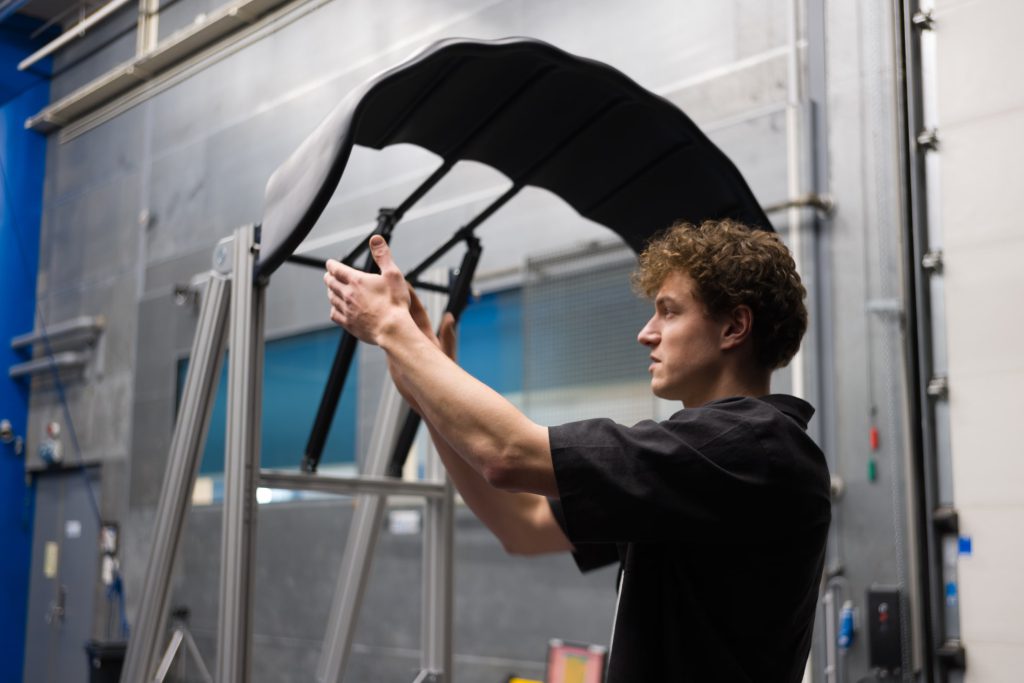
To validate these models, Poland conducted groundbreaking experiments at TU Delft’s Open Jet Facility, one of Europe’s leading low-speed wind tunnels. These tests included wind tunnel trials with inflatable, rigidized soft kites, replicating realistic in-flight pressure and tension conditions.
High-resolution Particle Image Velocimetry (PIV) and photogrammetry were used to measure both the airflow and the shape deformation of the kite in detail. The data gathered allowed Poland to calibrate his models, reducing the gap between simulation and reality. His validation results confirm that such simulation tools can be reliably used to predict and optimize kite flight performance.
Why It Matters for Kitepower
Realistic control models: Incorporating deformation into simulations leads to more precise predictions of lift, drag, and control response.
Flight optimization: Understanding how the kite deforms in real time allows control systems to optimize the power cycle, increasing energy output and durability.
Hardware-light solutions: Combining accurate modeling with minimal sensors reduces system complexity—an essential advantage for mobile wind energy units.
In short, Jelle Poland’s research on real-time state estimation and aerodynamic deformation provides the technological backbone for autonomous, high-performance kite power systems. His work is not just theoretical—it’s physically tested and directly applicable to commercial energy systems being deployed by innovators like Kitepower.
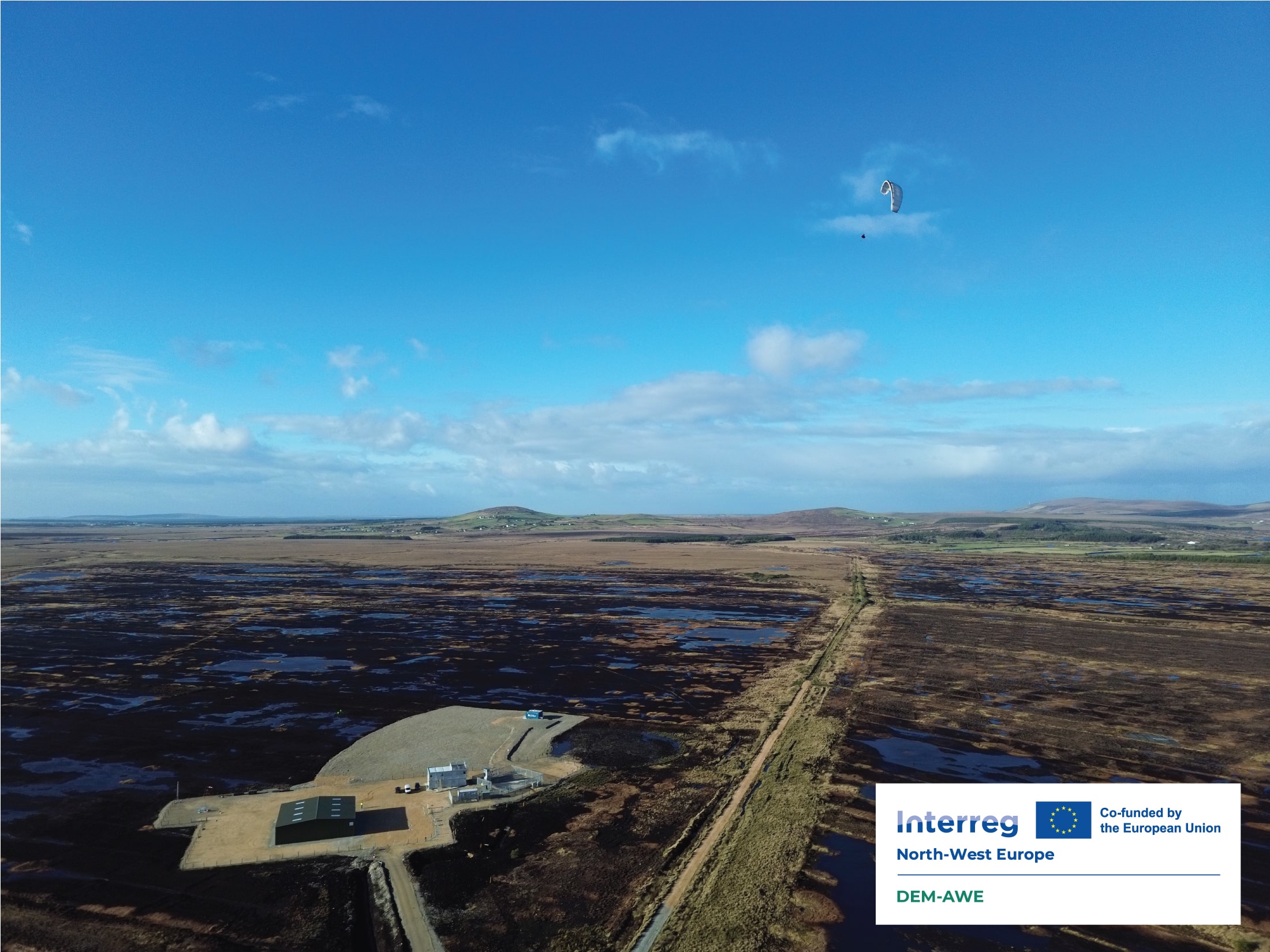
The DEM-AWE (Demonstrating Mobile Airborne Wind Energy) project has successfully come to an end, marking a significant step forward in the development and deployment of mobile AWE systems. As a natural successor to the MegaAWE project, DEM-AWE enabled critical testing and refinement of Kitepower’s first product, the K-BESS (Kite-Battery Energy Storage System), pushing the system closer to commercial readiness.
Testing in Ireland strengthens system performance
The project’s testing campaign was conducted at the RWE Airborne Wind Energy dedicated test site in Bangor Erris, County Mayo, Ireland, and proved to be a pivotal phase in validating the system under challenging conditions. The demanding environment on the West Coast of Ireland allowed the team to test system resilience, control algorithms, and operational procedures. These trials contributed directly to improving the robustness and reliability of the solution, which was designed for mobile, and off-grid deployment.
Battery integration and pilot deployment in the Netherlands
Earlier this year, Kitepower integrated an external battery system from Greener Power Solutions, a key technology partner. This implementation and initial testing were conducted in Bangor Erris as part of the system’s testing phase before deployment at Kitepower’s commercial site.
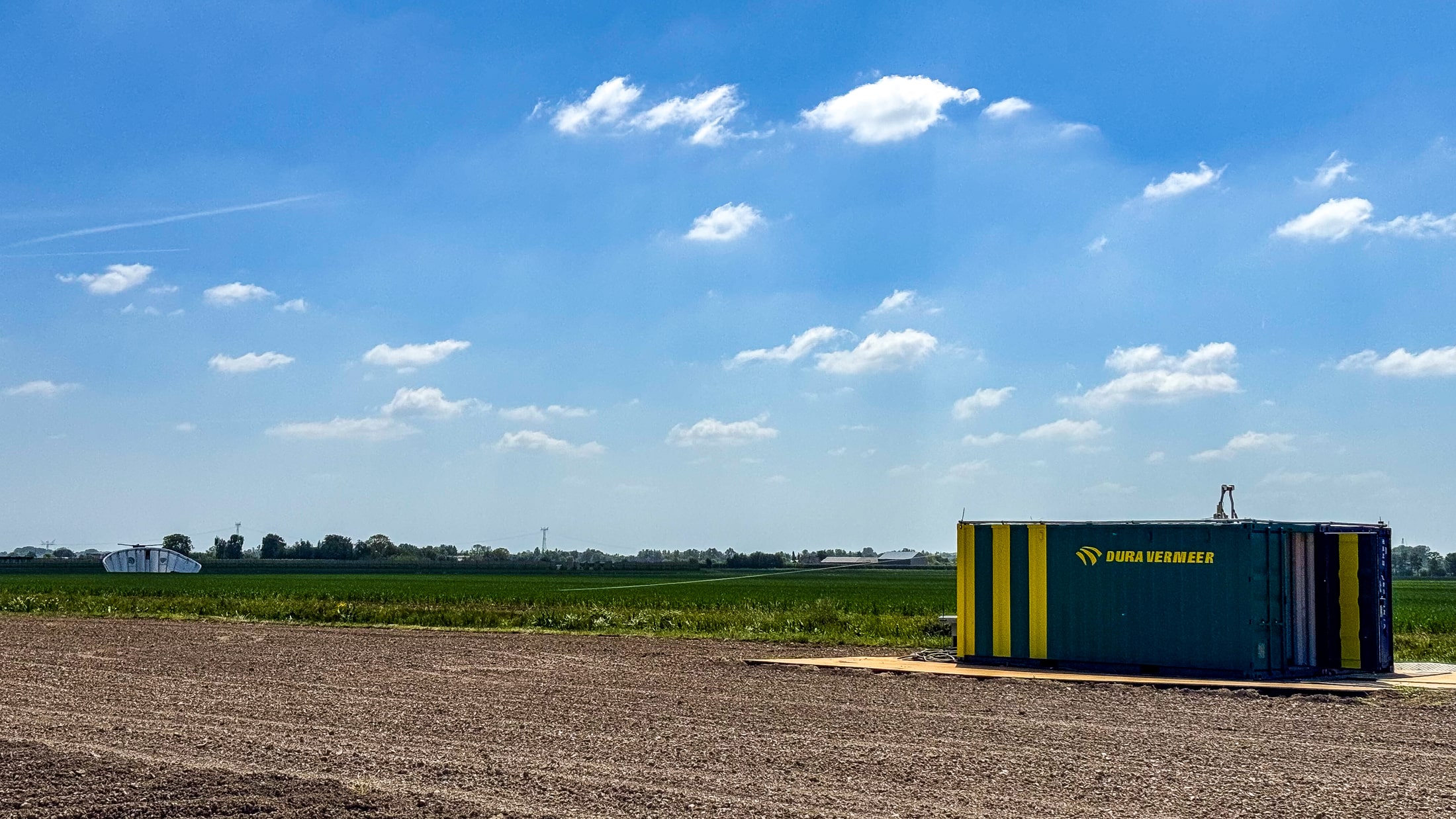
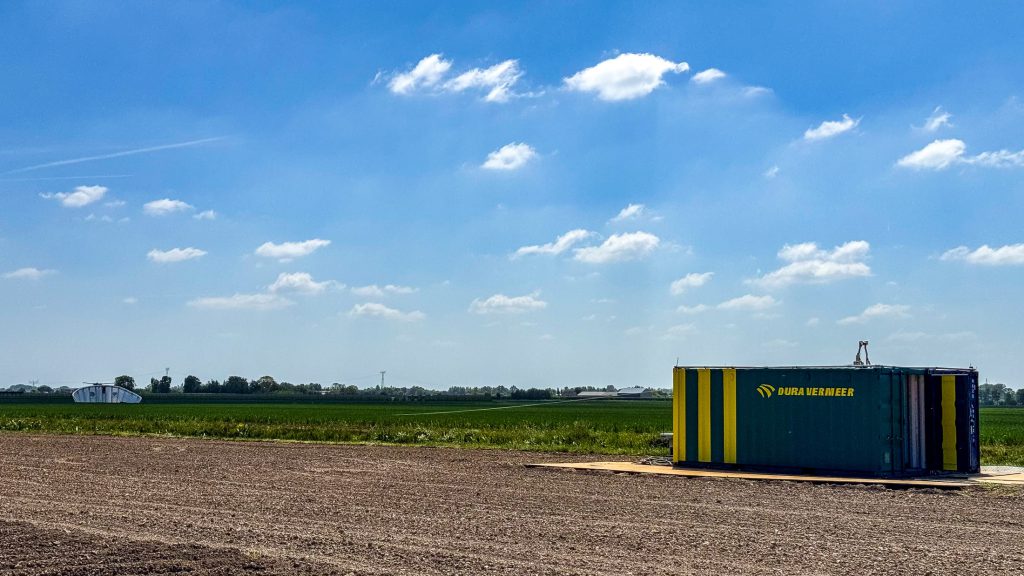
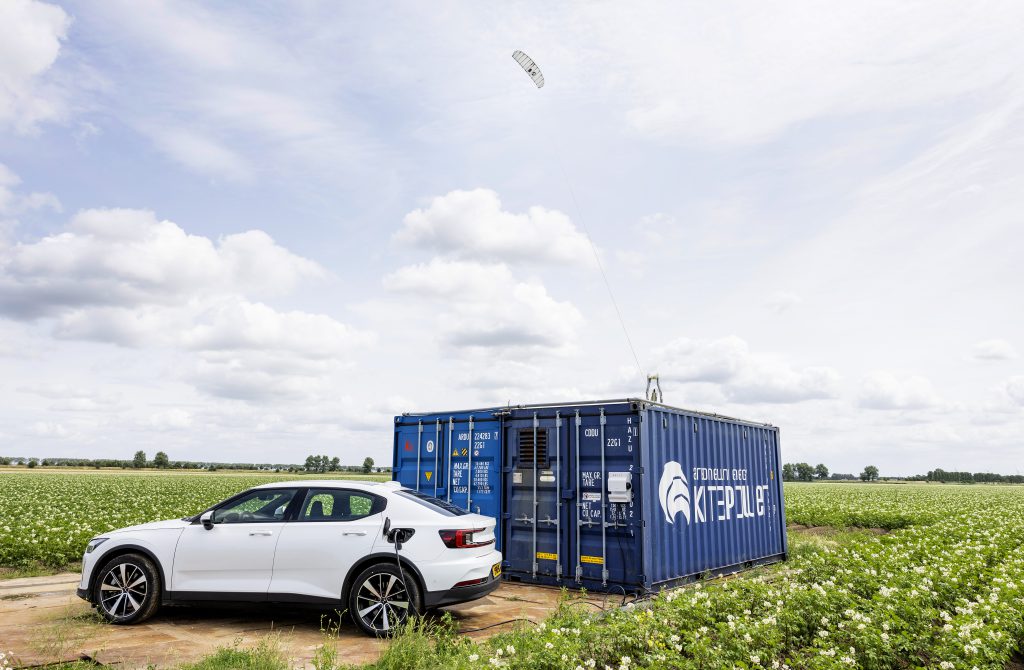
Following validation, the complete system was deployed during a pilot project in the Netherlands with construction company Dura Vermeer, where it was tested to power electric excavators and trucks, showcasing how Airborne Wind Energy can contribute directly to sustainable, large-scale construction operations such as a riverbank renovation.
The Consortium behind DEM-AWE
The DEM-AWE project (funded by Interreg North-West Europe) was made possible by a dedicated consortium of partners:
Airborne Wind Europe – Project leader, responsible for policy coordination, sector engagement, and communications
Laminak Energy – Commercialization support and project management
Special thanks are extended to RWE for supporting the project and for enabling the critical testing campaign in Ireland with the integrated battery.
Powering the future of EU Islands
As DEM-AWE concludes, Kitepower is turning its focus to new opportunities, particularly in supporting EU island communities in their efforts to decarbonize. Many of these regions rely on diesel imports and face high energy costs. The knowledge and experience gained through DEM-AWE will now be applied to demonstrate how Kitepower’s mobile AWE systems can offer reliable, clean, and locally generated energy for remote and isolated grids.
Kitepower, the Dutch pioneer in airborne wind energy systems (AWES), is launching a new crowdfunding campaign to scale the deployment of its mobile wind power solutions. Following the successful introduction of a rental-first strategy and key international collaborations, this campaign marks an exciting opportunity for anyone to participate in Kitepower’s journey toward reshaping renewable energy generation. The funds raised will be used to scale production, further develop the technology, and bring Kitepower systems to more locations worldwide.
Kitepower systems generate electricity by flying kites
Kitepower’s technology unlocks access to wind energy in locations that are unsuitable for traditional turbines. You can now express interest in limited Kitepower shares and support this clean energy revolution.
The vision
In the race to achieve carbon neutrality by 2050, the world urgently needs innovative renewable energy solutions that go beyond the status quo. Kitepower provides a lightweight, mobile, and highly efficient alternative to conventional wind turbines by using large kites to harvest electricity at higher altitudes. These systems drastically reduce material use—by up to 90%—while maintaining a high energy yield and a strong capacity factor.
Kitepower’s mobile 100 kW system, the Hawk, is especially suited for off-grid applications, construction sites, islands, and other remote areas. Since November 2024, the system has been available for rental, enabling businesses to access clean energy on demand without large upfront investments. This rental-first approach lowers the barrier to adoption and speeds up the transition to renewables.
Strong momentum and key partnerships
Kitepower has been steadily expanding its partnerships and technology. In September 2024, the company teamed up with French startup Beyond the Sea to further develop kite designs, tapping into new applications beyond land-based energy generation. The company was also nominated for the 2024 Earthshot Prize, a testament to its potential to drive large-scale impact in the renewable energy space.
Proven technology with strong backing
With over €4.1 million raised in previous funding rounds, Kitepower has successfully developed and tested its mobile airborne wind systems, proving their viability in real-world conditions. The company is now entering the next phase, bringing its technology to market on a larger scale. “The future of airborne wind energy is about smarter, more adaptable solutions,” said Johannes Peschel, CEO of Kitepower. “With our airborne wind energy systems, we unlock the power of the wind where traditional turbines can’t go—using a fraction of the materials and at a lower cost. This crowdfunding campaign gives investors a unique opportunity to be part of a game-changing shift in renewable energy.”
About Kitepower
Kitepower, a leading start-up in airborne wind energy systems (AWES), develops innovative and cost-effective alternatives to existing wind turbines by using kites to generate electricity. Thanks to the company’s patented game-changing technology, the Dutch start-up aims to tackle the global energy issue by offering system integrators that operate distributed energy grids a scalable technology that can significantly decrease CO2 emissions, therefore, accelerate the race to zero emissions.
Kitepower (registered trademark of Enevate BV), co-founded in 2016 by Johannes Peschel and TU Delft associate professor Roland Schmehl, is a spin-off from the TU Delft’s Airborne Wind Energy (AWE) research group. The company has developed its Airborne Wind Energy System (AWES) with a ‘Fast Track to Innovation’ grant from the European Union’s Horizon 2020 framework programme, guided by a mentoring partnership with tech incubator YES!Delft and with support from late wind energy expert and angel investor Henk Hutting (1952-2021).
Kitepower was established as a result of the work done by TU Delft’s pioneering kite power research group of the former astronaut Wubbo Ockels. Research in AWE generation was initiated by Wubbo Ockels in 1993, followed by a patent application for the Laddermill technology in 1997. Already in 2007, the first 20kW Kitepower system demonstrated the proof of concept. Currently, Kitepower is developing one of the first containerised on-shore AWES to enter the market.
About Fundernation
Fundernation is a leading European equity crowdfunding platform that connects startups and growth-stage companies with investors who want to support impactful innovation. The platform allows anyone to invest in promising ventures and be part of their journey from early-stage to scale.
Kitepower is proud to announce a new partnership with Ember Flash Aerospace to explore the integration of advanced wildfire detection into our airborne energy systems. Ember Flash’s AI-driven sensor, Vigilant Detect, is designed to identify early signs of wildfire smoke — a critical capability, especially during high-wind conditions when wildfires spread rapidly.
This aligns perfectly with the operational strengths of the Kitepower Hawk, which generates renewable energy precisely when it is windy. By combining clean energy generation with real-time wildfire detection, this collaboration aims to deliver dual benefits to communities: sustainable power and increased safety.
“At Ember Flash, just like our trailblazing partners at Kitepower, we’re operating in the power zone—where vision, velocity, and precision collide. Kitepower is redefining what’s possible in airborne energy, and together we’re not just adapting to wildfire threats—we’re sending it, pushing boundaries, and staying ahead of every shift the wind throws our way.” — said Joseph Norris, CEO, Ember Flash Aerospace.
The first test flights will evaluate the performance of the Vigilant Detect sensor mounted on the Kitepower Hawk. The system, nicknamed “The Vigilant Hawk”, is a mobile Airborne Wind Energy System that not only generates green energy but also functions as an early-warning system for wildfires, enabling faster response times and potentially saving lives and property.
“We’ve planned a full testing campaign to see how the sensor performs in flight and what iterations might be needed to fully integrate it with the Kitepower Hawk system,” said Andrei Luca, Head of Operations at Kitepower. “It’s an ideal match. The Hawk is designed to operate off-grid or on mini-grids, which are often located in remote areas. That makes it perfect for monitoring the horizon for wildfire threats from the height of the kite while providing clean power.”
This partnership opens a new chapter for both companies and offers tremendous potential for innovation at the intersection of energy, safety, and AI-powered sensing.Stay tuned as we begin flight testing and prepare The Vigilant Hawk for real-world deployment.
We’re proud to announce a new milestone for Kitepower: for the first time, our airborne wind energy system is being tested as an alternative power source on a major Dutch construction site in partnership with Dura Vermeer.
As part of the Dike Reinforcement Tiel-Waardenburg project, Dura Vermeer is exploring how our technology can support their transition to emission-free, sustainable construction. The project already operates 40 heavy electric machines, such as cranes and trucks, running on green electricity, making it one of the Netherlands’ frontrunners in clean construction. The addition of Kitepower’s system, combined with battery storage from Greener Power Solutions will help provide renewable power on-site, reducing the need for diesel generators.
“Working with an innovator like Dura Vermeer gives us a fantastic opportunity to further develop our technology in real-world conditions,” says Kitepower Founder Johannes Peschel. “It’s an exciting step toward bringing airborne wind energy into the mainstream for construction and beyond.”
Dura Vermeer’s team is committed to ambitious climate targets, aiming to cut CO₂ emissions by 50% by 2030 and 90% by 2050. Their innovation manager, Evan van der Holst, sees great potential: “This is a chance to learn what this technology can mean for the construction sector. We’re gathering valuable data and experience to help advance this innovation.”
At Kitepower, we’re excited to contribute to Dura Vermeer’s mission and to demonstrate how airborne wind energy can play a role in building a greener future. Over the coming months, the system’s performance will be closely monitored and evaluated, and we look forward to sharing the results.
Kitepower has appointed Dr Pieter Willemsas their new Chief Executive Officer, marking a strategic shift as the company prepares to commercialise its innovative renewable energy system.
Pieter brings extensive international leadership experience in the energy and mobility sectors. Over the past 25 years, he has driven the development of innovative and disruptive businesses—both as a start-up entrepreneur and as an executive within global organizations. Pieter is passionate about advancing sustainability and is well-equipped to lead Kitepower into its next phase of growth and scale-up.
“I am excited to join Kitepower at such a crucial moment,” said Dr Pieter Willems. “This company has proven its technology in the field, and we now have a unique opportunity to reshape the future of wind energy—making it more accessible, flexible, and sustainable.”
Johannes Peschel, who founded Kitepower in 2016, added: “Pieter is the best candidate from over 300 applicants. I’m proud of what we’ve achieved so far and look forward to continuing to contribute as we take the next big step. This is the next step to complete the management team and deliver on Kitepower’s ambition to global leadership in airborne wind energy.“
Kitepower has developed a cutting-edge airborne wind energy system that uses large kites to generate electricity from higher-altitude winds—offering a lightweight, mobile, and cost-effective alternative to conventional wind turbines. To date, the company has 15 years of R&D experience where over 300 successful flights were logged and 11 pilot projects are completed. With commercialisation in sight and the first customer projects in the pipeline, Kitepower is targeting the UK, Netherlands, and Germany as initial markets, with a specific focus on providing remote renewable power solutions to the rural construction industry.
Kitepower has reached an exciting new milestone in the development of its airborne wind energy system. At our test site in Ireland, we successfully completed 3,400 flight cycles in just 79 days, with a record-breaking 800 cycles achieved in a single period. This means Kitepower has been in operation for 30% of all working days. A strong testament to the reliability and growing commercial viability of our technology.
Advancing airborne wind energy, one cycle at a time
Every flight cycle brings us closer to realizing the full potential of airborne wind energy. Operating 30% of all working days proves that our system is capable of consistent, real-world performance. With each launch and landing, we gather critical data to refine our technology, increase efficiency, and enhance reliability.
By continuously testing and optimizing our system, we are paving the way for a future where Kitepower can deliver renewable energy to remote areas, off-grid communities, and industries looking for a sustainable power solution.
What’s next?
Reaching this flight record is an important step, but we’re not stopping here. Our team is focused on further improving uptime and operational capacity to maximize energy output. With every cycle, we are getting closer to making airborne wind energy a scalable, accessible alternative to conventional wind power.
Follow our journey as we continue pushing the boundaries of what’s possible with Kitepower!
Kitepower is pleased to announce that RWE has granted the company an extension to continue using the Bangor Erris test site in County Mayo, Ireland, marking a key milestone on the first anniversary of the facility. This opportunity allows Kitepower to finalise testing for its Hawk Kite-BESS system and advance research on larger-scale airborne wind energy solutions. With its vast space and excellent wind conditions, the site is ideal for scaling up Kitepower’s innovative technology.
Kitepower has had a very successful start in its testing programme, achieving over 90 flights and 100 hours of test time. With its vast space and excellent wind conditions, the RWE test site is perfect for scaling up Kitepower’s innovative technology. The extension for the site will allow Kitepower to finalise testing of its kite system and advance research on larger-scale airborne wind energy solutions.
Team expansion on site
This extended collaboration strengthens the relationship between Kitepower and RWE and provides valuable insights into the large-scale offshore potential of airborne wind energy. Kitepower has established a permanent crew on-site to ensure continuous research and development efforts.
Johannes Peschel, CEO of Kitepower, shared, “This extended collaboration not only strengthens the partnership between Kitepower and RWE but also opens the door to valuable insights into the large-scale offshore potential of airborne wind energy. Flights have increased to five per week on average, with total flight time surpassing 35 hours. Our test kite, the Falcon, now has a capacity of up to 100 kW, compared to the 30 kW capacity of our smaller Hawk system.”
Peter Lefroy, Head of Offshore Development, RWE Ireland & UK West, said, “We are pleased that RWE will continue to partner with Kitepower to further develop this new wind energy technology. RWE is exploring many different technical innovations to identify whether airborne wind technology could complement our existing renewables portfolio of offshore and onshore wind, solar energy, and battery storage.”
Delft, 16 December 2024 – Kitepower, a leader in airborne wind energy, has announced that its innovative Hawk wind energy system is now available for rent through Skoon’s platform. This collaboration provides industries such as construction and defence with access to a sustainable, mobile energy solution for off-grid operations.
Reliable, clean energy for remote locations
The Kitepower Hawk system generates 1 up to 4 MWh of clean energy per week, seamlessly integrating with battery storage for a continuous, zero-emissions power supply. Ideal for off-grid construction sites, military operations, and temporary installations, the Hawk offers a cost-effective and environmentally friendly alternative to traditional diesel generators, and logistically complex and cost-ineffective battery swaps.
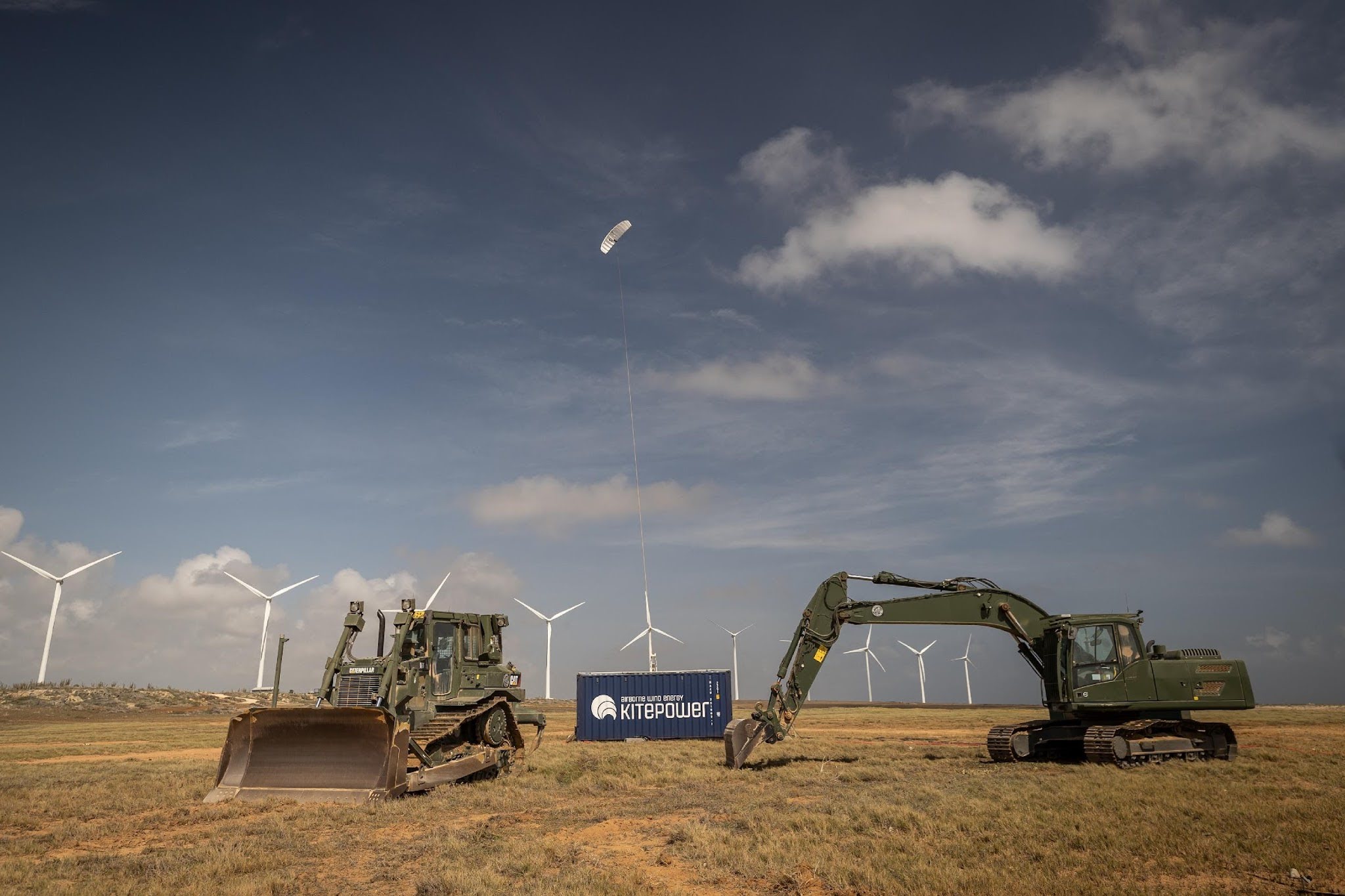
A recent deployment for the Dutch Ministry of Defence on Aruba demonstrated the Hawk system’s ability to deliver reliable green energy in remote locations. Now, through Skoon’s platform, companies can rent the Hawk system, ensuring a sustainable and efficient energy source for their operations.
Why rent the Hawk system?
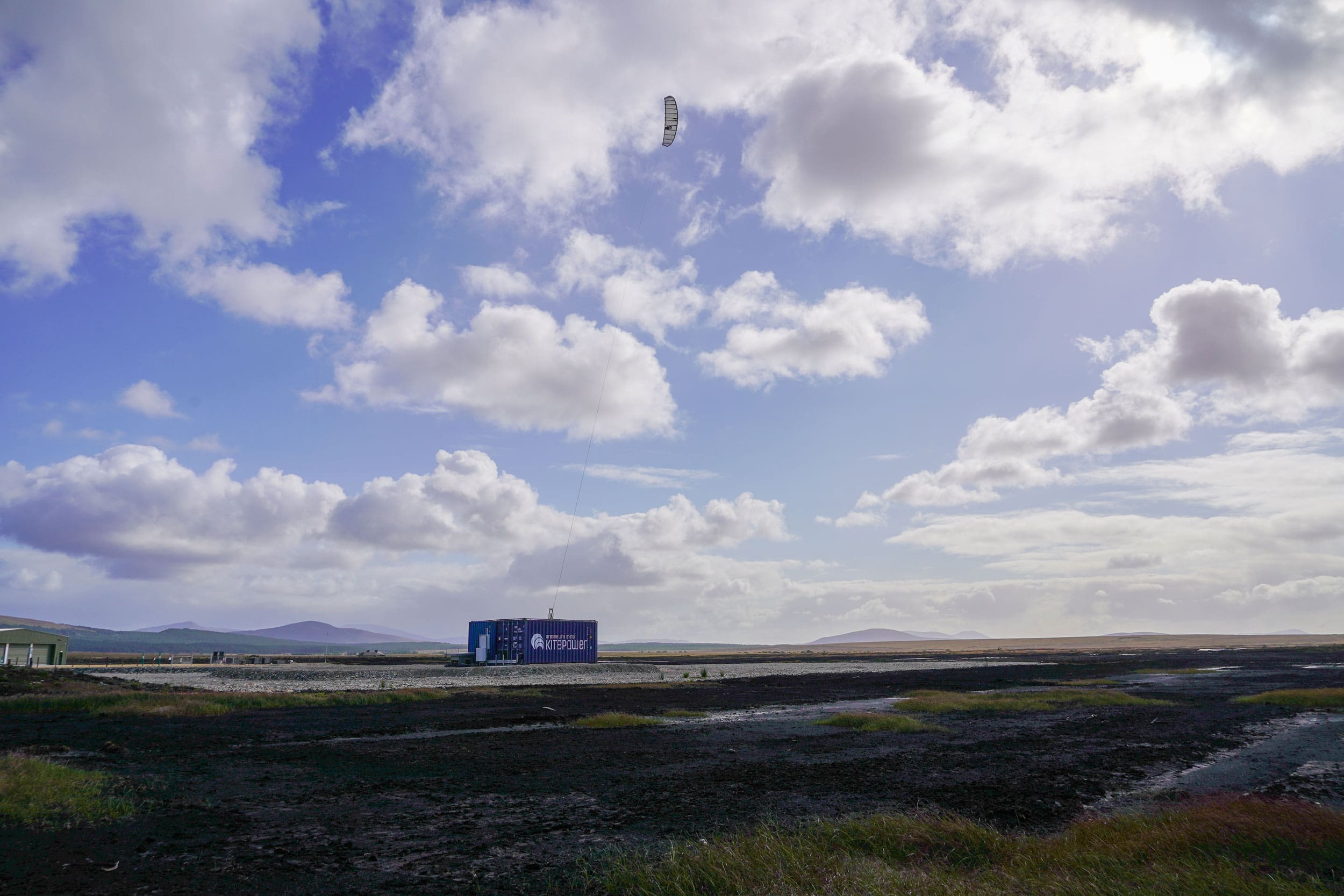
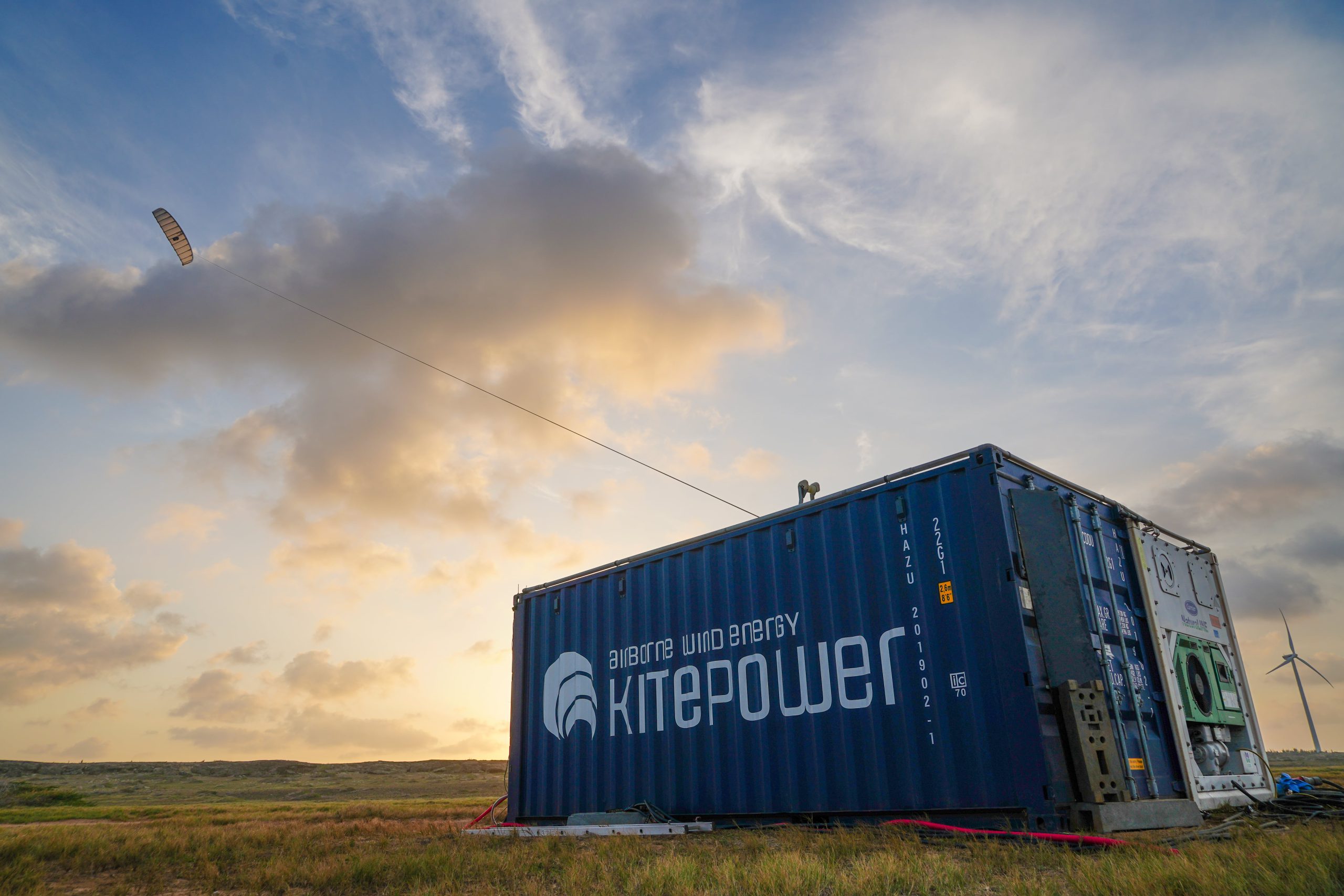
Quick, flexible deployment: The Hawk’s compact design, housed in a 20ft shipping container, makes it easy to transport and install at remote sites.
Zero emissions on site: The Hawk provides clean, renewable energy, supporting sustainability goals and compliance with environmental regulations.
Cost-effective: Renting the Hawk system removes the need for expensive diesel generators and lowers overall operational costs.
A sustainable energy solution for the future
By making the Kitepower Hawk available through Skoon, Kitepower offers businesses a scalable solution for powering off-grid operations sustainably. This partnership highlights the increasing demand for clean, mobile energy systems that reduce carbon footprints and help meet environmental commitments.
Delft, 28 November 2024 – Kitepower, a pioneer in airborne wind energy systems, today announced the launch of a new rental-first model for a select group of early customers. This initiative responds to the rising demand for flexible, cost-effective clean energy solutions across Europe.
Bridging the Gap in Renewable Energy Generation
As the world moves towards a carbon-free future, demand for renewable energy is surging. However, traditional sources like solar and conventional wind turbines are limited by factors such as low-wind areas, insufficient sunlight, limited land availability, underdeveloped infrastructure, and complex installation in floating offshore environments. Kitepower’s airborne wind energy systems provide an ideal solution to these challenges, offering a flexible and cost-effective alternative in key sectors:
Construction: With many projects stalled due to emission restrictions, such as the €1.2 billion in planned developments in the Netherlands, Kitepower can help construction companies decarbonize their operations and provide on-site energy access.
Filling the gap of traditional wind: Kitepower can unlock 80 GW of untapped wind potential in Germany alone, providing a viable solution to help Germany meet its target of 8 GW of annual wind power capacity in regions where traditional wind is not feasible.
Energy Companies: For offshore wind farms, particularly in floating offshore locations, Kitepower offers a cost-effective way to harness green energy in difficult-to-reach environments on floating platforms.
Kitepower’s rental-first model provides European construction companies with a low-risk entry point to electrify their machinery fleets with sustainable on-site energy. Customers can test the benefits of airborne wind energy — emission-free power generation — at competitive rates, without committing to long-term investments. The first customer will gain a first-mover advantage, including priority service and delivery of future Kitepower systems.
“Our customers need flexible, low-cost options to explore new technologies,” said Johannes Peschel, CEO of Kitepower. “Our rental-first model offers a win-win: businesses can experience Kitepower and get access to clean energy with minimal upfront investment, while we gather valuable feedback to improve future Kitepower systems.”
A phased approach to clean energy access – the future is now
Starting in mid-2025, Kitepower’s system will deliver an initial energy yield of 1 MWh per week, with projections to rise to 4 MWh per week as kite and flight efficiency improve. This solution is designed for areas without access to the grid and will help shape the development of Kitepower’s Falcon system, which is expected to offer a 5-7 year ROI.
Looking to the future
Kitepower’s rental-first model addresses the growing demand for flexible, affordable clean energy, enabling businesses to adopt sustainable practices while advancing airborne wind energy innovation. This strategy also accelerates the global energy transition by unlocking untapped wind potential and providing an affordable renewable solution for a wider range of locations.
On October 1st, 2024, Volkan Salma successfully defended his PhD thesis, “Safety and Reliability of Commercial Airborne Wind Energy Systems,” at TU Delft. His research delivers critical insights aimed at improving the safety and reliability of Airborne Wind Energy (AWE) systems, which have the potential to become an important future provider of renewable energy.
Advancing safety and reliability in AWE
Salma’s work tackles major challenges in AWE technology by enhancing system safety through advanced engineering methods like Failure Mode and Effects Analysis (FMEA) and Fault Tree Analysis (FTA). These tools effectively identify potential failure points and bolster operational robustness. Additionally, Salma introduced a Fault Detection, Isolation, and Recovery (FDIR) system designed to detect and resolve issues in real-time, ensuring safer and more reliable operations.
Paving the way for certification
Beyond enhancing safety, Salma’s research lays out a clear roadmap for AWE systems to achieve airworthiness certification. By employing the Specific Operations Risk Assessment (SORA) framework, his findings facilitate the large-scale, commercial deployment of AWE technology across Europe.
Kitepower proudly supports this significant advancement in the AWE sector, reinforcing our commitment to safety and innovation in renewable energy.
Kitepower is excited to announce a new partnership with the University of Freiburg’s Systems Control and Optimisation Laboratory, led by Prof. Moritz Diehl. This collaboration aims to improve digital modeling techniques for Kitepower’s innovative kite-based wind energy systems and will form the foundation of two new industrial master’s theses focused on digital modeling and advanced flight control techniques.
Airborne Wind Energy is a groundbreaking approach to renewable energy that uses tethered kites to capture wind power at higher altitudes, where winds are stronger and more consistent than those reachable by traditional wind turbines. Kitepower, based in Delft, Netherlands, has been at the forefront of this technology with its advanced leading edge inflatable kite system.
The partnership with the University of Freiburg will address one of the critical challenges in making Kitepower’s systems fully autonomous: improving the control of the kite’s flight path through all stages of operation. The collaboration will be structured around two distinct projects, each contributing to key areas of development.
Digital twin
The first project will focus on developing a digital twin—a sophisticated simulation model of the kite power system. This model will accurately replicate the design and operation of Kitepower’s soft-wing kites and will be validated using real-world flight test data. Once validated, the digital twin will serve as a critical tool for solving trajectory optimisation problems, improving flight path planning, and refining overall control strategies. The result will be greater system efficiency and reliability.
Flexible flight path
The second project will aim to improve Kitepower’s flight path planning by reducing its reliance on heuristic methods. By exploring advanced computational techniques, this project seeks to make the flight path planning process more flexible and adaptable to varying wind conditions. This will significantly enhance system performance, enabling Kitepower’s technology to respond dynamically to changing environmental factors.
Kitepower is eager to see the outcomes of both projects, confident that the advancements will deliver significant value.
Kitepower was selected to participate in DB Mindbox Startup Pitch Program in Berlin, organized by M. The event, focused on the future of railway construction, brought together 20 leading startups competing in categories such as energy generation and construction development.
The program started with an introduction and a series of workshops, led by industry experts, providing each startup a dedicated 30-minute session to engage in detailed discussions on their products and challenges. Kitepower made use of this opportunity to present its unique approach to energy generation and its potential contributions to the future of railway infrastructure.
In the afternoon, each startup delivered a four-minute pitch, outlining their solutions to the panel of judges and attendees. Despite a strong presentation, the award in the energy generation category was ultimately granted to Volta Energy.
Although Kitepower did not secure the top prize, the jury praised the company as “exciting and highly innovative.” The event provided significant value, offering expert feedback and extensive networking opportunities. The day concluded with a dinner, allowing participants to build connections with key industry leaders and potential collaborators.
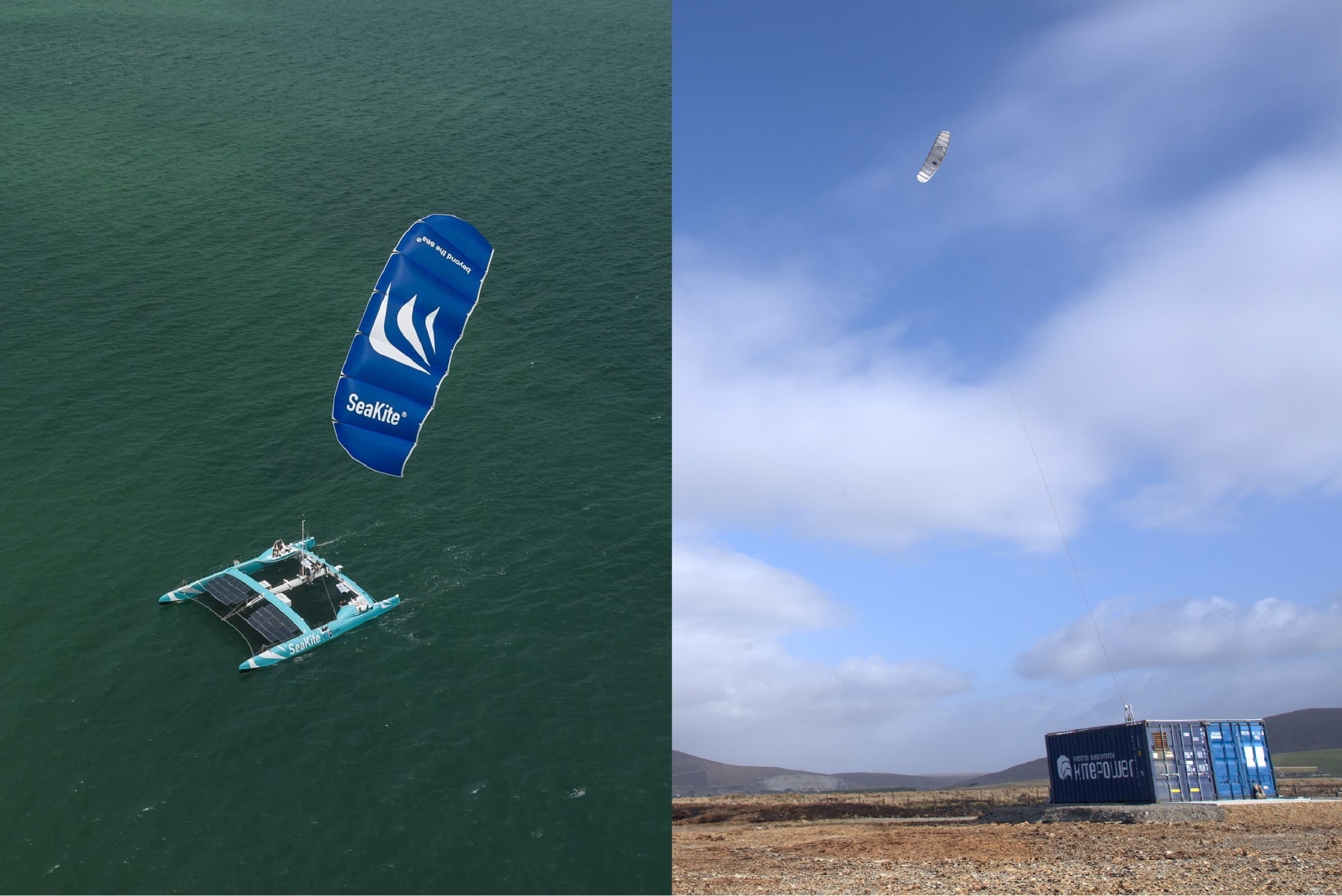
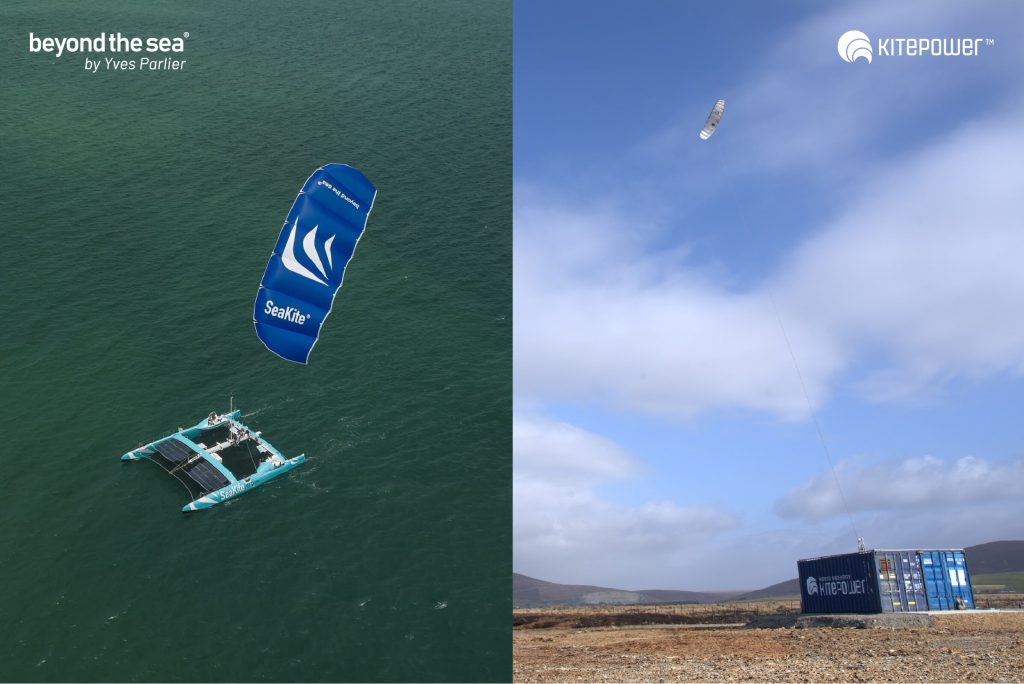
Delft, Netherlands/Bordeaux, France, 10 September 2024 – Kitepower, a pioneering Dutch company in airborne wind energy, and Beyond the Sea, a French startup specialising in marine propulsion systems, are pleased to announce the renewal and expansion of their groundbreaking partnership. Following the success of their initial collaboration in 2023, the two companies are launching a new, ambitious project aimed at revolutionising kite design, simulation, characterisation, and control.
A strengthened alliance for innovation
This renewed partnership, extending through June 2027, will operate across both the Netherlands and France, with a key focus on advancing modelling, simulation, and the development of a unified simulation platform. By combining their expertise and innovative approaches, Kitepower and Beyond the Sea aim to deliver cutting-edge kite designs that significantly enhance the efficiency and sustainability of energy generation and marine propulsion systems.
Key areas of collaboration
The collaboration will target three strategic areas: advanced kite design and development, academic research, and system modelling & mechatronics. This joint effort is expected to significantly elevate the technological capabilities of both companies, positioning them as leaders in the field. The partnership will facilitate the exchange of detailed plans and construction methodologies for kites and their bridles. Jointly developed simulation algorithms will refine kite design processes, and innovative methods, sensors, and algorithms will validate and enhance kite performance. Continuous sharing of experimental data will drive this iterative process.
Leadership Perspectives
Johannes Peschel, CEO of Kitepower, underscored the importance of this collaboration: “Renewing and expanding our partnership with Beyond the Sea is a major milestone in our mission to transform airborne wind energy. Our initial collaboration was highly successful, and we are excited to deepen our cooperation by aligning our software and simulation platforms, coordinating research activities, and synchronising the work of our PhD students with Beyond the Sea’s research team.”
Yves Parlier, CEO of Beyond the Sea, highlighted the synergy between the two companies: “This partnership showcases the powerful collaboration between our teams. By leveraging our combined strengths, we are setting new standards for innovation and sustainability in kite technology. Together, we are poised to deliver groundbreaking advancements that will redefine the future of kite applications.”
About Beyond the Sea
Beyond the Sea, created by Yves Parlier, develops and commercialises kite traction systems able to deliver part or all of the energy needed to propel a ship depending on the navigation area, the performance and the characteristics of the boat. The company aims to answer the problem of energy dependence of shipowners with a goal to decarbonise maritime transport. The company has developed SeaKite, a fully automated kite traction system, to reduce the emissions of the equipped vessel. Connected to the boat by its lines, SeaKite pilots itself automatically and can fly statically or dynamically depending on the desired traction force. The kite can be used alone or in addition to another mode of propulsion. Currently available in several different sizes, the system adapts to all types of boats.
Delft, 16 July 2024 – Kitepower is excited to share the results of a recent life cycle assessment (LCA) of our 100 kW Falcon airborne wind energy (AWE) system. As the European Commission targets 60 GW of offshore wind energy by 2030 and 300 GW by 2050, AWE technology offers a sustainable alternative, utilising higher altitude winds with lower material demands.
A study from TU Delft, adhering to ISO 14040 and 14044 guidelines, assessed the Falcon system’s environmental impact from cradle to grave. The results are promising: the Falcon system shows a global warming potential (GWP) of 8.6 kg CO2 eq/MWh and a cumulative energy demand (CED) of 144.1 MJ/MWh. This is two times lower than traditional wind and nuclear power which settles at around 12 kg CO2 eq/MWh, almost ten times lower than solar PV with 70.2kg CO2 eq/MWh and one hundred times less than the electricity produced by diesel generators. The most significant impact stemmed from the ground station, particularly its housing, frame, and generator.
Moreover, incorporating recycling strategies could further reduce GWP and CED by 13%, highlighting the importance of sustainable practices in AWE technology.
Hybrid power plant
We also explored a hybrid power plant (HPP) configuration combining AWE, solar, and batteries, using site data from a military base in Marseille, France. This setup demonstrated the highest sustainability and the lowest levelized cost of electricity (LCoE), proving both economically and environmentally advantageous over traditional diesel generators. Moving forward, Kitepower aims to enhance accuracy with an AWE-specific database and broaden the sustainability assessment with additional impact indicators. By integrating LCA findings into a comprehensive techno-economic framework, we are committed to advancing the future of renewable energy.
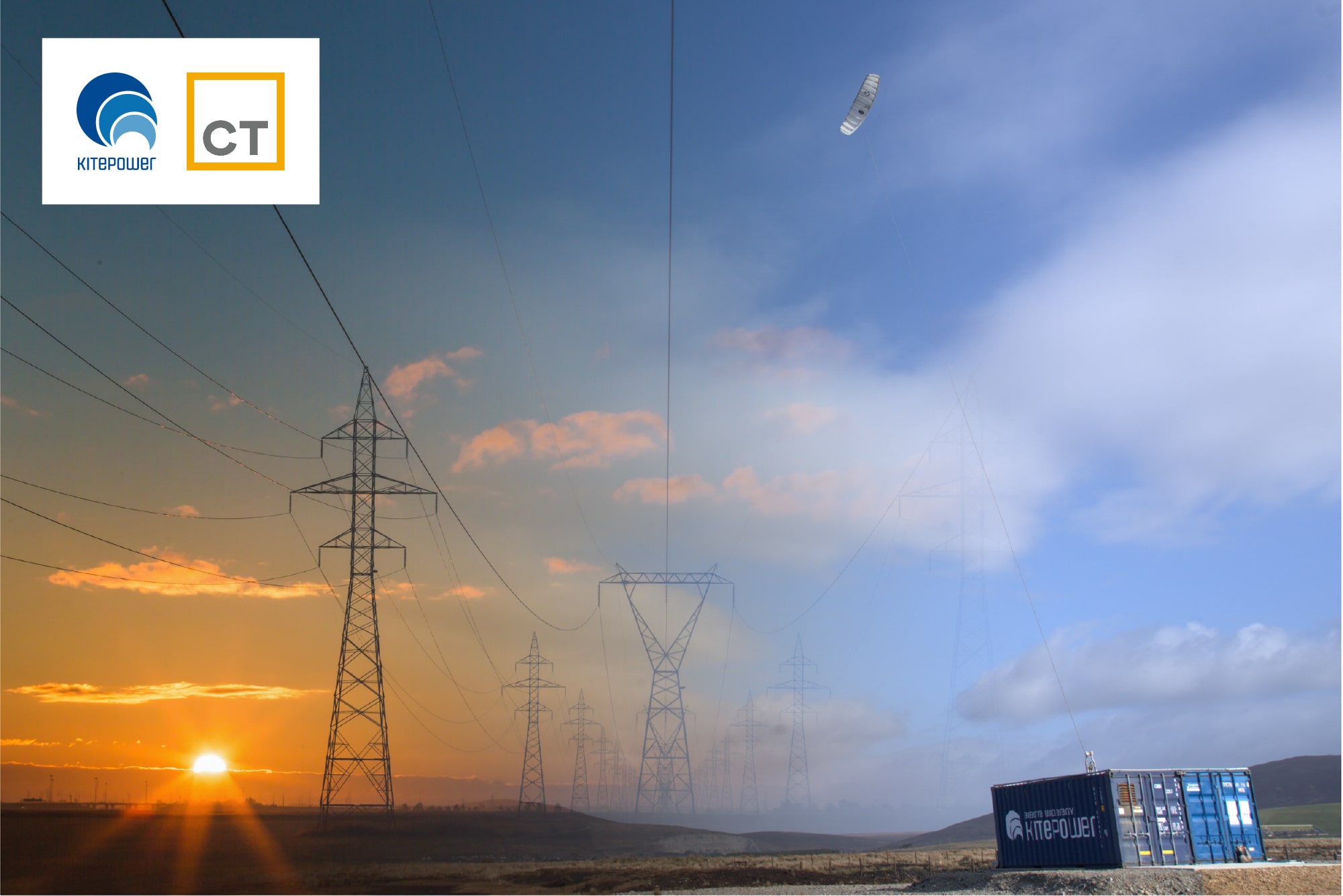
Delft, 9 July 2024- Kitepower, a leading Airborne Wind Energy company specialising in kites for power generation, announces its partnership with CT Ingenieros for the development of an Airborne Wind Energy (AWE) test site on La Gomera, one of the Canary Islands.
This announcement follows discussions aimed at demonstrating a Kitepower system and assessing the feasibility of La Gomera Island as an Airborne Wind Energy Center of Excellence. CT Ingenieros, Kitepower’s primary partner in the project, with the support of the Island Government, is planning to construct a Flight Test Center on the island, with Kitepower as the first occupants.
The project, scheduled to commence in the fourth quarter of 2024, will consist of three phases. The initial phase will involve a three-month demonstration and feasibility study with our system onsite to showcase the capabilities of the FTC. The second phase will focus on power production for a duration of one to two years, followed by continuous operation in the third phase spanning four to six years.
Airborne wind energy innovation
“This collaboration represents a significant milestone for both Kitepower and the entire Airborne Wind Energy industry,” stated Johannes Peschel, CEO of Kitepower. “We are excited to demonstrate our systems and explore the potential of La Gomera as a hub for airborne wind energy innovation. This project will not only advance our technological capabilities but also contribute to the economic, social, and environmental objectives of La Gomera.”
“CT is proud to be a part of this groundbreaking project,” said Agustin Arjonilla, Senior Consultant at CT. “We believe that Airborne Wind Energy has the potential to revolutionise the way we generate clean energy, and we are confident that this testing site will play a key role in advancing this technology in this particular area.“.
The partnership between Kitepower and CT underscores the importance of public-private collaborations in fostering innovation and sustainable development. La Gomera sees this project as an opportunity to diversify its economy and emerge as a leading center for energy generation and technological advancement.
A few weeks ago, Kristian Petrick, Secretary General of the sector association Airborne Wind Europe signed a Memorandum of Understanding with the Cabildo of La Gomera: “We are very grateful for the opportunity that La Gomera offers to the AWE sector. With CT Ingenieros and Kitepower leading the project, we are confident that we will see the first kites flying on La Gomera already by the end of this year, demonstrating how fast this technology can be implemented.”.
About CT
CT is a leading engineering company throughout the complete product lifecycle. For more than 35 years, our mission has been to provide innovative services and technological solutions that help our clients be more effective and competitive. Today, CT´s success is driven by 2.000+ engineers in seven countries providing end-to-end expert support to leading customers in the aeronautical, space, naval, automotive, railway, energy and industrial plant sectors.
About Airborne Wind Europe
Airborne Wind Europe is the association of the Airborne Wind Energy (AWE) sector. It promotes the development and deployment of AWE Systems, i.e. tethered kites that generate energy from high-altitude wind. Airborne Wind Europe encourages collaboration and exchange between technology developers, policy makers, research institutes and universities, as well as other stakeholders like public administration and authorities, suppliers, utilities, energy consumers, investors and financial institutions.
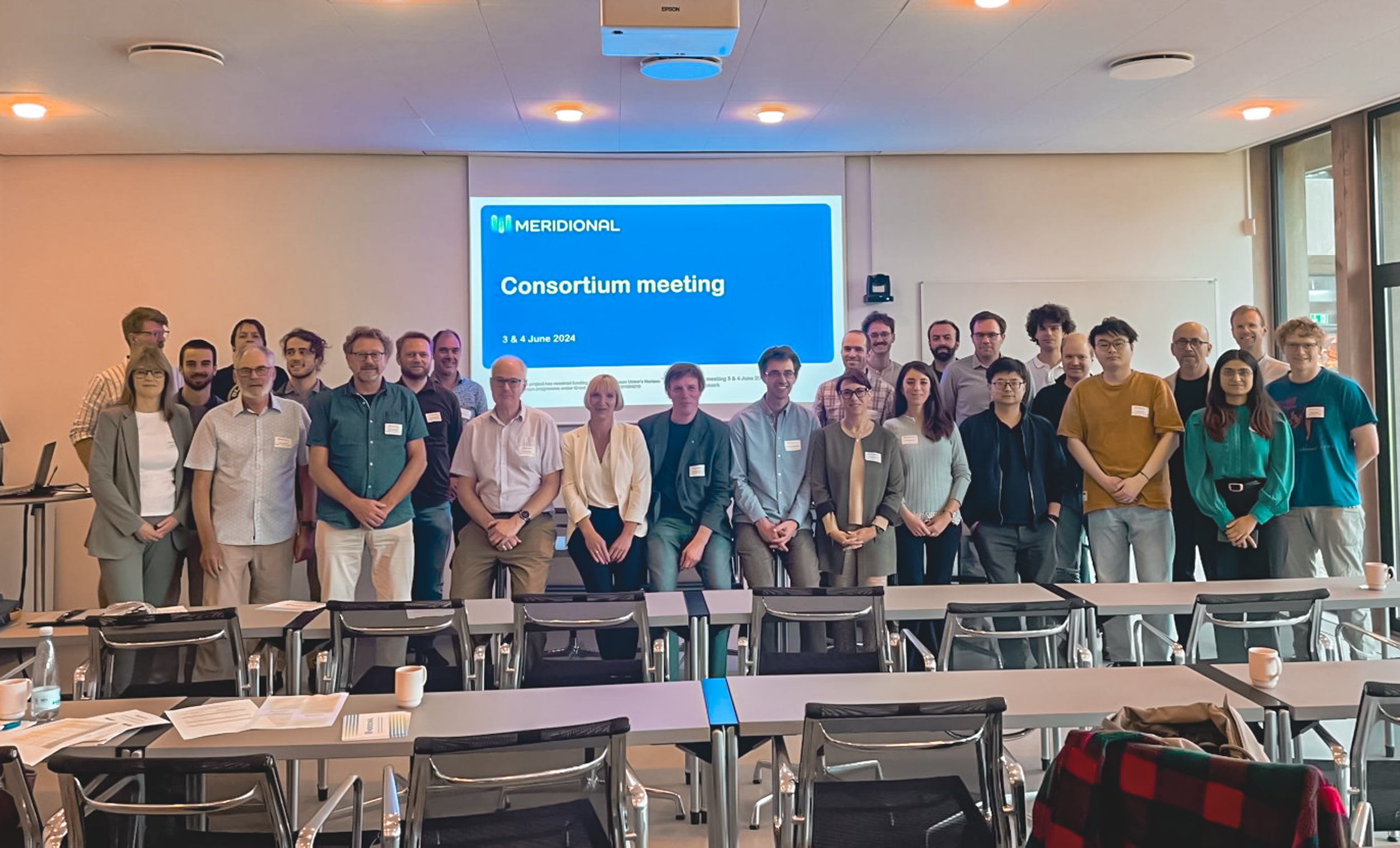
Delft, 2 July, 2024-Last month, Eduard Ijsselmuiden from Kitepower and Roland Schmehl from TU Delft, co-founder of Kitepower attended the 4th Consortium Meeting of the MERIDIONAL project in Copenhagen, Denmark. Hosted by the Technical University of Denmark (DTU), this event brought together leading experts to share insights, discuss progress, and plan future innovations in the wind energy sector.
Kitepower presented significant advancements and shared valuable knowledge with consortium partners. The meeting highlighted the creation of a comprehensive knowledge and data hub on wind energy, spearheaded by MERIDIONAL and its sister projects, AIRE and FLOW. This open-access repository aims to make critical data accessible, fostering industry-wide innovation and collaboration.
Progress and innovation
“Meeting in person allows us to brainstorm, collaborate, and share knowledge effectively—key elements for progress and innovation” stated Roland Schmehl. Eduard Ijsselmuiden added: “The event underscored the consortium’s commitment to advancing wind energy technology as it nears the halfway point of its project duration.”
Looking ahead, Kitepower and its partners will continue their research and development efforts. One recent initiative by Oriol Cayon, a PhD candidate under Schmehl’s supervision, involved developing a sensor fusion approach in close collaboration with Kitepower. This approach, currently being tested, has the potential to significantly improve the system’s performance and robustness.
As a leader in airborne wind energy, Kitepower remains dedicated to advancing sustainable solutions and contributing to the global energy transition. The next consortium meeting is scheduled for November 2024 in Milan, Italy, hosted by the Politecnico di Milano.
Delft, Netherlands, 18 June 2024 – Kitepower is pleased to announce Claudio Vergara as its new Chief Technology Officer (CTO). Vergara has extensive experience in both hardware and software development, especially in providing clean and reliable electricity to developing countries.
Claudio joins Kitepower from ZOLA Electric, where he played a key role in advancing access to sustainable energy. He has deep knowledge of the electric power sector, focusing on distributed controls and battery energy storage systems. His commitment to clean energy fits perfectly with Kitepower’s mission to transform wind energy.
Extensive experience
“We are thrilled to welcome Claudio Vergara to the Kitepower team”, said Johannes Peschel, CEO of Kitepower. “His extensive experience in the renewable energy sector and his proven ability to drive innovation to the market make him the ideal candidate to lead our technology development and product release efforts. We are confident that Claudio’s expertise and Silicon Valley mindset will be instrumental in accelerating our progress towards a more sustainable future powered by kites.”
Claudio Vergara shared his excitement about joining Kitepower: “I am very happy to be joining a company doing bold, high-potential innovation like Kitepower. I have dedicated my career to making low-carbon electricity available to everyone, and I look forward to contributing to Kitepower’s next-generation solutions in renewable energy. I’m confident this journey will have a big impact on the future of sustainable energy systems.“.
Kitepower’s airborne wind energy systems use high-altitude winds to generate electricity more efficiently than traditional wind turbines. Claudio Vergara’s addition to the team highlights Kitepower’s commitment to advancing renewable energy technology.
Kitepower announces its participation in the DEM-AWE project, which aims to demonstrate the practicality and effectiveness of the Kitepower Hawk, a kite-powered battery energy storage system (K-BESS). Building on insights from the successful MegaAWE project, K-BESS is designed to deliver clean energy to remote areas and industries that currently rely on diesel generators.
Expanding Renewable Energy
The DEM-AWE project will use airborne wind energy (AWE) to power a mobile battery storage system. This innovative approach has the potential to provide renewable energy to places that are hard to reach, like islands and rural areas, as well as to industries like construction and agriculture.
Partnership and Support
The DEM-AWE project is supported by the Interreg North-West Europe programme and includes a group of partners:
Kitepower (Netherlands): The developer of the K-BESS technology.
Airborne Wind Europe: An organization promoting airborne wind energy.
BlueWise Marine (Ireland): Providing local expertise and support.
Laminak Energy (France): Offering market analysis and consultancy.
Mayo County Council (Ireland): Engaging with the local community.
How It Works
Over the next 12 months, Kitepower will lead the demonstration of the K-BESS system and continue its development of the Hawk. This pre-commercial demonstrator can charge a 400kWh battery in 10 hours, providing a reliable source of renewable energy. The trial will collect important data and feedback to help improve the technology.
Planning for the Future
BlueWise Marine and Laminak Energy will use the results from the demonstration to create a plan for introducing K-BESS and other airborne wind energy systems to the market in northwestern Europe. This will include using GIS models to identify the best locations for these technologies.
Airborne Wind Europe will share the demonstration results and work to include K-BESS in regional energy plans. Mayo County Council will help engage the local community, ensuring they understand and support this new technology.
The DEM-AWE project is a major step towards meeting Europe’s energy goals. By bringing renewable energy to more places and reducing dependence on fossil fuels, Kitepower and its partners are helping to build a cleaner, more sustainable future.
Turin, Italy – May 23, 2024 – Kitepower, a pioneer in airborne wind energy systems, today presented the results of its participation in the NATO DIANA energy resilience challenge at a Demo Day in Turin, which marks the culmination of the NATO DIANA Accelerator Program’s inaugural group of selected companies. Kitepower presented its mobile renewable energy solutions for dual use applications.
Kitepower was selected for the prestigious NATO DIANA Accelerator program from over 1600 applications. Through the program, the company has been able to further validate its revolutionary Kite-powered Battery Energy Storage Systems (Kite BESS) Hawk and Falcon for dual use applications. Kitepower has been working with the Dutch Ministry of Defense in the Netherlands since 2018 in various research & development projects. The NATO DIANA program has allowed Kitepower to significantly strengthen its mission readiness levels enabling the use of the Kite BESS to replace diesel gensets and reduce reliance on vulnerable supply chains of fossil fuels.
Highlights:
Innovative Dual-Use Technology: The Kite BESS Hawk integrates airborne wind energy with battery storage, providing a mobile, renewable energy solution that is both cost-effective and environmentally friendly.
Operational Robustness: Program participation has enhanced kite design, modeling, and control, ensuring the operational robustness of the Kite BESS Hawk in remote and challenging environments.
Scalability and Future Plans: Post-demonstration, Kitepower plans to scale up the solution to 1 MWh storage and 100 kW power, solidifying its leadership in mobile renewable energy.
Johannes Peschel, CEO and co-founder of Kitepower, expressed his enthusiasm: “We are extremely proud to be part of the inaugural group of the NATO DIANA Accelerator Programme. This opportunity has significantly advanced our mission to revolutionise off-grid energy with our mobile renewable energy solution. The support from NATO and the expertise we’ve gained have been invaluable in demonstrating the capabilities of our Kite BESS Hawk.”
Kite BESS Hawk: a game-changer for off-grid energy
The Kite BESS Hawk is set to disrupt the off-grid energy sector by offering a clean, mobile, and cost-effective alternative to traditional diesel generators. This innovative system integrates a battery energy storage system (BESS) with a kite for in-situ charging, eliminating dependence on fossil fuels. It presents exciting possibilities for deploying renewable energy in remote locations where temporary power or mobile energy storage is essential.
Addressing energy challenges in remote areas
Remote areas often rely on diesel generators for power, which leads to high costs, operational challenges, and significant CO2 emissions. While BESS offers an alternative, they typically require frequent recharging using fossil fuels. Kitepower’s kite system, seamlessly connected to a BESS, provides a sustainable and efficient solution.
Revolutionizing wind energy with airborne technology
Kitepower’s Airborne Wind Energy (AWE) technology represents a paradigm shift, with an 80% reduction in material usage compared to traditional wind energy systems. The technology’s scalability to at least 10 MW and potential for fully automated rigid-winged drones as kites highlight the future possibilities in renewable energy. Aligned with its go-to-market strategy, Kitepower has successfully tested a 60m2 prototype in Aruba, validating the system’s efficiency and scalability.
Delft, April 26, 2024- Kitepower is proud to announce a monumental achievement in the renewable energy sector. The German Renewable Energy Act (EEG) is set to include provisions specifically recognising and supporting Airborne Wind Energy (AWE), a significant milestone for the industry.
With a track record of pioneering AWE systems that promise to reshape the renewable energy landscape, Kitepower has been instrumental in advocating for the integration of AWE into national energy policies. Today, the company celebrates the culmination of these efforts as Germany, a key player in Europe’s renewable energy transition, embraces AWE as part of its energy strategy.
Solarpakket
Recent developments in the German parliament saw the approval of the “Solarpakket,” which includes provisions for AWE-specific tariffs within the EEG. This historic decision marks the first time such measures have been implemented, signaling a major recognition of AWE’s potential contribution to the renewable energy mix.
Speaking on the significance of this milestone, Johannes Peschel, Kitepower’s CEO remarked, “This is a historic moment for the AWE industry and for sustainable energy as a whole. Germany’s decision to include AWE in its renewable energy framework not only validates our technology but also paves the way for accelerated adoption across Germany, Europe and beyond.”
Benefits
The incorporation of AWE-specific tariffs within the EEG is poised to unlock a range of benefits for the industry. These include enhanced access to financing, heightened international visibility, improved research and development conditions, regulatory adaptations, and the strengthening of European industrial leadership in renewable energy innovation.
As Kitepower continues to push the boundaries of renewable energy technology, the company remains committed to driving positive change and shaping a sustainable future for generations to come. With AWE gaining recognition and support on the global stage, the potential for clean, reliable, and scalable energy solutions has never been brighter.
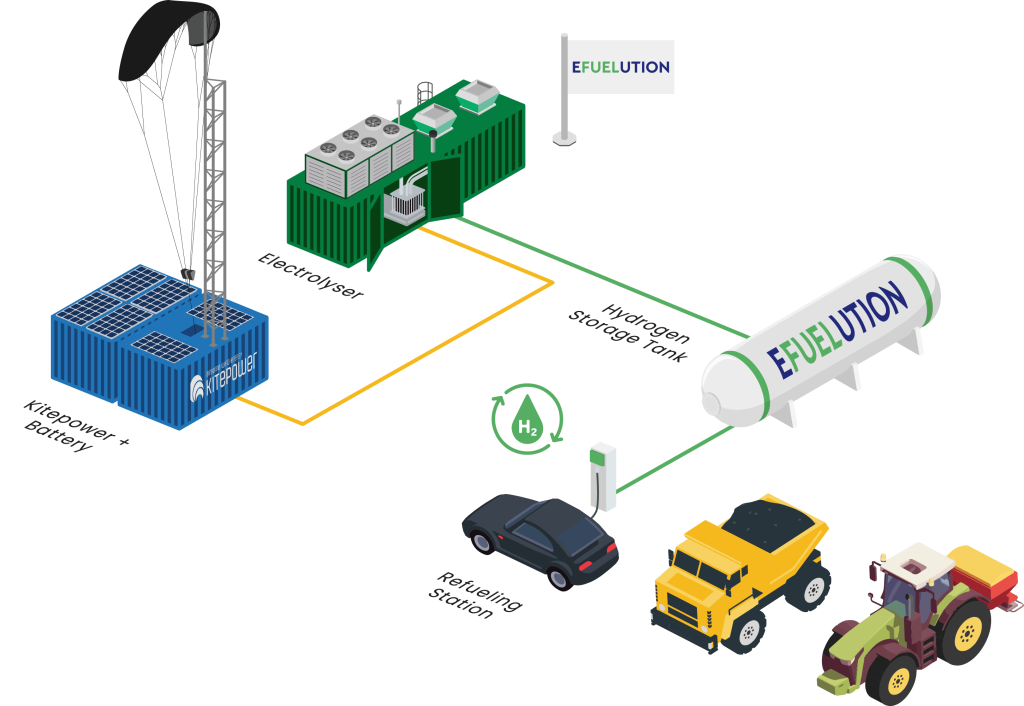
Delft, 23-04-2024– Kitepower and eFuelution, an end-to-end project developer specialising in hydrogen electrolysis projects, are pleased to announce a strategic collaboration. This partnership aims to accelerate the development of green hydrogen projects, leveraging Kitepower’s innovative technology as a complementary solution.
Green hydrogen stands at the forefront of the energy transition as a clean and versatile fuel, applicable across various sectors including transportation, industry, and infrastructure. With the Netherlands aiming for carbon neutrality by 2050, green hydrogen emerges as a pivotal element in achieving this ambitious goal. eFuelution, as a leading project developer dedicated to green hydrogen initiatives, is committed to accelerating and optimizing hydrogen project development, ensuring a sustainable and cost-effective energy solution.
Synergising innovation for sustainable solutions
The collaboration between Kitepower and eFuelution brings together cutting-edge technologies and expertise from both the airborne wind energy and hydrogen sectors. By uniting efforts, the partners seek to expedite the realization of green hydrogen projects while simultaneously driving down production costs.
Johannes Peschel, CEO of Kitepower: “We are excited to cooperate with eFuelution, exploring new applications of our system in the hydrogen sector. This partnership empowers us to seamlessly integrate our technology into hydrogen projects, making significant strides in the energy transition.”
Hanno Hardenbol, Project Development Consultant – Clean Energy at eFuelution: “Our partnership with Kitepower allows us to leverage their groundbreaking technology with the potential to revolutionize green hydrogen production. Together, we are poised to deliver sustainable and economically viable hydrogen projects.”
About Kitepower
Kitepower is a leading start-up in Airborne Wind Energy (AWE), developing innovative and cost-effective alternatives to existing wind turbines. Kitepower’s patented technology is a game-changer in the wind energy sector: Kitepower uses up to 90% less material with the potential to be twice as efficient as conventional wind turbines with the same power output. Unlike conventional wind turbines, Kitepower systems do not require resource-consuming towers or heavy foundations and are therefore highly mobile and easy to install. The system is able to harness stronger and more persistent winds at higher altitudes, providing capacity factors of more than 0.5 and in return cost-effective electricity generation.The company was founded in 2016 by Johannes Peschel and Roland Schmehl as a spin-out from the airborne wind energy group at Delft University of Technology. Kitepower has a team of experienced engineers and technicians working on the development of innovative wind energy systems. The team works with, among others, the Dutch Ministry of Defence, the United Nations World Food Program, and leading energy provider RWE Renewables.
About eFuelution
Hydrogen is the future for the green industry and mobility, and eFuelution is committed to realizing the crucial hydrogen projects. Combating climate change is eFuelution’s main goal. We develop innovative solutions for generating and transporting hydrogen, which will accelerate the energy transition and contribute to a greener future.
Concretely, eFuelution develops cost-effective hydrogen energy projects that bring world-class innovation to life.
Kitepower, the Dutch startup specialising in sustainable energy generation using kites, has been granted a permit by the Dutch Human Environment and Transport Inspectorate (ILT) to conduct ‘Beyond Visual Line of Sight’ (BVLOS) flights. This marks a significant milestone for Kitepower in the development and commercialisation of its technology.
With the recently obtained BVLOS permit from the ILT, Kitepower’s innovative kites, the Hawk and the Falcon, can now operate without a person ‘on-site’, utilizing remote monitoring instead. This substantially decreases the cost of operation and increases the operational range of the kites, enabling Kitepower to generate wind energy in previously inaccessible areas, including offshore wind farms. The ILT permit also allows Kitepower to conduct BVLOS flights in segregated and atypical airspace, creating new opportunities for deploying the kites in locations with specific regulations or restrictions. This permit represents a significant advancement in the commercialisation process for Kitepower, opening the door to larger-scale deployment of their technology products, further enhancing the efficiency of energy generation.
Milestone
“This permit is a crucial milestone for Kitepower,” says CEO Johannes Peschel. “It enables us to further develop and demonstrate our technology to potential customers. This permit not only enhances the commercial attractiveness of our technology but also opens the door to new applications and market segments. We are confident that BVLOS flights will play a crucial role in our operations and the future of wind energy in general.“
ILT granted Kitepower the permit after an extensive safety assessment of the technology. Throughout this process, Kitepower conducted comprehensive tests to demonstrate the safety and reliability of the kites. To date Kitepower had been flying under a ‘Visual Line of Sight’ permit which required a trained operator on site. Under the most recent European drone legislation, the ILT permit can be used as the basis for a cross-border application in order to fly in any other European country. The EU legislation and recent permit will help enable rapid deployments of Kitepower systems in places where portable power is needed. Construction sites, agriculture and island communities, currently relying on diesel generators, can now benefit from renewable power generation and storage on site.
Kitepower has been nominated for the prestigious Earthshot Prize 2024 by TU Delft, marking a significant recognition for the contributions to sustainable energy solutions. TU Delft has been exclusively invited as the only Dutch University by the Earthshot Prize organisation to submit nominations.
The Earthshot Prize, founded by Prince William and the Royal Foundation, aims to discover and celebrate innovative solutions to the world’s greatest environmental challenges.
TU Delft, renowned for its commitment to technological innovation and sustainability, recognised Kitepower’s work in harnessing wind energy using airborne wind systems. These systems involve tethered kites or drones that soar high into the sky, capturing powerful winds to generate electricity. The technology not only holds the promise of revolutionising the renewable energy landscape but also aligns with the Earthshot Prize’s mission of driving positive change on a global scale.
Gratitude
Johannes Peschel, CEO of Kitepower, expressed his gratitude for the nomination, stating, “We are honoured and thrilled to be nominated for the Earthshot Prize by TU Delft. This recognition underscores the importance of our mission to harness the power of the wind in a sustainable and innovative way. At Kitepower, we believe in pushing the boundaries of what’s possible, and this nomination is a testament to the hard work and dedication of our team.”
Kitepower’s technology presents a unique approach to wind energy generation, offering the potential to access higher and more consistent wind speeds at higher altitudes, ultimately increasing efficiency. This nomination not only highlights Kitepower’s success but also emphasises the role of Dutch innovation in contributing to global sustainability efforts.
Environmental challenges
The Earthshot Prize winners will be announced later this year, showcasing the outstanding efforts of individuals and organisations working towards a more sustainable and resilient future. Kitepower’s nomination by TU Delft positions them as a frontrunner in the quest for transformative solutions to address the pressing environmental challenges of our time.
We are delighted to announce the latest additions to the Kitepower family as we welcome six exceptional individuals who are set to play key roles in driving innovation and growth within our organisation. With a focus on strengthening our software, flight test, and operations teams, these talented professionals join us during an exciting phase in Kitepower’s journey towards sustainable energy solutions.
Expanding Our Horizons: Kitepower’s Second Location in County Mayo, Ireland
At the forefront of our expansion is the establishment of a brand-new team for our second Kitepower location in County Mayo, Ireland. We extend a warm welcome to Mark Devas and Padraic Doherty, who will be instrumental in driving our test campaigns from this joint test location, in collaboration with our partner RWE. This strategic move aligns with the finalisation of the development of our groundbreaking Kite Battery Energy Storage System, the Kitepower Hawk.
Empowering Software Development
Our software development capabilities receive a significant boost with the addition of three talented professionals. Antonio Velasco joins us as a Simulation and Flight Dynamics Engineer, contributing his expertise to propel our simulations to new heights. Alexandre Guerra strengthens our embedded software team, bringing innovation and efficiency to our software development processes. Additionally, we are thrilled to welcome back Kitepower alumni Bert Buchholz, who returns as the Head of Software, adding his wealth of experience to lead our software team towards new milestones.
Enhancing Organisational Foundations
In a strategic move to solidify the foundation of our organisation, we are proud to welcome Judith van Gelder to the Kitepower family. Judith brings a wealth of experience in HR, finance, and facility management at industrial sites. Her expertise will play a crucial role as we gear up for further growth and innovation.
As we welcome these talented individuals, we invite you to join us in extending a warm welcome to Judith, Antonio, Bert, Alexandre, Padraic, and Mark. Their diverse skills and experiences align perfectly with our mission to revolutionise the world of sustainable energy.
As we continue to grow, there are more opportunities to join the Kitepower family. Explore our open positions and be part of our journey towards a sustainable future: Kitepower Careers.
We look forward to the exciting times ahead as we collectively strive to innovate in the world of sustainable energy.
Brussels / Delft 30 November 2023- In a significant stride toward reshaping off-grid energy solutions, Kitepower, the Dutch innovator in wind energy harnessing using kites, proudly announces its selection for the inaugural group of the NATO DIANA Accelerator Programme. This endorsement reinforces Kitepower’s commitment to advancing off-grid energy through the recently announced pioneering Kite-powered Battery Energy Storage System (Kite BESS) Hawk.
Johannes Peschel, CEO, and co-founder of Kitepower, expressed enthusiasm, stating: “We are extremely proud to be part of the inaugural group of the NATO Diana Accelerator. It shows clear support for our aim to revolutionize off-grid energy with the first renewable energy solution that is also mobile. Access to the network, expertise and test locations of NATO allows us to further validate our Kite-powered Battery Energy Storage System, or Kite BESS, for deployments in a remote dual-use setting.”
NATO DIANA was launched in 2023 and aims to bring start-ups together with operational end users, scientists, and systems integrators to advance compelling deep tech with dual-use solutions for the Alliance. It leverages a network of more than 10 affiliated accelerator sites and nearly 90 test centers. Kitepower will be supported by the Takeoff DIANA Accelerator in Turin (Italy) focused on the aerospace and advanced hardware sectors. The project will support kite design, modeling and control improvements as well as demonstration of operational robustness of the Kitepower Hawk. Following the project, Kitepower plans to productize and scale up the solution to a remarkable 1 MWh storage and 100 kW power, further solidifying its position as a leader in the mobile renewable energy sector.
The recently announced Kitepower Hawk is set to revolutionize off-grid energy by introducing the world’s premier mobile renewable energy solution. The ground-breaking system seamlessly integrates a Battery Energy Storage System (BESS) with a kite for in-situ charging, providing a clean, independent, and cost-effective alternative to conventional mobile diesel generators. It opens new avenues for deploying renewable energy in markets where temporary power or mobile energy storage is essential.
Tackling Energy Challenges in Remote Settings
In remote or challenging-to-access settings, energy supply often relies on diesel generators, presenting operational challenges, high costs, and substantial CO2 emissions. Battery Energy Storage Solutions (BESS) offer an alternative but require frequent recharging, typically using energy from fossil fuels. Kitepower’s kite system, connected in-situ to a battery energy storage, presents a solution that addresses these challenges. The Kite-powered BESS is cost-effective, using 80% fewer materials than alternative renewables, ensuring minimal installation effort, and requiring only occasional consumable resupply. The system is largely autonomous and can be operated by two people, making it a reliable and efficient choice for remote or temporary settings.
The Airborne Wind Energy technology employed by Kitepower represents a breakthrough, boasting an 80% reduction in material usage compared to conventional wind energy. The scalability of the technology to at least 10 MW and its potential for fully automated rigid-winged drones as kites highlight the immense possibilities in the renewable energy landscape. Kitepower, closely following its go-to-market roadmap, has demonstrated a 60m2 prototype in Aruba, showcasing the efficiency and scalability of its concept.
Delft, 22.11.23 – Kitepower, a Dutch start-up that generates wind energy with kites, today introduced the Kitepower Hawk. The Hawk system integrates battery energy storage with an Airborne Wind Energy System (AWE) for on-site charging. With the introduction of the Hawk, Kitepower offers a sustainable alternative to diesel generators and enables far-reaching electrification for construction sites, in agriculture and horticulture, and for small island communities.
Kitepower’s solutions replaces diesel generators with Battery Energy Storage Systems (BESS) that can be charged by a highly automated kite. The Hawk kite generates 30kW of energy and stores it directly in a 400 kWh battery. This makes renewable energy truly mobile and accessible to farming, building and island communities. The Hawk is unique as a mobile renewable energy source that can be used completely independently from the grid.
Step forward
“The Kitepower Hawk is an important step forward for Kitepower,” said CEO Johannes Peschel. “The system is a perfect solution for smaller businesses in agriculture and construction looking for a sustainable way to generate electricity. The system is easy to install , can produce day and night, and it is highly efficient.”
The HAWK system was developed based on popular demand from customers and partners who need a relatively small system that can be flown a few times a week to meet energy needs throughout the week. In more and more places, battery energy storage systems are being deployed to support the electrification of vehicle and machinery fleets. However, these batteries are still often combined with diesel generators or are transported off-site to be charged with ‘grey’ electricity. Hawk charges the battery on site with renewable energy. This allows construction companies to charge their electric vehicles with locally generated renewable energy. Energy generation takes place several times a week, e.g. at times when there is no other activity, such as at night. The kite is then flown at an altitude of about 350 meters.
About Kitepower
Kitepower is a leading start-up in Airborne Wind Energy (AWE), developing innovative and cost-effective alternatives to existing wind turbines. Kitepower’s patented technology is a game-changer in the wind energy sector: Kitepower uses up to 90% less material with the potential to be twice as efficient as conventional wind turbines with the same power output. Unlike conventional wind turbines, Kitepower systems do not require resource-consuming towers or heavy foundations and are therefore highly mobile and easy to install. The system is able to harness stronger and more persistent winds at higher altitudes, providing capacity factors of more than 0.5 and in return cost-effective electricity generation.The company was founded in 2016 by Johannes Peschel and Roland Schmehl as a spin-out from the airborne wind energy group at Delft University of Technology. Kitepower has a team of experienced engineers and technicians working on the development of innovative wind energy systems. The team works with, among others, the Dutch Ministry of Defence, the United Nations World Food Program, and leading energy provider RWE Renewables.
Delft/Bordeaux, October 10, 2023 – Kitepower, a Dutch start-up, and Beyond the Sea, a French start-up, have signed a partnership agreement. The two companies will collaborate on kite design and technology with mutually exclusive applications, emphasizing sustainable energy and marine propulsion.
The partnership will focus on the development of an automated system for launching, retrieving, inflating, deflating, and storing kites from 40 to 60 square meters. This system will improve the safety and efficiency of kite use, and will further reduce the costs of this technology. The partners will also look for future opportunities to collaborate in manufacturing and grant applications, helping both organizations to accelerate their product development.
Energy innovation
Kitepower is a leading player in the airborne wind energy sector. The company has developed a unique and cost-effective technology that enables kites to be used at scale for electricity generation. Beyond the Sea is an innovative company that focuses on the development of sustainable marine propulsion systems. The company has developed a kite propulsion technology that can reduce CO2 emissions.
“We are very excited to partner with Beyond the Sea,” says Kitepower’s CEO Johannes Peschel. “Both companies have strong expertise in kite design and technology. By combining our strengths and experiences, we can make a significant contribution to the development of sustainable energy sources and marine propulsion.”
“We are delighted with this new partnership,” say together Yves Parlier, Chairman of Beyond the Sea and Marc Thienpont, CEO. “Kitepower is a leading player in the airborne wind energy sector. By working together, we can accelerate the development of our marine propulsion technology and increase our contribution to the decarbonization of shipping.”
About Kitepower
Kitepower is a leading start-up in Airborne Wind Energy (AWE), developing innovative and cost-effective alternatives to existing wind turbines. Kitepower’s patented technology is a game-changer in the wind energy sector: Kitepower uses up to 90% less material with the potential of being twice as efficient than conventional wind turbines with the same power output. Unlike conventional wind turbines, Kitepower systems do not require resource-intensive towers nor heavy foundations and are thus highly mobile and easy to deploy. The system is able to harness stronger and more persistent winds at higher altitudes, allowing for capacity factors greater than 0.5 and cost-effective electricity generation in return. Kitepower’s leading product, the Kitepower Falcon, is specially designed to allow remote communities worldwide to mitigate dependency on polluting and expensive diesel supply.
About Beyond the Sea
Beyond the Sea, created by Yves Parlier, develops and commercializes kite traction systems able to deliver part or all of the energy needed to propel a ship depending on the navigation area, the performance and the characteristics of the boat. The company aims to answer the problem of energy dependence of shipowners with a goal to decarbonize maritime transport.
The company has developed SeaKite, a fully automated kite traction system, to reduce the emissions of the equipped vessel.
Connected to the boat by its lines, SeaKite pilots itself automatically and can fly statically or dynamically depending on the desired traction force. The kite can be used alone or in addition to another mode of propulsion. Currently available in several different sizes, the system adapts to all types of boats.
RWE, a world leader in renewable power generation put its new innovative Airborne wind test facility in Ireland to work for the first time, enabling the maiden flight of a new kite technology by Kitepower in Bangor Erris, County Mayo, Ireland.
RWE is committed to exploring and supporting industry innovation and technological advances across all fields of wind power. Airborne Wind Energy is a new type of wind energy technology that RWE is testing in Ireland in collaboration with its technology partner Kitepower, its partners in Mayo County Council and the MegaAwe Project, with funding from Interreg North West Europe.
The site in Bangor Erris was chosen after an extensive global search for a suitable location to develop this technology. The site received planning permission earlier this year to allow the Kitepower device to fly.
Cathal Hennessy, Head of Onshore Renewables Development (Wind, Solar and Storage) UK & Ireland said: “We are delighted that RWE is helping to develop this new wind energy technology with our partner Kitepower. RWE is exploring many different industry innovations to see if airborne wind technology could complement our existing renewables portfolio of offshore and onshore wind, solar energy and battery storage. With low capital expenditure and fewer materials, Airborne wind has the potential to play a role in helping to drive down the cost of energy further. It will use winds at higher altitudes which are stronger, steadier, and more constant. It can be used onshore as well as offshore and in combination with other technologies such as solar electricity generation.”
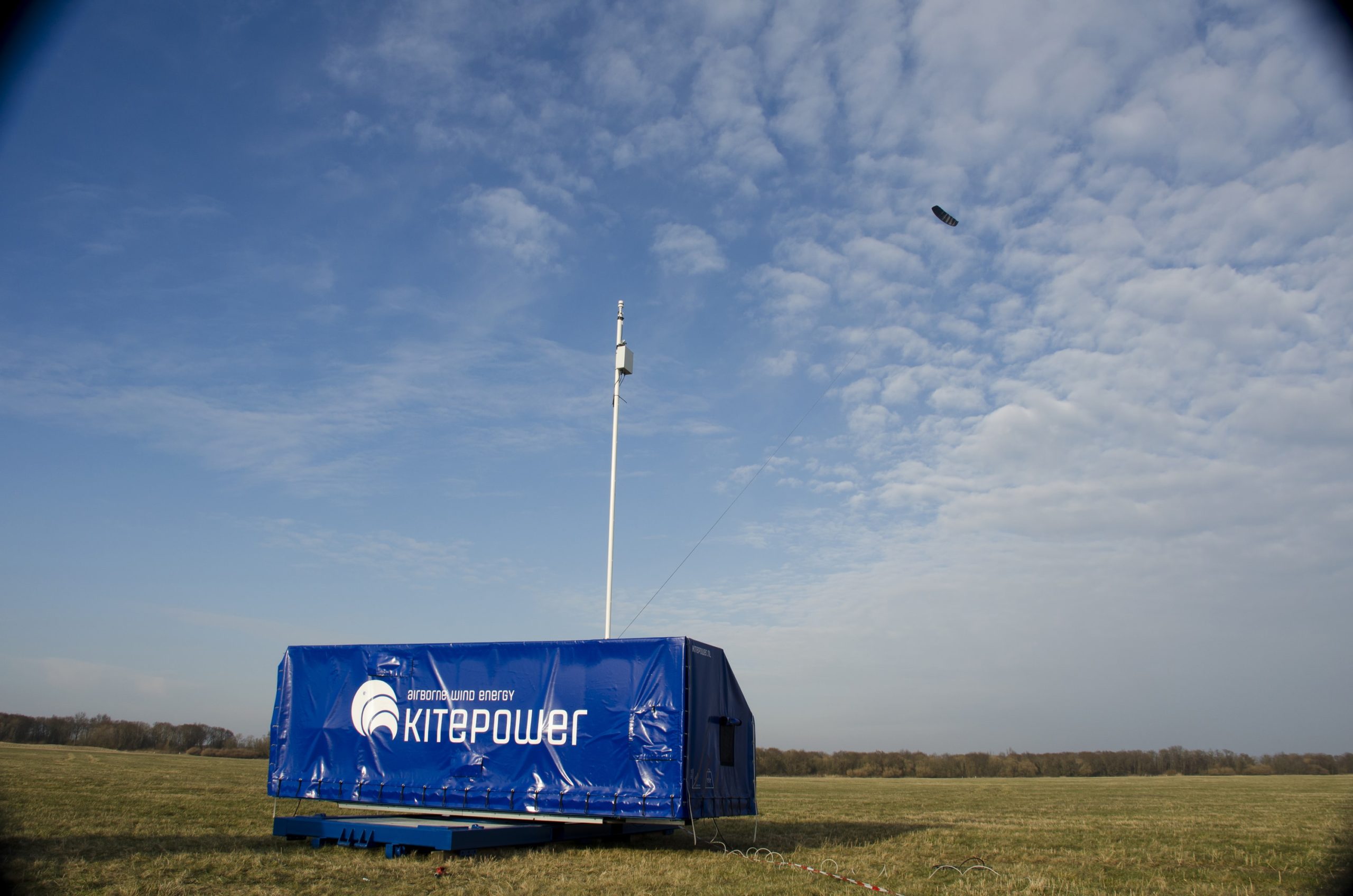
Johannes Peschel, CEO Kitepower, added “Kitepower, as the name suggests, uses a large kite structure with a hybrid inflatable and fixed fibreglass skeleton to hold the kite open. It has a wingspan of 60 square meters and weighs only 80kg, including the Kite Control and sensor unit. We will test our Kitepower Falcon system in Bangor Erris, which can generate up to 100kW. The Kite will initially be flown at up to 350m altitude and over the coming months could be tested to fly at greater heights. The dedicated test hub in Bangor Erris is the first of its kind and will help us further accelerate the development of our system. We are extremely proud that we have been able to contribute to the realization of this test hub and are committed to adding this new class of renewables to our global energy mix in the near future.”
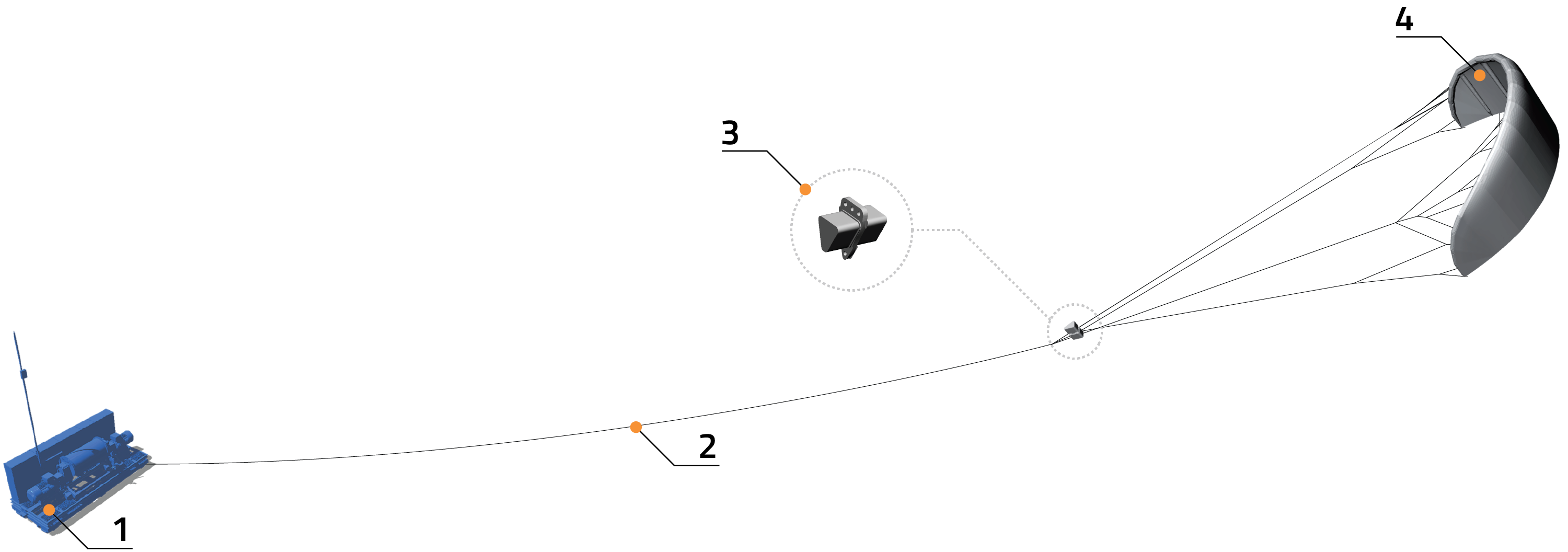
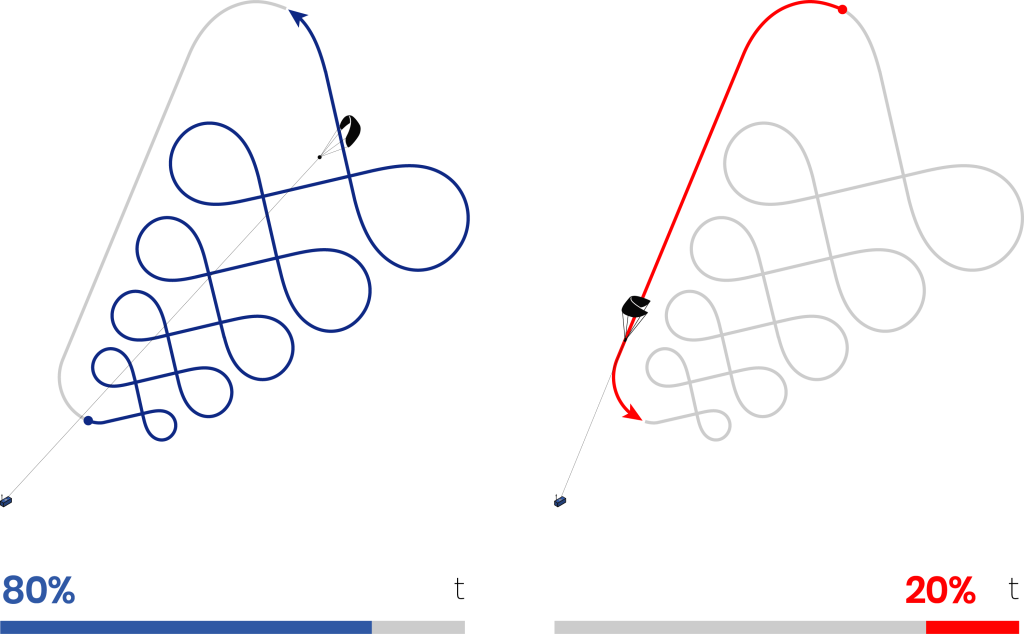
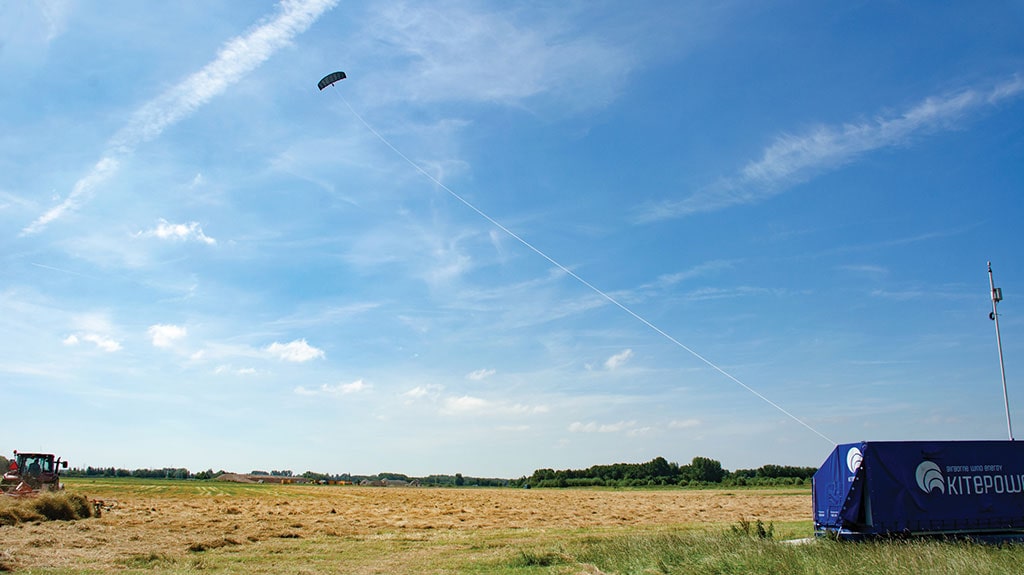
Kitepower uses a Kite Control Unit (KCU) attached to the tether, to control the direction the kite flies. The Dyneema tether (an ultra-strong rope which has a higher strength than steel wire of the same dimension but less than one tenth of its weight) is attached to a Ground Station, housed in a conventional 20 foot container. The ground station has a generator which converts the mechanical energy of the kite into electricity. Electricity is produced in the “Reel Out Phase” when the kite is flown in a cross-wind figure of eight pattern achieving a high pulling force which pulls out the tether from the winch in the ground station.
During this Reel Out Phase, the Kitepower “Falcon” produces electricity. When the tether reaches its maximum, the kite is directed back to directly above the ground station by the KCU and the tether is reeled in using a small amount of energy. This is known as the “Reel In Phase”. When the Reel in Phase is complete, the Reel Out Phase begins again. Normally these two phases take 100 seconds, 80 seconds for Reel Out and 20 seconds for Reel In.
RWE has established itself as a key player in the Irish energy market with an expanding portfolio of projects in development and operation, operational since 2016, the company has two offices, one in Kilkenny City and one in Dún Laoghaire, Co Dublin. RWE has one onshore wind farm in Kerry and two battery storage facilities, in Monaghan and Dublin. RWE’s objective for Ireland is to grow its renewable energy business, where RWE will be a long-term energy partner for Ireland during the country’s energy transition to 2030 and beyond. RWE has over 2 gigawatts (GW) of projects in development, comprising two offshore wind farms (1,750MW) and ten onshore wind farms ( 520MW) incorporating hybrid technologies.
Kitepower had a big win last week when it was featured on the popular Dutch television show Binnenstebuiten.
The episode, which aired on September 5, 2023, gave viewers a behind-the-scenes look at Kitepower’s research and development facilities in Delft, Netherlands. Host Marieke Eyskoot met Kitepower co-founder Roland Schmehl to learn more about the company’s technology and even experienced the power of wind energy in Dirksland. The Binnenstebuiten episode was a great opportunity for Kitepower to raise awareness of its technology and its potential to make a positive impact on the environment. The company is grateful for the opportunity to share its story with a wider audience.
Kitepower is working hard to bring its kite-powered generators to market. The company plans to start building commercial-scale generators in the near future.
As we continue to push the boundaries of renewable energy innovation, we are proud to announce our collaboration with Ecospeed. We have acquired a license for Ecospeed’s software to determine the Product Carbon Footprint (PCF) of our Airborne Wind Energy Systems.
This is a significant step forward in our commitment to transparency and sustainability. With Ecospeed‘s software, we’ll be able to accurately measure and document our system’s carbon footprint, further demonstrating our advantage over conventional power generation methods.
This software enables us not only to calculate the PCF of a single Kitepower system but also systems combined with battery buffers. We are excited to harness the power of this tool to optimize our installations with respect to CO2 footprint and share this crucial data with planners, operators, and certification companies.
As we prepare to launch our first small series of Kitepower installations, we look forward to delivering a renewable energy solution that’s not only efficient but also incredibly conscious of its environmental impact.
Stay tuned for updates as we continue this exciting journey towards a more sustainable future.
Airborne Wind Europe, the association of European Airborne Wind Energy (AWE) sector, was established in 2018 and serves as a platform for collaboration among various stakeholders, including technology developers, policy makers, research institutes, utilities, and investors. As one of the leading developers of airborne wind energy systems (AWES), Kitepower has become a leading member to help accelerate the growth of AWE technology. Johannes Peschel, Kitepower CEO, serves as Vice Chairman of the Board.
Kitepower Founder CEO, Johannes Peschel affirms: “Addressing the need for policy and regulatory frameworks, Airborne Wind Europe has taken proactive measures to map out relevant policies and regulations across European countries. Recognising the importance of environmental and social considerations, the association actively investigates solutions to mitigate potential impacts, such as effects on wildlife, visual aesthetics, sound emissions, and public acceptance. This comprehensive approach ensures the responsible and sustainable development of AWE systems.”
Airborne Wind Europe actively participates in strategic initiatives to foster the development of the AWE sector. As a partner in the Horizon Europe project JustWind4All, the association focuses on developing best practices for citizen engagement in wind projects, including AWE. Additionally, the MegaAWE project and IEA Wind Task 48 (WP4) address Airspace Integration, Safety, Life Cycle Analyses and Social Acceptance issues related to AWE technology. These efforts underscore the commitment of Airborne Wind Europe in addressing environmental and social concerns associated with the deployment of AWES.
Safety is a paramount concern in the AWE sector, and Airborne Wind Europe is dedicated to addressing safety-related aspects across all components and operations of AWES. The association has developed technical guidelines that cover crucial areas such as kite and tether safety, ground station safety, noise emissions, and power curves. By bringing together experts from the energy and aviation fields, Airborne Wind Europe has established best practices and guidelines tailored to the unique challenges of the AWE industry. This collaboration ensures airspace integration, unmanned aircraft systems (UAS) regulations, and mitigates aviation-related risks.
As a member of Airborne Wind Europe, Kitepower plays an integral role in the development and promotion of AWE technology. The company’s CEO, Johannes Peschel, holds the position of Vice Chairman within the association, bringing extensive experience in renewable energy, innovation, and strategic management. Roland Schmehl, Co-founder and Advisor of Kitepower, represents the Technical University of Delft as a board member of Airborne Wind Europe. Schmehl’s expertise in AWE as the head of TU Delft’s AWE research group contributes significantly to the advancement of the sector.
Membership in Airborne Wind Europe provides Kitepower with valuable opportunities to collaborate with industry stakeholders, exchange knowledge and expertise, and contribute to the development of policies and regulations specifically for airborne wind energy systems. By working collectively, Kitepower and other industry leaders strive to accelerate the growth of the AWE industry and create a sustainable and energy-independent future. Kitepower’s active involvement in Airborne Wind Europe positions the company as a key player in shaping the future of the AWE industry.
The selection of Kitepower in the United Nations (UN) World Food Programme (WFP) Innovation Accelerator bootcamp presented a promising opportunity to demonstrate the potential of airborne wind energy (AWE) systems in providing sustainable and reliable electricity to support humanitarian operations in remote and disaster-prone locations. Kitepower aims to further collaborate with WFP in future to demonstrate the potential of AWE in tackling some of the world’s most urgent issues, including the global food crisis and climate emergency.
By participating in the WFP Innovation Accelerator’s February bootcamp, Kitepower had the opportunity to leverage the resources and support of the Accelerator and its team to further develop its technology and expand its network. This intensive bootcamp provided Kitepower with valuable training, helped refine their pitch and developed a strong project plan that aligns with the goals and objectives of WFP. As part of the bootcamp activities, Kitepower also had the opportunity to present the innovative AWE solution to potential funders and partners, government officials, industry leaders and WFP staff at the WFP Innovation Accelerator Pitch Event.
The UN WFP Innovation Accelerator
The WFP Innovation Accelerator focuses on identifying, supporting and scaling innovations that have the potential to transform the food and humanitarian sectors. It has a strong commitment to working with innovators and entrepreneurs who are developing scalable solutions that can help communities become self-reliant, resilient, and sustainable. The Accelerator has already supported the development of numerous successful innovations that have helped to address hunger and humanitarian challenges around the world.
The WFP Innovation Accelerator is structured to provide innovators with the necessary resources and support to turn their ideas into tangible solutions that can have a real impact on global hunger and humanitarian challenges. It provides mentorship from industry experts, and access to the world’s largest humanitarian organization. Successful innovation teams also have the opportunity to receive up to US $100,000 in equity-free funding.
By supporting innovation, the WFP Innovation Accelerator is helping to accelerate progress towards the United Nations Sustainable Development Goals (SDGs), particularly SDG 2, which seeks to end hunger, achieve food security, and improve nutrition.
How Kitepower Could Support WFP and SDG2 in the Short Term
Kitepower offers a versatile solution that not only addresses the climate crisis but also provides mobile electricity units for disaster relief, remote camps, and off-grid communities. Based on the work undertaken at the recent WFP Innovation Accelerator bootcamp, the Kitepower system was seen to be especially valuable to WFP in two ways:
Firstly, WFP has numerous logistical tasks that require electricity, including storing, transporting, and distributing food all over the world, with the help of approximately 80 country offices. Here, Kitepower could provide reliable electricity to off-grid logistic points and country offices, reducing reliance on diesel generators. Within 2 days of optimal operation, a Kitepower system would already be capable of generating sufficient renewable power to support 30,000 displaced individuals in a refugee camp.
Secondly, in first responder situations, the Kitepower system can meet the requirement of being available within 72 hours. With Kitepower systems at every WFP country office and first responder location, rapid deployment can be achieved globally. The need for electricity is not limited to the WFP’s first responder operations. Electricity is essential for food preparation, replacing charcoal, and providing cooking facilities to refugee camps. In camps, electricity is often inaccessible to 90% of the population. Access to electricity can also reduce post-harvest losses and improve farming productivity, including irrigation systems, electrical machines, and vehicles.
How Kitepower Could Support WFP and Multiple SDGs in Future
Kitepower’s technology aligns with many of the United Nations Sustainable Development Goals (SDGs), which act as a universal call to action to end poverty, protect the planet, and ensure peace and prosperity. If Kitepower participates in a future WFP Innovation Accelerator Sprint Programme, more work can be done to develop and extend potential solutions across various WFP contexts, in line with multiple SDGs. Some examples are outlined below.
Many farmers in developing countries rely on manual labor and traditional farming techniques, which can be inefficient and labor-intensive. Access to electricity provides enormous benefits linked to ending hunger and promoting economic development.. For example, electricity enables farmers to use modern tools and equipment, such as irrigation systems, tractors, and grain mills, that can increase crop yields and reduce labor costs. This, in turn, can increase food production and help reduce hunger (SDG 2).
By providing renewable power, Kitepower could also help to improve the shelf life of perishable food with electricity-powered cooling, reducing food waste, and increasing food safety (SDG 2.1). Additionally, renewable power helps small-scale food producers, in particular indigenous peoples, smallholder farmers, pastoralists, and fishers, to access better inputs, knowledge, financial services, markets, and opportunities for value addition and non-farm employment (SDG 2.3). Moreover, the development of sustainable irrigation systems that can preserve water consumption and help agricultural communities deal with extreme drought or precipitation, facilitated by renewable power, can help to ensure the sustainable integrity of the food systems (SDG 2.4).
Kitepower’s Airborne Wind Energy Systems (AWES) provide a zero-emission capability to produce renewable power (SDG 7) for use throughout off-grid locations and remote communities, contributing to fight climate change (SDG 13) and end hunger in developing countries (SDG 2).The limited access to electricity in many communities around the world significantly hinders access to education and economic opportunities. Unfortunately, women and ethnic minorities are often the ones who bear the brunt of this issue. By providing renewable electricity to these communities, Kitepower can help to bridge this gap and enable access to education and business opportunities that were previously out of reach. This can go a long way in advancing people’s livelihoods and promoting greater equality and inclusivity (SDG 4; SDG 5).
As the world transitions towards a more sustainable energy mix, the role of airborne wind energy systems (AWES) is becoming increasingly important. By harnessing the power of the wind at higher altitudes by using only a fraction of material compared to traditional wind turbines, AWES can provide a cost-effective and scalable renewable energy solution. This can reduce reliance on fossil fuels and help to mitigate the impacts of climate change. AWES can also provide energy to areas that are currently off-grid or underserved, increasing access to sustainable energy sources. With the increasing demand for renewable energy solutions, Kitepower has the potential to disrupt the market and provide a competitive alternative to traditional wind turbines and other renewable energy technologies.
As we continue to work towards our mission of revolutionising wind energy, we recognize the importance of investing in our team. That’s why we have been rapidly expanding our team, bringing on board the skills and expertise needed to make our vision a reality.
Let’s take a closer look at Kitepower’s recent team expansion, and explore what it means for the future of the company. Kitepower’s recent team expansion has brought on board some key talent to drive the company forward in its mission to revolutionise wind energy. Among the new hires are a Chief Operations Officer, a Senior Product Manager, and a Flight Test Manager.
As new Chief Operations Officer (COO), Walter Hueber will be responsible for overseeing Kitepower’s operations, ensuring that the company is running smoothly and efficiently. This includes managing the company’s supply chain, production processes, and logistics, as well as working closely with other departments to ensure that all aspects of the business are aligned and working towards a common goal. Waler will play a crucial role in helping Kitepower scale up its operations and take its technology to market – (more about Walter).
As Senior Product Manager, Eduard IJsselmuiden will be responsible for leading the development and commercialisation of Kitepower’s products. This includes defining the product roadmap, working with the engineering team to design and build the products, and bringing them to market. Eduard will also be responsible for managing the product lifecycle, ensuring that Kitepower’s products meet customer needs and are competitive in the marketplace. This role is crucial for Kitepower as it looks to bring one of the first airborne wind energy systems to market and establish itself as a leader in the field – (more about Eduard).
The Flight Test Manager role will be covered by Andrei Luca who will be responsible for overseeing Kitepower’s flight testing program. This includes designing and executing flight tests to validate Kitepower’s technology, analysing flight data to improve performance, and working with the engineering team to implement improvements based on flight test results. Andrei will also be responsible for ensuring that Kitepower’s flight testing program is conducted safely and in compliance with regulatory requirements. This role is crucial for Kitepower as it looks to refine and improve its technology, and move closer to commercialization: “I am here to support Kitepower’s mission and I am looking forward to seeing how innovation in this sector helps to tackle other humanitarian needs around the world, especially in remote communities and in challenging environments”.
Finally, Maëlle Trubert has recently started her Master internship at Kitepower: “My mission here is to help the team carry out as many successful flight tests as possible. This, in order to improve the usability of the system and make it more reliable before large-scale use.”. While clearly in line with Maelle’s aerospace engineering background she happily points out how Kitepower’s mission fits her values “..Ecology is a major matter of concern for me and this internship is an opportunity to get involved in actual sustainable development. In this respect, because of climate change, Kitepower is committed to a project which concerns all of us”.
Overall, the addition of these key team members is a significant step forward for Kitepower in its mission to commercialise one of the first airborne wind energy systems ever. With the team’s expertise and experience, Kitepower is well-positioned to take on the challenges ahead and make a significant impact in the renewable energy sector.
Kitepower is proud to welcome Eduard IJsselmuiden as its Senior Product Manager. Eduard brings a wealth of experience as an aerospace engineer and founder of his own successful drone company, Delft Dynamics B.V. demonstrating his expertise in project management, entrepreneurship, and customer relations, making him an excellent addition to the Kitepower team.
Johannes Peschel, CEO Kitepower: “We are thrilled to have Eduard on board as our Senior Product Manager. His skills and experience in the aerospace industry make him a perfect fit for Kitepower’s mission to provide clean, affordable energy to everyone. Eduard’s can-do mentality and dedication to making things work will undoubtedly help us continue to develop cutting-edge airborne wind energy systems.“
Eduard IJsselmuiden: “Joining Kitepower as a Senior Product Manager is a perfect match for me. I can fully use my experience in drones ánd work for the nice and challenging mission of making wind energy in a very efficient way. I am looking forward to continuing working together with the very enthusiastic team of Kitepower.“
Kitepower’s first product, the Kitepower Falcon, is specially designed to allow remote communities worldwide to mitigate dependency on polluting and expensive diesel supply. With a power output of 100 kW it can supply up to 150 households with electricity. The system is currently available for pre-order and is the first in a family of Airborne Wind Energy Systems (AWES) with the objective to develop a product range that will be able to generate ever larger electricity output.
Kitepower, innovation leader in Airborne Wind Energy Systems (AWES), has appointed seasoned venture builder Walter Hueber as its Chief Operating Officer (COO) to strengthen its management team. The new role will help Kitepower prepare for its next phase of company development as it brings its cost-effective alternatives to existing wind turbines to the market to support off-grid communities and increase our overall capacity for sustainable energy production.
Johannes Peschel, CEO Kitepower: “In order to create impact at scale with our airborne wind energy systems, Kitepower will step up its investment in overall company expansion with public and private partnerships, expanded R&D and go-to-market activities to deploy our systems. I believe Walter will be instrumental in helping us shape a future-proof organisation that can contribute to a world with clean affordable energy for everyone.”
Walter Hueber: “The Kitepower team is contributing to tackle the single biggest problem our planet is facing today: climate change. I believe that this team is uniquely positioned to help communities globally benefit from sustainable energy by building an entirely new and complementary category of power generation with airborne wind energy systems. The affiliation with Delft University of Technology and the strong support with both private and public investment is proof of the enormous potential of this technology.”
Kitepower’s first product, the Kitepower Falcon, is specially designed to allow remote communities worldwide to mitigate dependency on polluting and expensive diesel supply. With a power output of 100 kW it can supply up to 150 households with electricity. The system is currently available for pre-order and is the first in a family of Airborne Wind Energy Systems (AWES) with the objective to develop a product range that will be able to generate ever larger electricity output.
Energy security is among the most important topics of our current times that make even politicians in the most powerful European nations break out in cold sweat. The dependency on fossil fuels from energy production, to heating, and even chemical production has become painfully clear in the face of the war in Ukraine. The idea of energy independence seems more and more attractive the longer the current energy crisis develops – while rich European countries scramble to secure gas and oil for the near future to then, eventually, switch to more and more renewable energy the impact on smaller countries and communities is yet to be seen. The switch away from fossil to renewable is often not just a question of price or infrastructure, but also of having suitable alternatives for the location the energy is needed.
Islands offer fundamental challenges for any energy supply, as the cost of running a power line or even supplying fuel to local generators is often several times what the same would cost on the mainland. For this reason, energy tends to be supplied by generators running on diesel imported at very high costs. Considering these drawbacks, the urge to hybridise with renewables is growing. And while traditional renewable energy sources like wind turbines and solar PV are growing, they require significant investment and also have their very own drawback. Whereas solar electricity generation is only available during daylight and conventional wind turbines are often not feasible due to high transport costs and heavy foundations. However, there is a new kid on the block with a perfect solution for exactly that – Kitepower.
The Kitepower Falcon during operation in Vader Piet, Aruba – October 2021
Kitepower is a Dutch leading start-up in Airborne Wind Energy (AWE), developing innovative and cost-effective alternatives to existing wind turbines by using kites to generate electricity. Kitepower’s patented technology is a game-changer in the wind energy sector, using 90 % less material while being twice as efficient as existing technology with the same power output. Unlike conventional wind turbines, a Kitepower system does not require resource-intensive towers or heavy foundations and is thus easy to transport and deploy.
In 2021 Kitepower showed the viability of its technology for remote locations by deploying the Falcon 100kW system on the Caribbean Island of Aruba. Aruba marked the successful completion of a development that has been ongoing since the establishment of the company in 2016. The Aruba project was in collaboration with the Dutch Ministry of Defence (MoD) and marked an important milestone not just for Kitepower but for AWES overall – it was the Kitepower System operating outside of Europe and the first Airborne Wind Energy system in the Caribbean. “A dream finally came true: A milestone that I have envisioned since the incorporation of Kitepower five years ago. We have finally shipped and flown a Kitepower system on a Caribbean Island”, said Johannes Peschel, Founder and CEO of Kitepower.
Airborne wind energy systems work extremely well on islands due to high coastal winds ensuring strong steady power generation. This obviously means traditional wind energy systems would work on Islands, however, transporting conventional wind turbines is no mean feat – with all the overweight and over-dimensional freight-related issues – the transportation of the Kitepower Falcon 100kW AWES validated the system’s strategical potential when it comes to reaching rural and remote areas via ordinary and even narrow roads. A Kitepower system fits in a 20ft container which makes its transportation very simple and can be easily installed and operated in less than 24 hours. The versatility of AWES opens up new geographical markets for the generation of distributed wind energy and empowers operational sites and communities across remote and rural areas of the world to emancipate themselves from expensive and polluting fossil fuels. Kitepower’s AWES can be deployed in harsh environments and can generate electricity during day and night, on cloudy and rainy days, assuring higher capacity factors (+75 %) than solar PV (12 %) and conventional wind turbines (35 %). Integrating Kitepower into a microgrid in combination with batteries allows to switch off diesel generators completely.
The potential Island market alone is a huge opportunity for these systems with roughly 1,800 small islands equivalent to approximately 100,000 inhabitants that could be potentially powered by Kitepower systems. A large part of this market will be powered by traditional systems such as solar PV and conventional wind turbines but due to its unique deployability, low price, and easy transport and operation Kitepower has the potential to play an important part in making the energy in these areas both more sustainable and the communities more independent from fossil fuels. After the huge Caribbean success on Aruba Kitepower is now ramping up towards the next big leap of further developing and optimising the current systems to bring airborne wind energy systems all over the world. Kitepower now opens up to new investors of all sizes in their crowdfunding campaign – learn more about the campaign here.
The goal of the project is to achieve a better understanding of the unsteady inflow conditions at altitudes above the first layer of air above the ground (the surface layer). The aim is to develop a toolchain to efficiently and effectively assess the performance and reliability of airborne wind energy devices and conventional wind turbines. This is important to site evaluation but also for increasing the wind plant efficiency and making the operation of AWES safer.
MERIDIONAL’s consortium consists of a total of 12 partners including 5 leading technical universities (TUDelft as the coordinator and 4 others from Denmark, Italy and Germany) and 3 Airborne Wind Energy companies (Kitepower, Kitenergy, Kitekraft). One of the project partners is the US national renewable energy laboratory (NREL) which will contribute in-kind. The grant’s total budget is 6.7 million EUR, most of which is reserved for the universities while Kitepower will receive around 240.000 EUR. The project is 100% funded over a total runtime of 4 years.
In addition to the standard instruments of a Kitepower system (using the kite as a sensor), ground-based LIDAR (Light Detection and Ranging) and drone-mounted 3D flow measurements performed during the flight tests, Kitepower will contribute to the models of the toolchain with system knowledge and test data. A further area of interest will be the interaction of the flow and the movements and shape of the kite. Based on the new toolchain, predictions of system performance in upscaled or park configurations will also be made. The latter analysis is particularly important to predict the impact of airborne wind energy on the future energy landscape.
The proposal convincingly demonstrates significant progress beyond the state of the art, regarding forecasting wind flow in high altitudes for airborne wind energy systems (AWES).
EU Horizon commission
We are very happy that the European Commission recognizes the importance of developing the toolchain and associated models and supports the airborne wind energy community in achieving its goal to make an impact.
Positive developments concerning airspace regulations and related permit-issuing for Kitepower’s AWES have recently been made.
Up to now, the Kitepower system was operating in the classification of a tethered kite. This classification required an individual application for a flying permit at the Inspectie Leefomgeving en Transport (ILT). Based on the application, the ILT issued a permit to operate the system at one specific location in the Netherlands. In the recent past, the legal boundary conditions have changed. Furthermore, the responsible authority for the legal framework of the permit has changed from national to European legislation. The respective authority EASA has declared the Kitepower system a drone, allowing the company as its operator, to use a European wide acknowledged administrative framework to generate the legal boundary conditions for operating the system. The system is classified as a drone in the specific category requiring a Specific Operational Risk Assessment (SORA). This procedure describes the mode of operation of the vehicle and how the vehicle integrates itself into the adjacent airspace as well as into the environment on the ground. In order to be allowed to operate in this category, a Specific Assurance and Integrity Level is determined (SAIL). This level expresses how the risks the system is exposing to its environment, both to the proximate ground and air environment, are being mitigated by certain measures and strategies.
Kitepower’s 60sqm kite in launch position at the test site in Melissant, Goeree-Overflakkee. View related article.
The Kitepower system is classified as SAIL II, which allows it to be operated at locations all over Europe. The requirements for operating in the Netherlands are fulfilled by having the application handled by the ILT. Applying for an operation in other European countries, the respective national aviation authority is being contacted via a cross border form. Nonetheless, since the SORA, which has been done once, is regulated by the EASA, every European country can relate to that. This facilitates the European wide deployment of the Kitepower system.
Furthermore, the recently applied classification of the Kitepower system enables it to operate:
in VLOS/EVLOS (Visual Line Of Sight/Extended VLOS)
in uncontrolled airspace
by notifying the respective airspace traffic control service to issue a NOTAM (NOtice To Air Missions) about the flight operation and use of the airspace at the site
over sparsely populated ground area
during night
with low visibility (kite visible from the ground at all times)
with a visual observer on site, pilot in remote control (eg office)
with a drone pilot license (A1/A3 and A2) plus system relevant training
Ultimately, the new permit classification is going to lead to easier and faster arrangements of Kitepower pilot installations within the EU.
Everyone can now play a vital role in Kitepower’s growth by investing alongside a community of impact-driven, like-minded people.
Kitepower is collaborating with Crowdcube, one of the world’s leading equity crowdfunding platforms, to allow everyone to participate in Kitepower’s journey to a smarter energy future. It is now possible to sign up and express interest in limited Kitepower shares. Investments can be made anywhere from 26 EUR up to over 20,000 EUR. The collected funds will be used to secure Kitepower’s next steps towards the consolidation of a product roadmap capable of disrupting the world of distributed energy generation.
Steps to follow in order to participate in the crowdfunding:
Wait for Kitepower’s launch on Crowdcube – we are going to keep you posted 😉
The Vision
The world needs renewable energy sources to reach carbon neutrality by 2050 and current efforts are not enough. Kitepower has developed a cost-effective alternative to traditional wind energy generation by using kites to harvest electricity.
Kitepower’s electricity-generating kites aim to empower remote areas, temporary power supplies and off-grid installations by providing a viable way to decarbonize and therefore accelerate the global energy transition to renewables. Kitepower’s target market is the global microgrid sector, which is projected to reach approximately $225 billion by 2030. We calculate microgrids could save diesel equivalent to over 3 million tons of CO2 emissions yearly by integrating Kitepower as a wind solution, This is an impact equivalent to 50 million new trees grown over 10 years. Kitepower ultimately aims to develop its platform up to the scale of current wind turbines, these have seen an annual global growth rate of 14% over the past 20 years.
Whether there is a need for optimising solar PV’s efficiency or trying to set up a remote micro-grid configuration, Kitepower could very well represent the best available solution in renewables. The versatility of a mobile Kitepower unit, which drastically reduces mass compared to traditional wind turbines, can open up new geographical markets for distributed wind energy generation. The 100 kW system currently in development is ideally suited to be integrated alongside diesel generator sets in remote locations to mitigate dependency on polluting and expensive diesel supply. Kitepower’s initial potential customers include; Greener, one of the market leaders for mobile battery solutions, and Enerwhere, one of the leading distributed solar utility in the Middle East and Africa.
We envision a world where Kitepower systems are deployed globally, delivering clean, affordable and sustainable energy to everyone.
After five years of intensive developments – which led to the manufacturing of a 100 kW containerised generator and several 60m2 high-performance kites – Kitepower can now look back at a successful pilot demonstration in the Caribbean, the ideal “habitat” for the Kitepower’s Falcon. The recent temporary deployment of Kitepower near the 30MW Vader Piet Wind Farm on Aruba marks a major achievement in the airborne wind energy industry as it represents the very first operation of a kite-powered system on a Caribbean island.
In order to accelerate the transition to renewables, more effective alternatives to fossil fuels must be implemented worldwide. The Delft-based start-up is thus eager to keep demonstrating the capabilities of Kitepower’s airborne wind energy technology throughout temporary pilots as well as permanent installations, with the goal of ultimately heading towards a scaled-up system for the Megawatt class.
See Kitepower’s airborne wind energy system being operated in Aruba – View article
Kitepower was founded in 2016 as a result of the work done by TU Delft’s pioneering Kitepower research group established by the former Dutch astronaut Wubbo Ockels in 2003. Today, after 6 years of commercial developments, the realisation of two working prototypes, € 4+ M raised in grants, investment and revenues, plus the accomplishment of three temporary pilots, Kitepower is approaching launching one of the first airborne wind energy systems to the market. Energy distributors and project developers keen on showcasing and taking advantage of the benefits of airborne wind energy can now submit preorders via preorder.kitepower.nl.
The Tech
A Kitepower system consists of (1) a ground station – that converts the mechanical energy of the kite into electrical power and reels the kite in by using the generator as a motor – (2) a tether – used to connect the kite to the ground station – (3) a kite-control-unit (KCU) – that controls the roll, pitch, and yaw of the kite and takes care of the communications between the sensor unit placed on the kite and the ground station – and (4) a hybrid between an inflatable and a fixed fibre-glass kite.
The electricity generation works in two phases, which repeated in continuous cycles, result in positive net energy output. Energy is generated during the first phase when the kite is flown in cross-wind figure of eight patterns to achieve a high pulling force and reel out the tether from the winch in the ground station. When the max tether length is reached, the kite’s profile is adjusted in order to reel in the tether with low force, using a small fraction of the energy produced in the previous phase. The energy generated by the system while reeling out is greater than the energy consumed to reel the kite back in. The 100kW system currently in development has a yearly power production potential of 450MWh in the Netherlands.
Kitepower’s product page is the best place to learn more about the advantages of Kitepower and how airborne wind energy can play a crucial role in accelerating the global energy transition to renewables.
The Team
Kitepower consists of an international team with a multi-disciplinary background. The company’s crew comprises mechanical, aerospace, electrical and software engineers, sustainable energy and natural sciences professionals and business developers.
What brings us together is the passion for wind, engineering and technology, but most essentially it is the genuine desire to contribute to a sustainable future by unlocking the potential of airborne wind energy.
Johannes Peschel Founder CEO
Roland Schmehl Co-Founder & Advisor
Joep Breuer CTO
Jacques van Haaster Financial Manager
Astrid de Jong Office Manager
Johannes Crol HR Advisor
Johannes Stark Flight Test Engineer
Christian Beier Flight Test Engineer
Bryan van Ostheim Kite Designer
Alexander Cohen Mechatronics Engineer
Zachary Pellegrin Software Engineer
Wolf Fisscher Mechanical Engineer
FAQ
We’re happy to share that we’re ready to launch and will be opening very soon! As crowdfunding will be uncharted territory for many, we’ve explained how it works and the simple steps needed to be ready to invest once we open.
What is the share price? The single share price is 26,48 EUR, with any multiples of this available to purchase. Because of legal restrictions, we had to increase the minimum price from 10 EUR to 26,48 EUR.
What are my immediate investor rewards? As a shareholder of any size, you’ll receive exclusive company updates, and will be supporting Kitepower to generate renewable energy across the world through our patented Airborne Wind Energy systems. In addition, we’ve devised the following rewards for the following investment sizes:
10.000 EUR or over – Receive one of our awesome circular kitesurfing kites
20.000 EUR or over – The above reward, plus gain a seat in our yearly kitesurfing session and strategy meeting.
How can I get a return on my investment? Although not guaranteed, as an equity crowdfunding investor, you may potentially receive a return in one of three ways:
IPO – when the company lists on a public stock exchange, and you can then sell your shares on the stock market
Trade sale – the company is sold to another company, and an investor’s shares are bought at the company purchase price
Secondary market (except US, Canada, Japan, Russia and Belarus) – you can potentially sell your shares via CrowdCube’s secondary market, Cubex. More details here.
Why are Kitepower raising money? Following 15 years of research, 6 years of commercial development with £3.4m+ invested in research and development, and multiple awards won for our technology, we’re now ready to commercialize the first Kitepower system. We’re inviting investment partners so we can:
Expand the Kitepower team
Start pilot operations on a permanent site
Fly the system at festivals and other demo events
Prepare investment for scaling
How do I make an investment? Investments will be handled by Crowdcube, our chosen regulated investment platform. In order to buy shares in Kitepower, you’ll need a credit card and to register with Crowdcube. This is free, quick and easy and you can do so here.
When I invest, are funds taken straight away? No. When you purchase your shares, this is a commitment to invest but money is not taken until after the round is complete. You will be notified by Crowdcube before this happens.
Kitepower is ready for take off in more ways than one, and we hope you’ll join us on our journey towards a smarter energy future!
Investments of this nature carry risks to your capital. Please Invest Aware.
Looks like this article got your attention!
If you would like to learn more about Kitepower’s crowdfunding campaign don’t hesitate to get in touch with us.
Airborne Wind Europe (AWEurope), the association of the European airborne wind energy industry, has appointed a new board of directors, expanding its team with important profiles coming from the most active AWE developers on the continent. We are very proud to announce that the role of Vice Chairman of the association is now covered by Kitepower’s Founder CEO Johannes Peschel.
Kitepower’s Founder CEO, Johannes Peschel
I am honoured to represent the Vice Chairman of AWEurope and in that way contribute to the important work that AWEurope is doing. The recent crisis shows that we need to reduce the dependency on fossil fuels and even quicker transition to a net-zero CO2 emission future. AWE can play a significant role but to do so we need political, financial and public support. Kitepower is happy to be a member of AWEurope which helps the industry to grow in these domains.
Johannes Peschel – Founder CEO at Kitepower
About AWEurope
Airborne Wind Europe encourages high-level discussions on the generation of energy from high-altitude winds by means of kite energy systems, wind drones and other airborne wind energy systems and encourages research, innovation and exchange of technical information among entrepreneurs, suppliers, utilities, developers, energy consumers, equipment manufacturers, financial institutions and universities
Airborne Wind Europe promotes the generation of energy from high altitude winds by means of airborne wind energy systems. It represents the interests of the airborne wind energy industry as well as academia to decision-makers in politics and business, provides reliable and high-quality information and data on airborne wind energy and is coordinating the industry at all levels.
It is with great enthusiasm that we announce the start of a new phase in the collaboration between Kitepower and the Dutch Ministry of Defence (MoD): The Kitepower Falcon 100kW AWES is being deployed in the Dutch Defence’s training area near Vader Piet on the island of Aruba, with the goal to test the system in an operational environment as part of the military exercise Caribbean Engineer 2021.
This is a groundbreaking milestone for Kitepower and the whole AWE industry, namely:
This is the very first Kitepower operation to be carried outside of the European continent
This is the very first Airborne Wind Energy system to be operated in the Caribbean
The vessel carrying Kitepower’s Falcon 100kW AWES has shipped from the port of Eemshaven at the beginning of September and arrived on the island of Aruba a couple of weeks later. Delivering the Kitepower Falcon overseas represented a great opportunity to put to the test the system’s logistics and once more prove its huge transportation and installation advantages. The entire trip went smoothly, two standard trucks, one for the Kitepower system and one for the Greener battery, were all we needed to reach the deployment site on land. Whereas transporting conventional wind turbines is no mean feat – with all the overweight and over-dimensional freight-related issues – the transportation of the Kitepower Falcon 100kW AWES validated the system’s strategical potential when it comes to reaching rural and remote areas via ordinary and even narrow roads.
The deployment of Kitepower’s AWE technology is taking place near the 30MW Vader Piet Wind Farm, NuCapital‘s first involvement on the island dated 2009, led by wind energy expert and Kitepower’s mentor & investor Henk Hutting (1952 – 2021).
“Henk has been a strong supporter of Kitepower and I am incredibly grateful that part of our common dream – bringing Kitepower to the Caribbeans – becomes reality. It is especially satisfying that we are flying in front of a wind farm that was developed by him and I hope he will be watching from his star” adds Kitepower’s Founder CEO, Johannes Peschel.
The project shows how MoD’s strategic foresight activities, which take climate change into consideration, have recently been stepped up throughout applicable regional cases. Kitepower is proud to be supporting the Dutch Ministry of Defence with innovative energy solutions in operational situations.
Kitepower & The Dutch Ministry of Defence – Background
It was November 2016 when the relationship between the Dutch Ministry of Defence and Kitepower first started. Back then, Kitepower had just won the Innovation Competition themed “Energy for Military Operations” aimed to foster the development of a 100kW Airborne Wind Energy System capable to support the ministry’s decarbonization commitment (Operationele Energiestrategie, OES-2015). Find out more.
Following up on the Innovation competition, in early 2018, Kitepower successfully performed a training session for the Dutch Defence in order to introduce the Falcon 100kW system and its operation. This was the first time that an external crew operated a Kitepower AWES. Find out more.
After the Innovation Competition, in 2019 Kitepower received a second valuable collaboration agreement with the Dutch Defence focused on reporting the benefits of deploying Kitepower throughout Defence’s field operations, named: “Kitepower System for the New Defence Technology Program” and this is what ultimately led to the project taking place in 2021 on the Dutch Caribbean Island of Aruba. The collaboration agreement had developed within the framework of the National Technology Project (NTP), a program that stimulates the development of prototypes and demonstration of defence-specific applications.
The Dutch Defence aims to reduce dependence on fossil fuels across its worldwide campaigns. Kitepower’s innovative wind energy technology offers an environmentally friendly solution for deployments in remote locations, where logistical supply lines cannot be guaranteed, by reducing diesel consumption and increasing energy independence.
Lieutenant Colonel Paul van der Heul affirms “Kitepower is one of the interesting possibilities of energy supply. We see the application as Defence in the operational and civil domain, it has social added value. This is one of the reasons for Defence to participate in this project. This offers opportunities, especially in remote and windy areas such as islands”.
Airborne Wind Energy on Islands
Airborne wind energy systems work extremely well on islands due to high coastal winds ensuring strong steady power generation. Islands offer fundamental challenges for any energy supply, as the cost of running a power line or even supplying fuel to local generators are often several times what the same would cost on the mainland. For this reason, energy tends to be supplied by generators running on diesel imported at very high costs. Kitepower offers an excellent solution to reducing the fuel consumption, cost and environmental footprint of these generators.
Kitepower can be integrated into microgrids allowing to unlock the potential of airborne wind energy When integrating Kitepower in combination with batteries, diesel generators can be switched off completely. Hybridizing with Kitepower results in less diesel consumption for more clean energy, culminating in considerable financial savings even for areas that do not experience consistent high wind speeds.
Johannes Peschel, Founder CEO of Kitepower, says: “A dream finally came true: A milestone that I have envisioned since the incorporation of Kitepower five years ago. We have finally shipped and flown a Kitepower system on a Caribbean Island. It is rewarding to see one of our kites flying next to Henk’s wind farm (Vader Piet in Aruba) and I believe it is truly remarkable to be able to witness what Kitepower has accomplished in the course of the last years. I would like to thank Henk, the department of Defense, all supporters and especially the Kitepower team for the blood, sweat and tears that have been put into the system and look forward to many more Kitepower operations in Europe and overseas!”
A new stamp sheet from PostNL, focusing on the innovative capacity of The Netherlands, has selected 10 unique innovations developed by scientists from TU Delft and Kitepower is one of them!
“We are super happy being part of it. We’re really proud to be seen and acknowledged. Being on a stamp is really special! And it gives us an opportunity to get our name out there, to the general audience, and raise awareness about the possibilities of creating electricity with kites.”
The innovations that have been picked vary, ranging from energy-saving projects, smart transport solutions and flexible production possibilities to effective water management and innovations in healthcare. More information about the Innovation stamps can be found here.
We are very excited to announce that Kitepower has secured a €3 million investment agreement for the development of innovative airborne wind energy systems. Energy innovation fund ENERGIIQ, Stichting ifund and Windhandel Beheer are investing €1 million each in Kitepower. The Delft-based start-up will use the funds to commercialise its innovative airborne wind energy system (AWES) and further expand its organisation. The investment was announced on 16 June at Kitepower’s premises in Delft.
The investment will enable Kitepower to accelerate the development and market introduction of its technology, which has the potential to significantly reduce CO2 emissions across diesel-dependant industries. It will also create job opportunities in Delft and the surrounding region. Apart from financial support, the investors can provide access to a broad network of experts and contacts to propel the commercialisation rollout.
Mobile, plug & play alternative for microgrids
Kitepower, co-founded in 2016 by CEO Johannes Peschel and TU Delft associate professor Roland Schmehl, is a spin-off from the TU Delft’s kite power research group. The company has developed its 100kW AWES with a ‘Fast Track to Innovation’ grant from the European Union’s Horizon 2020 framework programme, guided by a mentoring partnership with tech incubator YES!Delft and with support from angel investor and wind energy expert Henk Hutting.
Johannes Peschel, Founder CEO of Kitepower, is enthusiastic about the future and says: “This investment will significantly boost our ability to refine and develop our system and organisation. Our technology presents an opportunity to disrupt the global renewable energy market by ease of operation and increased capacity. We look forward to a successful collaboration with many learning opportunities.”
About Windhandel Beheer
A spokesperson from Windhandel Beheer says:“Henk Hutting, founder of Windhandel Beheer, has been described as ‘Kitepower’s biggest fan’. Due to his impressive career in the renewable energy sector, he has been an important investor and advisor for the company in recent years. Even though he passed away only a few months ago, Henk’s legacy lives on in many ways and we are proud to count Kitepower as part of it.”
About Stichting ifund
Stichting ifund aims to sustain the long-term quality of life for all mankind by stimulating the transition to a sustainable society in which renewable energy is generated locally and people have access to organic food and clean water. ifund invests in impact-first start-ups with an investment typically ranging between €200k and €1m.
Stefan van Eijk, fund manager at Stichting ifund, says: “We believe Kitepower will be a catalyst for airborne wind energy, thereby enabling renewable energy for a completely new segment. We are excited about the years ahead and will support Kitepower in the further commercialisation of the technology throughout.”
About ENERGIIQ
ENERGIIQ is the energy innovation fund of the Province of South Holland and is administered by InnovationQuarter. The Province of South Holland has earmarked €35 million for ENERGIIQ, which invests in businesses that are ready to commercialise a proven energy innovation. Innovations should lead to a reduction in CO2 emissions and/or the creation of jobs in the Province of South Holland.
Rafael Koene, ENERGIIQ fund manager at InnovationQuarter, adds: “We are investing in Kitepower because it has developed an interesting technology that can have a significant impact on CO2 reduction in remote areas and locations requiring temporary power by offering a fossil-free alternative to polluting diesel generators. ENERGIIQ has every confidence in Kitepower’s management team and looks forward to driving this proposition forward.”
About InnovationQuarter
InnovationQuarter is the regional development agency for West Holland. It invests in innovative, fast-growing local enterprises and helps transnational companies become established in this unique delta region. InnovationQuarter also facilitates national and international collaboration between forward-thinking entrepreneurs, knowledge institutes and governments. By collaborating with the business community, the agency is helping to make West Holland one of the most innovative regions in Europe.
We would like to thank all the parties that have been involved in the process, that are working towards the facilitation of renewable energy project developments. We are looking forward to an intense testing season ahead.
Dromec specializes in tailor-made winches, winch systems, controls, reel machines and power transmission. Dromec’s approach assures the highest reliability in power transmission applications and boasts dynamic and innovative manufacturing techniques when it comes to winch systems. Such features had made Dromec a key development partner of Kitepower since day one, when back in 2015, at the time of REACH, the Dutch company has joined the mission to develop Kitepower’s first commercial Airborne Wind Energy System (AWES).
The role of Dromec is to manufacture the ground station (GS) of the Kitepower AWES, an exclusive development path that so far has brought to life two versions of Kitepower’s combined smart generator and winch system. Within a Kitepower system, the ground station is the component that converts the mechanical energy of the kite into electrical power and is also used to reel the kite in and out by using the generator as a motor.
Kitepower is proud to be cooperating with Dromec in the construction of an energy system capable to play a significant role in the EU’s energy mix and majorly contribute to the global energy transition to renewables.
Starting from January 2020, Kitepower has moved its headquarters and workshops to a new (awesome) location within the Kabel District in Delft. In over 600m2, Kitepower is now combining workshops, indoor testing facilities and offices. Kitepower is proud to be part of the innovative manufacturing industry shaping up at the Kabel District, the first step in the concrete elaboration of Schieoevers Noord development plan.
Kitepower recently moved to the Kabel District and quickly reaped the benefits of this step.
We are one of the last companies to come here and did not expect to be able to connect so quickly with the high-tech companies that are already located there. But nothing could be further from the truth. Within a few days, we had already made valuable contacts, with whom we exchange knowledge on an almost daily basis.
Operations manager Johannes Stark
Kitepower may be new in the Schiehallen, but the company is definitely not a newcomer. As early as 2007, a research team from TU Delft, led by Wubbo Ockels, produced a kite power system to prove that the system can really work. In 2016, Johannes Peschel and Roland Schmehl set up Kitepower to take research to a higher level.
Kitepower produces an innovative and cost-efficient alternative to wind turbines and windmills for generating energy. With enormous kites of between 60 and 100 m², energy is generated and collected using a patented system. The system requires 90% less material than current systems that generate wind energy and is twice as effective as existing systems.
The decade we just entered is going to be the decade where every day will be crucial in deciding what the future will look like. In other words, this must be the decade when all investments and subsidies allocated to fossil fuel exploration and extraction end, this must be the decade when humanity completely divests and emancipates from fossil fuels.
What are fossil fuels?
Fossil fuel is a general term for buried combustible geologic deposits of organic materials, formed from decayed plants and animals that have been converted to crude oil, coal, natural gas, or heavy oils by exposure to heat and pressure in the earth’s crust over hundreds of millions of years.
What are the effects of burning fossil fuels?
The burning of fossil fuels by humans is the largest source of emissions of carbon dioxide, which is one of the greenhouse gases that allows radiative forcing and contributes to global warming. Further, fossil fuels emit harmful air pollutants long before they’re burned. Indeed, millions of people are exposed daily to toxic air pollution from active oil and gas wells and from transport and processing facilities.
So fossil fuels’ effects are sometimes easy to see, such as pollution and land degradation, and other times less obvious, such as the costs of asthma and cancer, or the impacts of sea-level rise – until a global movement for renewable energy is successful, the negative effects of fossil fuel will inevitably continue.
Is there an actual advantage in using fossil fuels?
An enduring argument for the ongoing use of fossil fuels is their high energy return on energy investment. This refers to the ratio of how much energy a source such as coal or oil will produce compared to how much energy it takes to extract. Previously, the estimated ratios for energy return on investment (EROI) have favoured fossil fuels over renewable energy sources. Oil, coal and gas are typically calculated to have ratios above 25:1, this means roughly one barrel of oil used yields 25 barrels to put back into the energy economy. Renewable energy sources often have much lower estimated ratios, below 10:1.
However, these fossil fuel ratios are measured at the extraction stage, when oil, coal or gas is removed from the ground. These ratios do not take into account the energy required to transform oil, coal and gas into finished fuels such as petrol used in cars, or electricity used by households.
A recent study from July 2019, co-authored by scientists from the Sustainability Research Institute at the University of Leeds, has calculated the EROI for fossil fuels over a 16 year period and found that at the finished fuel stage, the ratios are much closer to those of renewable energy sources – roughly 6:1, and potentially as low as 3:1 in the case of electricity. The study, undertaken as part of the UK Energy Research Centre programme, warns that the increasing energy costs of extracting fossil fuels will cause the ratios to continue to decline, pushing energy resources towards a “net energy cliff.” This is when net energy available to society declines rapidly due to the increasing amounts of “parasitical” energy required in the energy production phase.
These findings make a strong case for rapidly stepping up investment in renewable energy sources. So leave the dinosaurs alone and contribute to the energy transition to renewables!
NEON (New Energy and mobility Outlook for the Netherlands), is a multidisciplinary research program in which engineers work closely with social scientists, NGOs and companies in order to ease the transition to sustainable energy within the Netherlands. The NEON Consortium, led by Eindhoven University of Technology, is one of five consortia that receive a Crossover grant from NWO. The consortium focuses on the development of new methods and techniques to give the energy transition a significant boost. On 12 December, NWO announced that it would be awarding this programme a crossover grant of 8.5 million euros.
More specifically, the research project will comprise the work of 30 Principal Investigators (academic PIs) and 32 PhD researchers, 4 of which will be focusing on Airborne Wind Energy while being employed by TU Delft and co-financed by the two AWE companies funded by TU Delft alumni’s: Ampyx Power and Kitepower. The Airborne Wind Energy research group at the TUD Faculty of Aerospace Engineering is one of the partners in the consortium. Benefiting from thorough supervision, given the exceptional manpower enrolled in the context of NEON, the project aims to bring significant improvements in the Dutch transition to renewables by possibly tackling the following three main problems:
Investments often do not go to the technologies with the biggest impact, but to those with the shortest time to the market
Promising solutions often fail due to institutional problems or resistance from citizens, when applied on a large scale
Science currently lacks quantified models to calculate the fastest and most cost-effective solutions
Breakthrough Technologies for Sustainable Energy Supply – Wind Energy
NEON Wind energy will be covered by Kitepower’s co-founder and advisor Roland Schmehl (task leader) and fellow researchers of the section of wind energy at the Faculty of Aerospace Engineering of TU Delft. The TU Delft will cooperate together with Ampyx Power and Kitepower, leading Dutch enterprises in their respective airborne wind energy sub-sectors, rigid and soft wings.
The cross-disciplinary approach of NEON allows us to make AWE part of the integral system, both spatially and temporally. NEON will e.g. determine how AWE would use a smaller part of the Dutch North Sea would be more flexible in terms of siting that takes the ecosystem, electricity grid costs and other economic uses of the North Sea into account. Onshore on locations where there are impediments to wind on the ground level, NEON will show how the reduction in footprint would increase even further. The link with psychologists and living labs allows Ampyx Power and Kitepower to assess how much the fact that AWE is less noisy and visible will reduce NIMBY resistance and the integral model can determine what this means for potential market share. The integral model can also calculate the impact on the grid and storage requirements to make the business case and overall system costs for AWE explicit.
What is ISO Certification? ISO (International Organization for Standardization) is an independent, non-governmental, international organization that develops standards to ensure the quality, safety, and efficiency of products, services, and systems.
ISO certification certifies that a management system, manufacturing process, service, or documentation procedure has all the requirements for standardization and quality assurance. These are all aspects upon which Kitepower’s engineering features rely on, and therefore had become important to master them internally. The ISO Certification was consequently the best way to accomplish this.
More specifically, ISO 9001 is defined as the international standard that specifies requirements for a quality management system (QMS). Organizations use the standard to demonstrate the ability to consistently provide products and services that meet customer and regulatory requirements. It is the most popular standard in the ISO 9000 series and the only standard in the series to which organizations can certify.
With the recent successful issue of this ISO Certification, Kitepower is securing another important milestone in its professional growth.
Kitepower creates access to affordable, reliable, sustainable and modern energy
Did you know?
13% of the global population still lacks access to modern electricity.
Energy is the dominant contributor to climate change, accounting for around 60 per cent of total global greenhouse gas emissions.
3 billion people rely on wood, coal, charcoal or animal waste for cooking and heating.
Kitepower is focusing on universal access to energy and supporting United Nation’s SDG challenge to reach the following goals by 2030:
Expand infrastructure and upgrade technology for supplying modern and sustainable energy services for all in developing countries, in particular least developed countries, small island developing States, and land-locked developing countries, in accordance with their respective programmes of support.
Ensure universal access to affordable, reliable and modern energy services.
Kitepower helps building resilient infrastructure, promoting sustainable industrialization and fostering innovation
Technological progress is the foundation of efforts to achieve environmental objectives, such as increased resource and energy efficiency. Without technology and innovation, industrialization will not happen, and without industrialization, development will not happen.
How can we help?
Develop quality, reliable, sustainable and resilient infrastructure, including regional and transborder infrastructure, to support economic development and human well-being, with a focus on affordable and equitable access for all.
Support domestic technology development, research and innovation in developing countries, including by ensuring a conducive policy environment for, inter alia, industrial diversification and value addition to commodities.
Kitepower takes action to combat climate change and its impacts
Some of the most alarming stats are:
From 1880 to 2012, the average global temperature increased by 0.85°C.
Global emissions of carbon dioxide (CO2) have increased by almost 50% since 1990.
From 1901 to 2010, the global average sea level rose by 19 cm as oceans expanded due to warming and ice melted.
The pace of change is quickening as more people are turning to renewable energy and a range of other measures that will reduce emissions and increase adaptation efforts. Climate change, however, is a global challenge that does not respect national borders. It is an issue that requires solutions that need to be coordinated at the international level to help developing countries move toward a low-carbon economy.
We are happy to announce that Kitepower received a second valuable collaboration agreement with the Dutch Defence focused on reporting the benefits of deploying Kitepower throughout Defence’s field operations: “Kitepower System for the New Defence Technology Program”.
Harvesting wind energy with Kitepower represents an efficient way to reduce the number of diesel generators deployed by the Defence during field exercises. On a yearly basis, one Kitepower unit can save up to 150.000 litres of diesel and 400 tons of CO2.
Moreover, Kitepower systems embody a series of decisively important advantages for the Defence:
Modular and easy to transport (all equipment fits in one 20ft container)
Fast deployment and easy operation makes it a resilient and user-friendly energy system
Kitepower was established at TU Delft in 2016 and, like a lot of the university’s ventures, it has continued to thrive. From these unassuming beginnings the ambition and innovation of Kitepower have earned a pioneering position in the airborne wind energy field. Having such a good grounding at TUD has enabled this progression within the industry, achieving notable landmarks such as winning the Ministry of Defence Innovation Competition with the chance to deploy the 100kw system at the Marnewaard and organise intensive training sessions with the militaries as well as benefiting from the precious addition of Henk Hutting to the advisory board of the company. The Innovation Competition and the collection of insightful feasibility studies inevitably reasserted the potentially outstanding technological, economical and ecological impact of the entire AWE industry sector in our society, in other words the great benefits of being clean, sustainable, reliable and cost effective.
AWE is an industry budding with cutting-edge progressions to blast us into the future. Kitepower’s technological achievements highlight this innovation as well as its own maturity by solving the continuous operation challenge through automatic flying, high precision flight tracking, kite control unit self-sustain by means of an airborne wind turbine, flying at night as well as in adverse weather conditions.
These long-exposure photographs are a beautiful way of illustrating these innovations, while concurrently acknowledging the creativity that is inherent to advancements such as these. Currently at the forefront of Kitepower research and development is the prospect of scaled-up semi-rigid modular wings to be implemented within the systems, when it comes to upgrades depending on the wind conditions the appropriate wing’s size may differ. Kitepower is now in the process of developing new 60m2 and 100m2 kites.
We are delighted to welcome Hendrik Hutting on board of Kitepower’s advisory board as an enthusiastic investor as well as a pioneering wind energy entrepreneur.
About Mr. Hutting
Henk Hutting is widely regarded as one of the founding fathers of the modern wind energy industry. He began his career in wind energy in 1982 when he got involved in the development of the first wind farm in the Netherlands; he then became the manager of a comprehensive research and development program covering all aspects of wind farming after which he set up and managed the wind energy consultancy department of KEMA.
Between 2000 and 2003, Mr. Hutting was managing director of Smart Tower, a joint venture of KEMA and Volker Stevin Offshore, specialising in the development of support structures for offshore wind turbines. This experience further extended his breadth and depth of knowledge of wind turbine design, engineering and hardware configuration.
From 2004 until 2007, Mr. Hutting was CEO of WinWind, a wind farm development company. In the beginning of 2007 he formed his own company, Hutting Windenergie B.V. Since 2006 he has served as CEO and shareholder of Growind, a company to develop and own a 63 MW wind farm in the Netherlands. Further, from 2007 until 2012 Hutting has been the CEO of Lake Turkana Wind Power Ltd., a company to develop and own a 300 MW wind farm in Kenya.
In early 2008 Mr. Hutting led the founding of the Vader Piet entities to build and operate the wind farms on Aruba. The same year he joined NuCapital, Incorporated (BVI) as CEO. NuCapital specialises in the development, financing and commissioning of wind energy projects in the Caribbean and Central and South America. In 2014 he became main investor and Board member in Optixolar BV, a company dedicated to the improvement of the efficiency of solar panels.
In 2015 he joined Futerra as investor and Chairman of the Board. Futerra is developing a factory in Portugal to produce BioCoal out of waste wood. In addition Mr. Hutting also joined VBA Brazil, turned Acai pits into a valuable fuel while simultaneously eliminating a disposal problem in the city of Belem. Successively he invested in and gave management support to Yilkins Drying Systems, a Dutch company that builds drying and torrefaction systems for biomass.
Looking ahead
In joining the spin-off from the TU Delft that became Kitepower, Mr. Hutting is entering the airborne wind energy industry and actively preparing its first commercialised system. The contribution of Hutting finds the start-up at the right time: Kitepower is approaching the winter ahead with many technical milestones to reach and the opportunity to rely on Mr. Hutting’s capital investment as well as 38 years of experience in the renewable energy field, serve as precious help throughout the technological and commercial growth of the young AWE company. At the moment Kitepower is confidently initiating the construction of a new 100kW ground station (GS3) and are closing in on continuous 1-week-long flight operations. The joint research carried by Kitepower B.V. and the TUD AWE research group will continue, and with the new research possibilities granted by Mr. Hutting’s investment, technical challenges will continue to be addressed by the PhD and MSc research programmes.
The majority of small islands and remote communities still rely on diesel generators for electricity supply, which is risky business with volatile fossil fuel costs as well as dependence on outside transportation and storage. These two factors make powering a remote community excessively costly. In the past renewable energy sources have been overlooked due to high implementation costs as well as aesthetic reasons, however it is becoming a much more viable option with initiatives such as Kitepower, which is both inexpensive and virtually invisible.
By using an additional Kitepower system in combination with batteries, diesel generators can be switched off completely while remaining available as backup in case of low wind. Traditionally, a number of diesel generators would run idle to be able to ramp up quickly in case of fast increase in energy demand. Kitepower can instead provide energy directly into the microgrid allowing batteries to charge up with the energy surplus so being able to respond instantly to demand shifts hence avoiding idle generators. This hybrid system results in less diesel consumption for more power, culminating in considerable financial savings even for areas that don’t experience consistent high wind speeds.
Moreover
If financial incentive isn’t enough, one should also consider the benefits of increased independence. The Kitepower systems are comparatively easy and quick to install as well as manoeuvre: ensuing low maintenance and enhanced self-sufficiency. Airborne wind energy systems work extremely well on islands due to high coastal winds ensuring strong steady power generation. These areas also tend to suffer more extreme weather conditions and subsequent power outages, however Kitepower is ‘hurricane proof’, culminating in more reliable as well as cheaper energy. These qualities are highlighted in Kitepower’s involvement in relief efforts, where modular and mobile 20ft ground stations can be deployed for quick energy supply after natural disasters (see bid-book for the recovery campaign on Saint Martin Island in 2017 after it was hit by hurricane Irma.).
It is now possible for remote communities to reap the benefits of renewable energy sources; healthier and more independent living with the added bonus of saving a “little” cash.
Lastly, there is the all-important green motivation. Renewable energy sources do exactly what they say on the tin: there is not a finite source amount so once these systems are in place they will continue to generate. This means they can help to significantly reduce the amount of greenhouse gas emissions, the use of fossil fuels being a main culprit of this. As aforementioned the location can impact the effectiveness of these renewable energy sources however the payoff is mammoth in well-suited areas, such as islands harnessing airborne wind energy systems, resulting in drastic reductions of emissions.
An increasing number of farmers and ranchers are now adding to their incomes by harvesting the wind that blows across their land to make electricity. As new options are becoming available, airborne wind energy is definitely standing out there. Renewable energy can be used on the farm to replace other fuels or sold as a “cash crop”.
Wind energy alone could provide plenty of new jobs and a remarkable profit in new income for farmers and rural landowners by 2020, according to energy departments all across the globe. Farms have long used wind power to pump water and generate electricity. Farmers are in a unique position to benefit from the growth in the wind industry. To tap this market, farmers can lease land to wind developers, use the wind to generate power for their farms, or become wind power producers themselves. Recently, wind developers have installed large wind turbines on farms to provide power to electric companies and consumers. Moreover, whereas a wind turbine averagely uses half an acre, kitepower would cover approximately 6 x 2,5 m of ground allowing farmers to further optimise their arable areas. This winning combination is enlightening many farmers worldwide and many of them are now starting to form wind power cooperatives.
What benefit does Kitepower bring to your farm?
Independence of energy: With Kitepower farmers can generate their own clean power, avoiding visual and acoustic pollution, and ultimately becoming less dependent on the grid.
Tax advantages and incentive programmes: Between federal investment programmes, tax credit programs, feed-in tariffs and the ability to claim depreciation on wind energy systems, an investment in wind power translates to real value.
Kitepower is proudly enduring a great deal of testing. Since the day of its foundation, the company had been strongly dedicated to collect as many hours as possible on the field.
When Kitepower B.V. first started its flight test sessions back in 2016 “..logistical arrangements and hardware sorting needed for one flight test would have taken most of the week..” recalls Pietro Faggiani, simulation engineer at Kitepower. Two years after the team increased its capability to test tenfold. The combination of thorough logistics and spatial(1) as well as meteorological(2) conveniences drastically facilitated the ability of the start-up to run deployments on the go. (1)Having the aerodrome of Valkenburg so quickly reachable from the headquarter of the company and (2)being able to count on the persistent winds blowing over the Netherlands represents a major commodity that could have not been overlooked.
On the field is where theory and practice contend for truth..that is the time and place where, by definition, we got to understand how the system should work..
Pietro Faggiani, Simulation Engineer
For the upcoming seasons, Kitepower is planning to maintain its high rate of flight tests towards the achievement of the next endurance milestone: the duration of the flights is intended to extend from a whole day to an entire week of automatic operation.
During the month of February 2018, Kitepower successfully performed a training session for the Dutch Defence in order to introduce the Falcon 100kW AWE system and its operation. The training session was an important milestone of MoD’s Innovation Competition project won by Kitepower back in November 2016 – for Kitepower, this was the first time an external third party successfully operated the 100kW unit currently in development. Over the course of four weeks, Kitepower engineers showed four different teams of reservists and military engineers how to safely operate the AWES. The training session included system deployment, a one-button launching procedure, supervision of automatic system operation, landing and system storage.
In the span of one afternoon, the teams managed to set up (within one hour), operate the system and ultimately generate airborne wind electricity. On two occasions during the project, the airspace was shared with the airforce. The test location at the Marnewaard in the Province of Groningen, Netherlands, provided a great testing environment; furthermore, different weather conditions were experienced throughout the testing including heavy snow. Kitepower’s founder CEO, Johannes Peschel, affirms: “We are proud to share this achievement with the public and want to thank the Ministry of Defence for its continuous support“.
In November 2016, Kitepower won the Dutch Ministry of Defence’s Innovation Competition themed “Energy for Operational Action (Energie voor Operationeel Optreden)” endowed with €200.000. The competition relates to the Operational Energy Strategy (Operationele Energiestrategie, OES-2015) of the Defence, in which it announces the ambition to produce 50% of the electricity in its camps in a renewable manner by 2030.
During its operations on international peace missions, the Defence is dependent on diesel for a large part of its energy supply, which brings risks and limitations. Reportedly, diesel prices can be as high as 6€/l (full burden of costs) driven by the need for regular transportation through difficult terrain to remote or challenging locations and its necessary security measures. Kitepower systems offer an environmentally friendly solution, by generating wind power with tethered kites. These units are easy to use and quick to install within a few hours in an operational environment. Kitepower systems can thus reduce diesel consumption and increase energy independence. Therefore, the jury of the Ministry of Defence chose the Delft startup and spin-off from the Delft University of Technology as the winner.
During the month of February 2018, Kitepower successfully performed a training session for the Dutch Defence in order to introduce the Falcon 100kW AWE system and its operation. The training session was an important milestone of MoD’s Innovation Competition project won by Kitepower back in November 2016 – for Kitepower, this was the first time an external third party successfully operated the 100kW unit currently in development. Over the course of four weeks, Kitepower engineers showed four different teams of reservists and military engineers how to safely operate the AWES. The training session included system deployment, a one-button launching procedure, supervision of automatic system operation, landing and system storage.
In the span of one afternoon, the teams managed to set up (within one hour), operate the system and ultimately generate airborne wind electricity. On two occasions during the project, the airspace was shared with the airforce. The test location at the Marnewaard in the Province of Groningen, Netherlands, provided a great testing environment; furthermore, different weather conditions were experienced throughout the testing including heavy snow. Kitepower’s founder CEO, Johannes Peschel, affirms: “We are proud to share this achievement with the public and want to thank the Ministry of Defence for its continuous support“.
In November 2016, Kitepower won the Dutch Ministry of Defence’s Innovation Competition themed “Energy for Operational Action (Energie voor Operationeel Optreden)” endowed with €200.000. The competition relates to the Operational Energy Strategy (Operationele Energiestrategie, OES-2015) of the Defence, in which it announces the ambition to produce 50% of the electricity in its camps in a renewable manner by 2030.
During its operations on international peace missions, the Defence is dependent on diesel for a large part of its energy supply, which brings risks and limitations. Reportedly, diesel prices can be as high as 6€/l (full burden of costs) driven by the need for regular transportation through difficult terrain to remote or challenging locations and its necessary security measures. Kitepower systems offer an environmentally friendly solution, by generating wind power with tethered kites. These units are easy to use and quick to install within a few hours in an operational environment. Kitepower systems can thus reduce diesel consumption and increase energy independence. Therefore, the jury of the Ministry of Defence chose the Delft startup and spin-off from the Delft University of Technology as the winner.