

Advantages
Stable Power for Diesel Reduction & Peak Shaving
Provides consistent renewable power that reduces diesel consumption and avoids costly peak electricity purchases—supporting predictable energy costs and measurable sustainability impact.

Rapid Deployment, Out-of-the-Box Operation
Installed in under 24 hours and operated immediately without complex commissioning—delivering instant power generation with minimal setup effort.

Compact, Low-Material, Easily Transportable Design
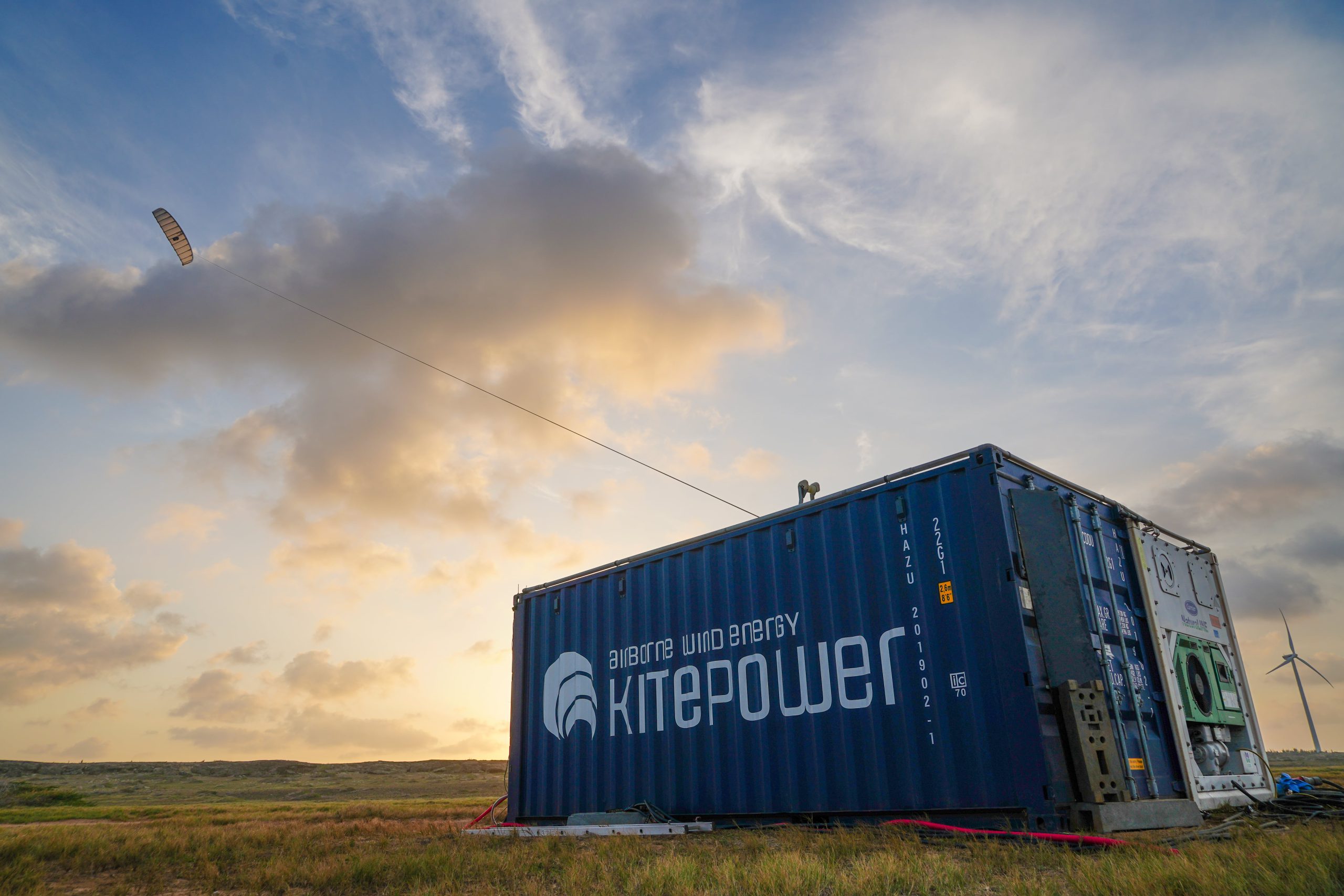
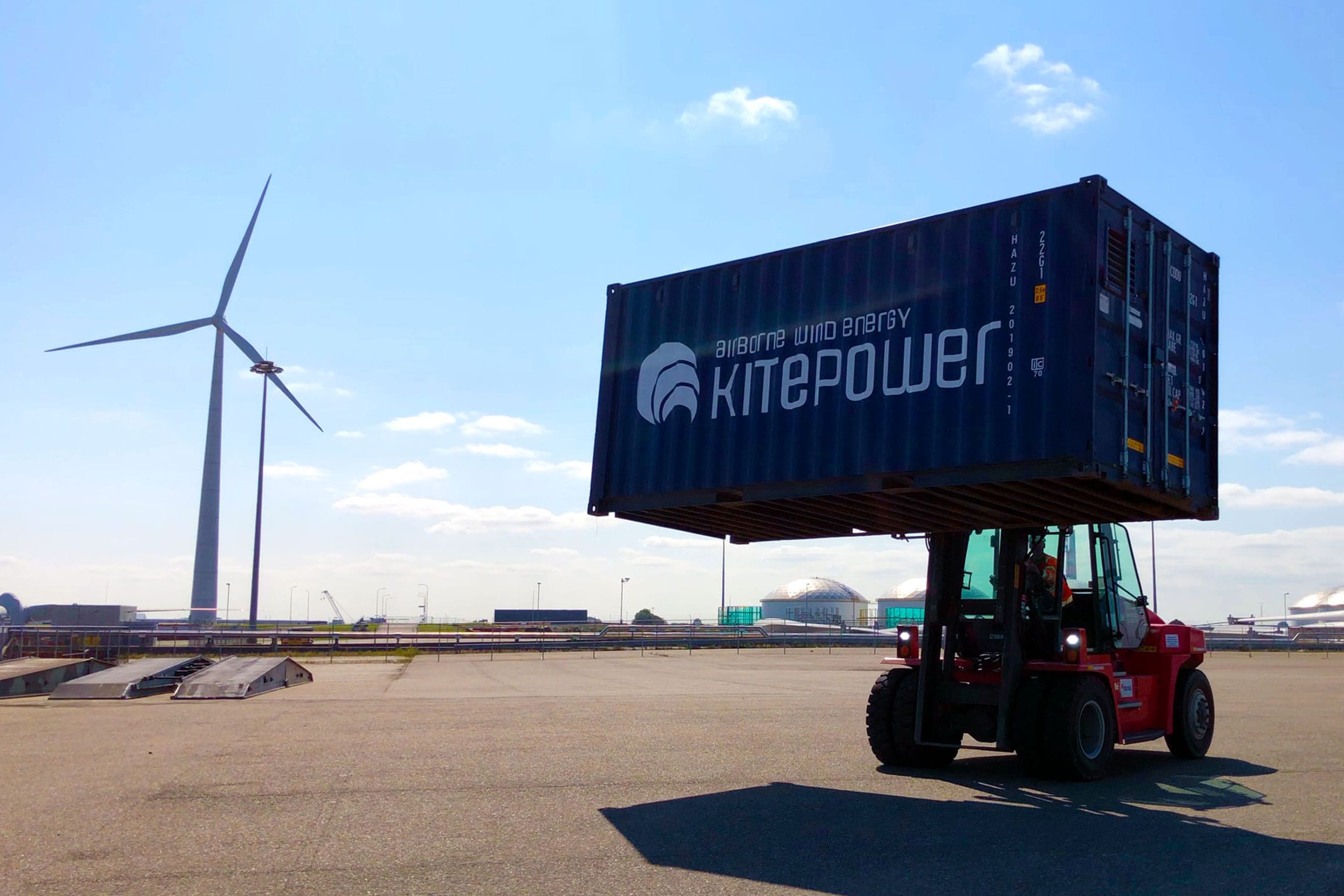
Uses up to 90% less material than conventional wind turbines, and all equipment fits into a single 20ft container—making it suitable for temporary or permanent installations and easy relocation worldwide.

24/7 Renewable Energy with Stable Output
Produces electricity day and night, including cloudy and rainy conditions, with a higher capacity factor than solar PV and wind – enabling seamless integration with existing energy systems and long-term […]

The system components of Kitepower
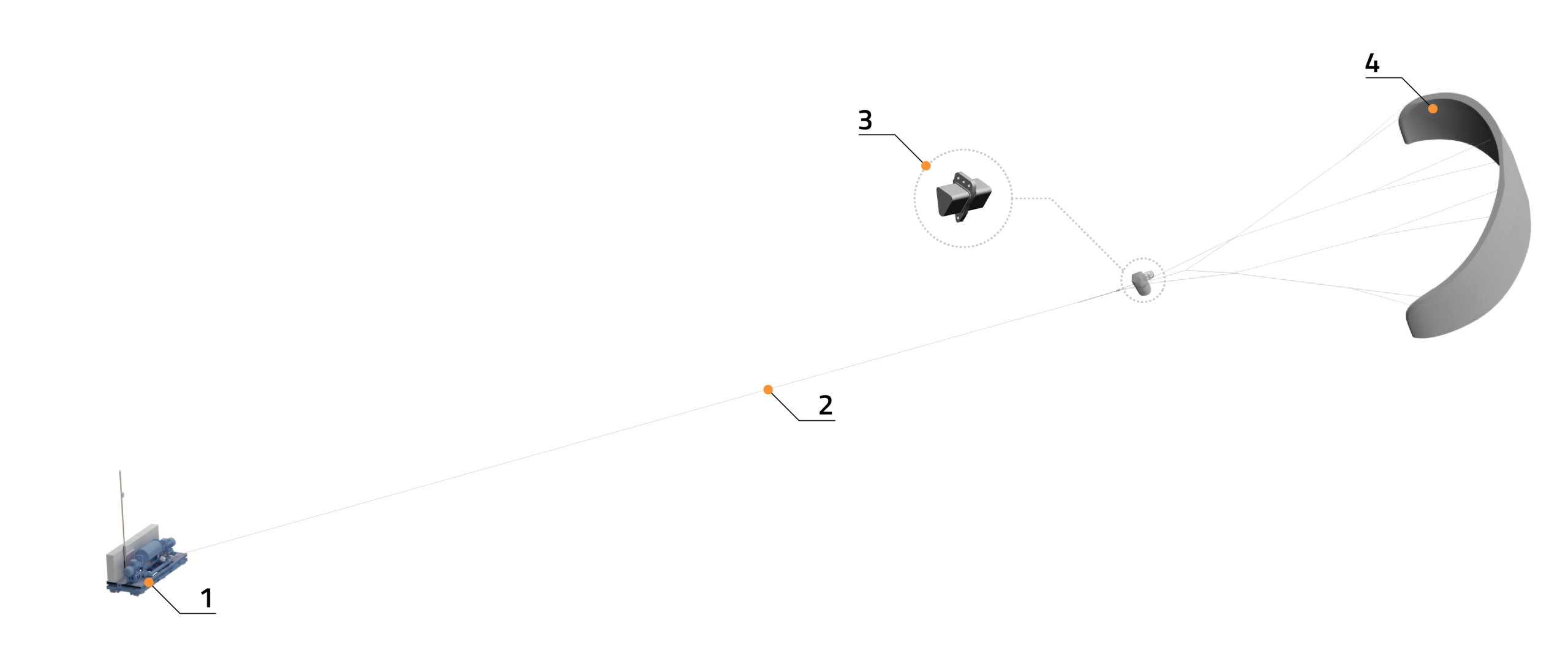
1. Ground Station
Converts the mechanical energy of the kite into electrical power and reels the kite in by using the generator as a motor.
- 2.44 m
- 2.6 m
- 6.06 m
- 9.6 t
- IP64
- 25 years
- 400V AC 3 phase
- 550-700V V
2. Tether
A Dyneema® line is used for a lightweight and strong connection between the kite and the GS.
- UHMWPE Dyneema®
- 350 m
3. Kite Control Unit
Controls the roll, pitch, and yaw of the kite and takes care of the communications between the sensor unit placed on the kite and the GS.
- 2 km km
- IP65
4. Kite
Consists of a hybrid between an inflatable and a fixed fibre-glass skeleton, forming the best combination for a strong and lightweight wing.
- 100 m²
- 3.5 t
- 110 km/h





The System Operation
Learn more about the continuous pumping cycle operationThe continuous pumping cycle operation
Reel Out - Energy Production
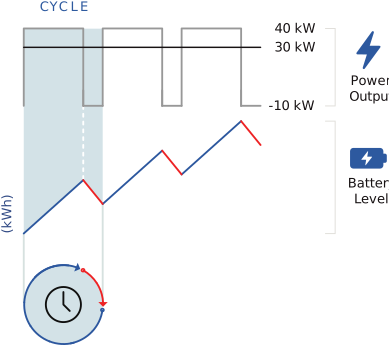
Energy is generated during the first phase when the kites are flown in a cross-wind figure of eight pattern to achieve a high pulling force and reel out the tether from the winch in the ground station. During reel-out, Kitepower systems produce power throughout 80% of the cycle’s time.
Reel In - Energy Consumption
When the max tether length is reached, the kite’s profile is adjusted to reel in the tether with low force, using a small fraction of the energy produced in the previous phase. During reel-in, Kitepower systems consume power throughout 20% of the cycle’s time.
Generation phases vs power output
The electricity generation works in two phases, which repeated in continuous cycles result in positive net energy output. The energy generated by the system while reeling out is greater than the energy consumed to reel the kite back in.
- Has a single cycle duration of 100 seconds
- Produces 130 kW 80% of the cycle’s time when in reel-out
- Consumes 20 kW 20% of the cycle’s time when in reel-in
The electricity generation works in two phases, which repeated in continuous cycles result in positive net energy output. The energy generated by the system while reeling out is greater than the energy consumed to reel the kite back in.
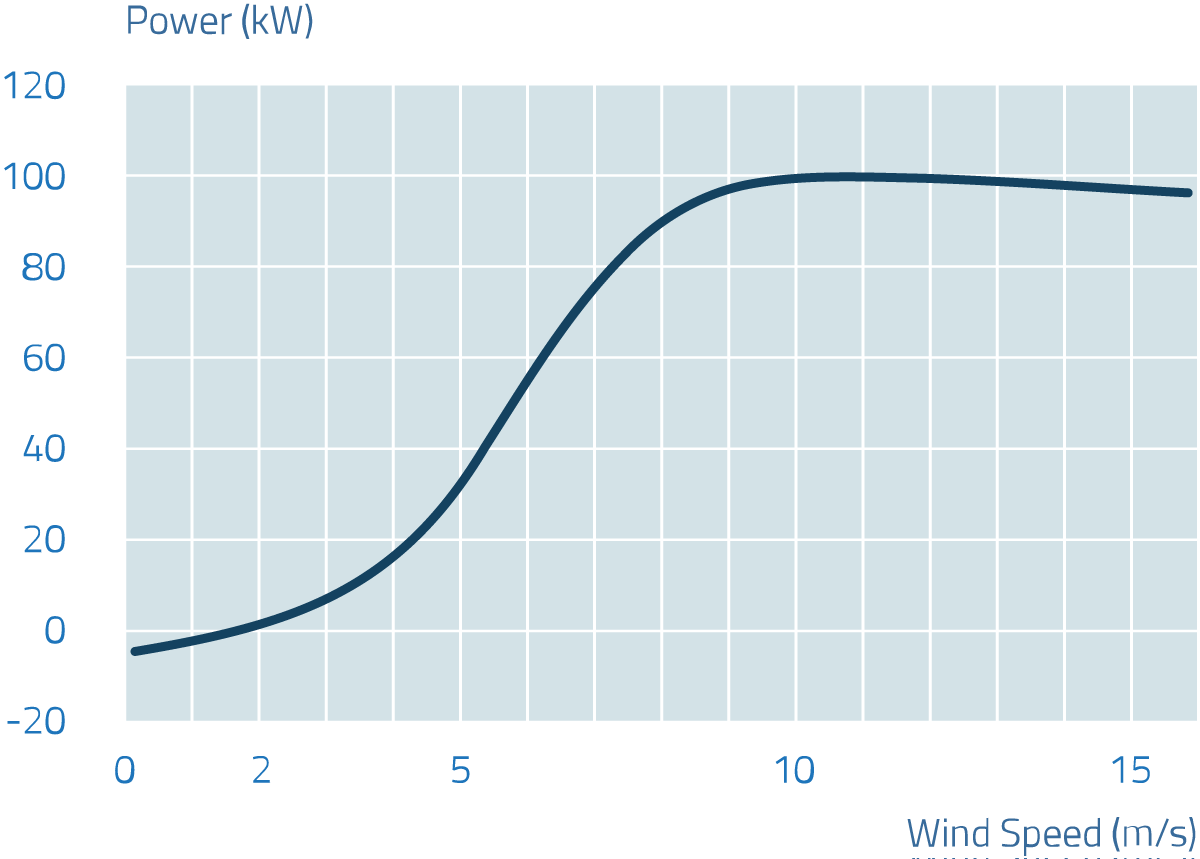
Kitepower represents an innovative and cost-effective alternative to existing wind turbines. Kitepower systems start producing energy with lower wind speeds than the ones required by conventional wind turbines, moreover, Kitepower is capable to harness stronger and more persistent winds at higher altitudes. (COMMENT: Highlight lower winds within the power curve graphic.)

Generation phases vs power output
The electricity generation works in two phases, which repeated in continuous cycles result in positive net energy output. The energy generated by the system while reeling out is greater than the energy consumed to reel the kite back in.
- Has a single cycle duration of 100 seconds
- Produces 130 kW 80% of the cycle’s time when in reel-out
- Consumes 20 kW 20% of the cycle’s time when in reel-in
Start generating electricity at lower wind speeds
Kitepower represents an innovative and cost-effective alternative to existing wind turbines. Kitepower systems start producing energy with lower wind speeds than the ones required by conventional wind turbines, moreover, Kitepower is capable to harness stronger and more persistent winds at higher altitudes.